Miriam Y. Arani: The photographs of the German Wehrmacht’s Propaganda Companies as sources on the events in occupied Poland 1939–1945

Jahrgang 12, Nr. 3, ISSN 2363-6513, Juni 2026

The photographs of the German Wehrmacht’s Propaganda Companies as sources on the events in occupied Poland 1939–1945

by Miriam Y. Arani

This text as a PDF

Originalquelle / Original Source:

Miriam Y. Arani: Die Fotografien der Propagandakompanien der deutschen Wehrmacht als Quellen zu den Ereignissen im besetzten Polen 1939–1945.
In: Zeitschrift für Ostmitteleuropa-Forschung (ZfO), Bd. 60, 2011, Heft 1, S. 1–49.

Erstveröffentlichung / Archivlink:
https://www.hsozkult.de/journal/id/zeitschriftenausgaben-6329

DOI / Volltext auf der Website der Zeitschrift:
https://doi.org/10.25627/20116019144

ZfO Online:
https://www.zfo-online.de/

Übersetzung aus dem Deutschen:
Gita Marta Yegane Arani.

Abstract

Photographs produced by the propaganda companies (Propagandakompanien, PK) of the German Wehrmacht have long shaped the visual memory of the Second World War. Often overlooked, however, is the fact that these images were created as instruments of psychological warfare. They served not only to glorify the German military as National Socialist war propaganda, but also to visually stigmatize, dehumanize, and discredit alleged or real “enemies” of the regime.

Research has shown that photographs produced by the propaganda companies were subject to systematic selection, censorship, and manipulation by both the Reich Ministry of Propaganda and the Wehrmacht High Command. This challenges the once widespread assumption that such images constituted a form of neutral or objective war reporting.

The propaganda companies operated on all fronts of the war, in occupied territories and within Germany itself. As visual records that closely followed the movements and activities of the German armed forces, the photographs produced in East Central Europe deserve particular attention. It was in these occupied regions – especially in Poland – that millions of civilians and soldiers lost their lives, including many victims of the Holocaust.

Focusing on the production, circulation, and historical context of propaganda photography in German-occupied Poland between 1939 and 1945, this article examines the ambivalent nature of these visual sources. On the one hand, the photographs reflect an intentional ideological iconography shaped by National Socialist propaganda; on the other, they remain important historical documents containing traces of the realities they sought to frame and control.

Tags: Propagandakompanien; Wehrmacht Photography; National Socialist Propaganda; Occupied Poland; Visual History; Holocaust Studies; Enemy Images; Second World War; Visual History; Holocaust Studies; Psychological Warfare

The photographs of the German Wehrmacht’s Propaganda Companies as sources on the events in occupied Poland 1939–1945

by Miriam Y. Arani

The photographs most frequently used to visually depict World War II in the press, in exhibitions, in academic and political publications, as well as in illustrated books, were produced by the Propaganda Companies [Propagandakompanien, PK] of the German Wehrmacht (Fig. 1) and were an integral part of the wartime propaganda of that era. A source-critical approach to photographs from World War II and German-occupied Europe remains the exception rather than the rule to this day, although these visual sources, too, require critical examination, analysis, and interpretation. [1] As was recently noted at a conference held by the Neuengamme Concentration Camp Memorial on images of National Socialist camps and ghettos, research on images produced under National Socialist rule still presents numerous gaps. The methodologically most important goal at present, to combine a careful critical analysis of pictorial sources with an examination of the aesthetic dimension and iconography, has so far only been rarely achieved. [2] The state of research specifically on photography under National Socialist rule does not differ significantly – particularly with regard to the relationship between empiricism and theory – from the German- and English-language state of research on the general history of photography, where empirically grounded, case-specific studies stand side by side, largely unmediated, with photographic theories that claim very broad applicability. [3] In the meantime, the source value of press photographs produced by the Propaganda Companies (PK) of the German Wehrmacht has become highly contested: on the one hand, it is being called into question more strongly [4]; on the other, it is being valued more highly than before in light of new perspectives – such as those related to urban and architectural history. [5] In contrast to the author’s monograph on the “Reichsgau Wartheland,” [6] which sought to typologically organize the various social uses of the medium of photography within an administrative unit of occupied Poland, the considerations presented here focus exclusively to the official government-directed and militarily organized visual reporting of the National Socialist state.

Fig. 1: German soldiers from a Propaganda Company in an open vehicle, Litzmannstadt (Łódź), 1941, Photographer: Zermin, PK 689 (BArch, Image 101I-133-0703-33/Zermin/CC-BY-SA)

Of the approximately three million photographic images produced by the PK, around 1.7 million have been preserved in various archives. The largest holdings are kept in the Federal Archives [Bundesarchiv] in the sub-collections Bild 101I (Army and Air Force), Bild 101II (Navy), and Bild 101III (Waffen-SS), as well as Bild 183 (Allgemeiner Deutscher Nachrichtendienst – Zentralbild). [7] In addition, there are the estates of individual PK photographers, such as that of Artur Grimm in the Image Archive of the Prussian Cultural Heritage Foundation. [8] The Propaganda Troops of the German Wehrmacht were deployed on all war fronts and in all occupied territories. To date, the PK photographs from the eastern theaters of war – where the genocidal dimension of National Socialism was most evident [9] and where not only military activity but also the loss of human life was greatest [10] – have not been systematically studied. Consequently, no monograph exists either on the approximately 25,000 PK photographs from occupied Poland or on those from other war and occupation zones in East-Central and Eastern Europe. The following section therefore summarizes research findings from the past decade on PK photographs, with a geographical focus on German-occupied Poland, in order to improve the conditions for their critical use as sources. At the same time, the aim is to substantiate the view that the visual message of PK photography cannot be understood in isolation from its context in which it was created. [11]

Various researchers have by now uncovered a complex network of administrative control processes governing the production and distribution of PK photographs, knowledge of which is indispensable for a more precise assessment of the source value of these visual mass sources of high transnational relevance. In addition to the question of what PK photographs can reveal about historical events themselves, a central issue is the messages conveyed by these images during the Second World War as part of the National Socialist regime’s psychological warfare.

Fig. 2: Major Hasso von Wedel, portrait photograph, November 1938, photographer: Stiehr. Contemporary caption: „Major von Wedel, der Leiter der Pressetruppe im Oberkommando der Wehrmacht, sprach am heutigen Mittwochabend (23.11.1938) im Schinkelsaal der Hochschule für Politik zu dem Thema ‚Aufbau der Wehrmacht‘“ [“Major von Wedel, head of the press corps at the Wehrmacht High Command, spoke this Wednesday evening (November 23, 1938) in the Schinkel Hall of the College of Politics on the topic ‘The Development of the Wehrmacht’”], (BArch, Image 146-2002-005-22A/Stiehr/ CC-BY-SA)

The description of the Propaganda Troops of the German Wehrmacht remained, for many decades, bound to the perspective of their former members. [12] Apart from Hasso von Wedel, the head of the Wehrmacht Propaganda Department (Fig. 2), former members of the Propaganda Companies (PK) published their memoirs and other texts after the Second World War. However, the value of these sources is limited due to their more or less explicit intention to absolve these organizations of any association with the ideology and crimes of the National Socialist state. [13] More detailed research over the past decade has shown that the PK photographers were not apolitical photojournalists forced to wear uniforms, as many of them claimed after the war; rather, it is likely that they deliberately perpetuated this myth. [14]

As Winfried Ranke already noted in 1992, many PK photographers identified with the war aims of the National Socialist regime and saw their work as an opportunity to advance their careers as press photographers with a view to the postwar period. [15] During the war and the destruction of Europe’s Jewish minority, they competed to see “their” photographs published in the German press – preferably on the cover of an illustrated magazine. It is therefore advisable, when dealing with all postwar statements by former PK photographers, to proceed from the following consideration as a working hypothesis:

“[…] as long as we do not have – instead of the self-justifications of a Hilmar Pabel or Gerhard Gronefeld, two of the many PK photographers who enjoyed successful postwar careers – evidence of dissent or subversive behavior within the Wehrmacht’s Propaganda Troops, we must assume that it was not journalistic craftsmanship and detachment from events, but rather a high degree of alignment with National Socialist ideology and propaganda that shaped the perspective of the German ‘photojournalists/image reporters.’” [16]

The instructions issued to PK photographers by the Reich Ministry of Public Enlightenment and Propaganda [Reichsministerium für Volksaufklärung und Propaganda, RMVP] and the Wehrmacht Propaganda Office of the Wehrmacht High Command [Oberkommando der Wehrmacht, OKW] – whose implementation can be verified through numerous written and visual sources – as well as the deliberate visual defamation of certain groups of people, refute Hasso von Wedel’s postwar claim that PK reporting from Poland was characterized by the utmost “objectivity” [17] and that Wehrmacht propaganda had offered “passive resistance” [18] to the NSDAP’s racial-ideological anti-Semitic propaganda. The organizational structure and purpose of the Propaganda Troops determined both the possibilities aswell as the limitations of the PK photography: its aim was not to document World War II neutrally, but rather to serve as a weapon in which this war had been psychologically waged. [19]

The photographs of the PK, as visual mass sources, cannot be adequately interpreted by either historical scholarship or art history alone, since these artifacts – unlike works of fine art – were intended to serve a mass-media communicative function, so that their “social meaning” must also be taken into account. [20] For these reasons, it makes sense to analyze and interpret the PK photographs as sources from an interdisciplinary perspective. [21] In order to describe and analyze their visual messages more precisely within the context of the “war of extermination”—conceived primarily in “racial-political” terms with regard to the East—it is necessary, beyond reconstructing the circumstances of their creation, to examine the contexts of their contemporary use in order to elucidate the “intended iconography” by the PK photographers. [22] This can be achieved through comparisons with products of the contemporary photographic publishing directed by the National Socialist regime on the one hand, and with PK photographs from other German-occupied territories and theaters of war on the other.

Organizational-historical overview

The beginnings of an – initially informal – cooperation between the RMVP, established by the NSDAP after it came to power, and the Reichswehr Ministry (as the predecessor institution of the OKW) date back to 1933. [23] In the period that followed, an alliance based on mutual interests developed between the OKW and the RMVP, ultimately leading to the establishment of the Propaganda Troops as a military organization. [24]

In the spring of 1938, Colonel General Wilhelm Keitel, Chief of the OKW, stated in a memorandum that it was among the “principles of the total war of the future” to unify military, propaganda, and economic warfare. [25] The National Socialist understanding of propaganda [26] had already been closely linked to the use of physical violence. [27] In the implementing regulations issued by the OKW on August 19, 1938, it was stipulated that the PK, as part of the signal troops [Nachrichtentruppen], were to be subordinate to the respective Army High Command [Armeeoberkommando, AOK], while receiving their directives regarding the content and form of reporting from the RMVP. [28]

The RMVP’s authority over the production of propaganda material was reaffirmed in the “Principles for the Conduct of Propaganda in War” [“Grundsätzen für die Führung der Propaganda im Kriege”] agreed upon between the RMVP and the OKW on September 27, 1938, [29] whereby the OKW, with the support of the RMVP, would solely organize the propaganda units: war reporting in all mass media, propaganda directed at the “enemy” [so-called combat and active propaganda, Kampf- und Aktivpropaganda; in den “Feind” hinein], and the “moral” support [“geistige” Betreuung] of its own troops. [30] To implement these principles, the OKW established the Wehrmacht Propaganda Department [Abteilung Wehrmacht propaganda, Abt. WPr] on April 1, 1939, which was responsible for military censorship during the war and for directing Wehrmacht reporting. As its commander Colonel Hasso von Wedel was appointed, who at the time explicitly supported Adolf Hitler’s political objectives and the indoctrination of the Wehrmacht with National Socialist ideology. [31]

In the period that followed, the RMVP determined the PK’s image production on three levels: through the selection of specialized personnel, through content-related instructions to the PK, and through subsequent political censorship of the visual material. [32]

By selecting the specialized personnel, the RMVP ensured its influence over their professionalism (in terms of technical quality expectations) and their political reliability (in terms of adherence to the NSDAP). In the summer of 1939, the WPr Department approved the recruitment of PK specialist personnel upon the recommendation of the RMVP [33] in coordination with the General Army Office [Allgemeines Heeresamt, AHA] of the Army High Command [Oberkommando des Heeres]. [34] This recruitment process has not yet been fully clarified in all its details. Recent research on the involved offices complements an earlier reconstruction of the procedure, which focused on the external, non-military offices that were involved. [35] Each military district command [Wehrkreiskommando] [36] received, via the AHA, a list of names of conscripted specialists in its command area, and proposed company commanders in consultation with the relevant Reich Propaganda Office [Reichspropagandaamt, RPA]. [37] The final decision regarding the commanding PK officers was made personally by Joseph Goebbels, acting on the recommendation of the WPr department. [38] As a result of this recruitment process, all PK photographers were subject to the “Editors’ Law” of October 4, 1933, under which any journalistic activity was considered a propaganda service for the National Socialist regime, and certain groups of people were completely barred from access to the press professions. [39]

The RMVP’s daily “press directives” [40] to the PK, which concerned, among other things, photographs to be taken, were announced at ministerial conferences [41] and, in some cases, also at the RMVP’s daily Reich press conferences, [42] which had been held since 1933. They prescribed the themes and overall direction of photographic reporting and were presumably forwarded via the RMVP’s Main Department for the Picture Press [Hauptreferat Bildpresse] to the responsible army offices. [43] A more precise reconstruction of the chain of command or transmission of orders is still lacking.

The RMVP had already deployed press photographers on a trial basis during military maneuvers in 1936 and 1937. [44] With an order dated August 16, 1938, the OKW established the first four of five PK units for the German invasion of the Sudetenland. [45] In the run-up to the invasion of Poland in September 1939, additional PK units were hastily formed. [46] In 1939, the standard strength of such a company was around 150 men, including at least four to seven press photographers. [47] Contemporary sources and postwar accounts contradict each other regarding the military rank of the PK photographers: According to the latter, PK photographers were classified as unserved personnel and given the rank of “Sonderführer”, which had been introduced as an expedient solution, whereby the publication of their photographs in the press was reportedly rewarded with a promotion to non-commissioned officer. [48] Contemporary written sources, however, indicate that PK journalists held the rank of non-commissioned officers, and that privileged “special correspondents” [“Sonderberichter”] even attained officer rank. [49]

When more than a million German soldiers invaded Poland on September 1, 1939, each branch of the armed forces had been assigned a PK. Five of the Army’s seven PK units, two war correspondent companies [Kriegsberichterkompanien] of the Luftwaffe, and one PK unit of the Navy entered Polish territory alongside the German armed forces. [50]

As early as 1939, the WPr Department in Potsdam established a training company, which was expanded in 1940 into the Propaganda Replacement Unit [Propaganda-Ersatz-Abteilung, PEA]. Propaganda units from allied nations (Finland, Italy, Hungary, Romania, and Bulgaria) were also trained in this training and replacement unit. [51]

During the Wehrmacht’s invasion of the Soviet Union in June 1941, thirteen PK units from the Army, four from the Luftwaffe, two half-companies from the Navy, and three SS Propaganda Companies [PK] were deployed. [52] By 1942, the Propaganda Troops numbered a total of nearly 15,000 men. [53] Now, even Panzer Groups that had not previously been assigned a PK were given their own war correspondents. [54] As a result of the German military’s setbacks on the fronts in the winter of 1941–42, the primary focus of the Army’s PK gradually shifted toward combat, or active propaganda, as well as troop support. The companies were reorganized and reduced in size due to the losses incurred. While in January 1943 about three-quarters of the PK staff were still engaged in war reporting, the number of these employees decreased in the following months to either two writers and one photographer per unit, or they were consolidated into Army War Correspondent Units [Heereskriegsberichterstatterzügen, HKBZ] attached to the Army Groups [Heeresgruppen]. [55]

In 1942, the WPr Department employed approximately 300 staff members [56] and was elevated in 1942–43 to the WPr Office of the Wehrmacht Command Staff [WPr des Wehrmachtsführungsstabs, WFSt]. The Propaganda Troops were now declared an independent branch of weaponry within the Wehrmacht. Hasso von Wedel had himself promoted to major general and head of the Propaganda Troops, and moved with a small group of staff to the Führer’s headquarters to join Adolf Hitler and the OKW leadership. He had his deputy commander, Colonel Rolf Kratzer, take charge of the WPr office in Berlin. [57] The approximately 15 remaining Wehrmacht war correspondent units [Kriegsberichterzüge, KBZ] at the end of 1944, comprising some 450 men, were ultimately placed under the command of a “War Correspondent Division” [Kriegsberichter-Abteilung, KBA]. [58]

This overview of organizational history shows that the Propaganda Troops were expanded and then reduced in response to the course of the war – particularly in connection with the war against the Soviet Union – while von Wedel became increasingly detached from the everyday experiences of his subordinates. This shortcoming in responsible leadership ultimately also affected relations with the SS, since the WPr Department or Office, that is: von Wedel, was also responsible for the organization and command of the SS Propaganda Companies [SS-Propaganda-Kompanien, SS-PK] that had been established in early 1940. It started out as a single company, which – as the war progressed and the Waffen-SS expanded – grew into an entire regiment known as the “SS-Standarte Kurt Eggers,” which significantly increased its influence within the WPr office toward the end of the war. [59]

From what is currently known, the assignments given by the WPr department or office to the PK photographers had a slightly different focus than those given by the RMVP and were primarily intended to enhance the Army’s reputation. However, in terms of their aesthetic and ideological requirements for photographers, the assignments issued by this agency did not differ from those of the RMVP. [60] Moreover, the military censorship carried out by the WPr was not conducted in opposition to, but rather in line with the RMVP’s prohibitions and guidelines regarding visual depictions. It prevented the disclosure of military secrets while also controlling the fields of reporting, as censorship officers were constantly informed about what urgently should be made public, what should be reported only in a veiled manner, and what should not be made public at all. [61]

Fig. 3: This staged photograph, featuring German soldiers, was taken at the border between the city of Danzig, governed by the NSDAP, and the Polish city of Sopot. It conveys the deceptive impression of a nonviolent German incursion into Poland. Caption from the ADN-Zentralbild (GDR):

„II. Weltkrieg 1939-45. Überfall der faschistischen deutschen Wehrmacht auf Polen am 1.9.1939. Soldaten zerstören den Schlagbaum an der deutsch- polnischen Grenze in der Nähe von Danzig.“ [“World War II, 1939–45. Invasion of Poland by the fascist German Wehrmacht on September 1, 1939. Soldiers destroy the barrier at the German-Polish border near Danzig.”] Photographer: Hans Sönnke, Danzig (BArch, Image 183-51909-0003/Sönnke/CC-BY-SA)]

However, it would be insufficient to view PK photography in isolation from the media landscape in the occupied territories, which has been transformed by military operations. Through the cooperation between the OKW and the RMVP, the National Socialist regime exerted complete control over the production and distribution of press photographs in the occupied territory by having the Wehrmacht prohibit all journalists not authorized by the OKW and the RMVP from entering the territory occupied by the Wehrmacht, [62] and only the photographs taken by PK photojournalists – and, in isolated cases, those by civilian photographers [63] (Fig. 3) – were forwarded for publication via the WPr Department and the RMVP. In September 1939, within just a few days, the photographs taken by the PK photographers – along with other media products by the Propaganda Troops – became the most important source of information for the German population about the war and the countries occupied by the Wehrmacht; all news media in the territories under National Socialist rule were required to use their material. [64] Polish press photographers in the occupied territory were largely impeded from practicing their profession, and in the summer of 1941, Poles were also prohibited from owning or using cameras for personal use. [65]

From the creation of a PK photograph to its publication

From its creation to its publication, a PK photograph underwent a production and distribution process involving a high degree of division of labor. Although PK photographs were primarily intended for current war reporting, their creators also sought to produce sources for future historiography. [66] For this reason, “service prints” [“Dienstabzüge”] of the photographs delivered by the PK to the RMVP’s Main Press Photo Department [RMVP-Hauptreferat Bildpresse] were recorded, organized, and stored in a “Reich Photo Archive” [“Reichsbildarchiv”]. [67]

As far as it has been possible to reconstruct, the production and distribution process for the PK photographs proceeded as follows: First, RMVP and WPr agreed on which topics should be presented to the public and how; in doing so, they took into account requests from third parties to an extent that cannot yet be determined. Instructions were then issued to the PK [68], which often consisted of image themes formulated in the form of keywords. Sometimes the PK photographers received more specific guidelines regarding the composition of the images. For example, a work assignment to PK photographer Schwahn (PK 689) dated September 8, 1939, read: “Not too many details, large figures; a simple composition of the image is crucial for the print result. Cover page! One to two people with milieu as a background.” [69] In some cases, the RMVP and WPr specifically commissioned certain photographers. [70] In September 1939, for example, the RMVP requested the services of the PK photographers Schwahn, Ehlert, and Borchert. [71] In November 1939, the WPr department specifically requested the press photographer Gerhard Gronefeld, who was again specifically commissioned in June 1941 during the invasion of the Soviet Union to take pictures of victims of the Soviet secret service, the NKVD. [72]

The photographers apparently competed with one another within the PK in such a way that some boasted of taking candid shots, while others staged the subjects to achieve optimal results in line with their clients’ expectations. This possible interpretation is at least suggested by the following statement in the mission report of the PK 637 from October 14, 1939:

“The photo reports by Special Guide [Sonderführer] [Hans] Wagner, [Eitel] Lange, and [Friedrich Anton] Bögner are in part inauthentic, as they are staged. They would likely not stand up to comparison, for example, with the photo reports by non-commissioned officer [Otto] Lanziger from Warsaw.” [73]

A company order from the PK 612 dated January 18, 1940, presented the “staging” of the photographs to be taken as a matter of course:

“The photo report is not the accidental result of a photo-reporting assignment, but requires prior consideration and a mental plan of the shots to be taken. Directing the action by bringing about certain procedures will often be necessary to produce a photo report. However, it is essential to ensure that the main requirement of a photo report is liveliness. Staged and ‘lifeless’ shots destroy the publication [publizistischen] effect of the photo report.” [74]

Not all PK photographs were staged in this way, but the distortion of the actual circumstances encountered by a photographer could also be achieved without physically intervening in the encountered situation, by employing means of image-creation and design [bildgestalterischer Mittel]. The former PK photographer Georg Schmidt-Scheeder [75] described how he photographically solved an assignment that did not correspond with the encountered visible reality, in order to deliver the image he was asked to provide: The RMVP demanded photographs of as many British prisoners of war as possible, yet in Dunkirk he found himself mainly confronted with French prisoners. Therefore, he photographed a few British soldiers full-frame in the foreground and allowed the mass of French prisoners of war to appear indistinctly in the background of the image. [76] A PK photo from Warsaw (Fig. 4) is composed in a similar way, placing a military band of the German Wehrmacht in the foreground and middle ground of the image, so that the numerous people in the background on the right appear, at a quick glance, to be part of the military parade. Upon closer inspection, they are likely Polish civilians watching the military parade from behind a barrier formed by German soldiers in uniform.

Fig. 4: Military band at a German military parade in Warsaw, ca. September/October 1939, Photographer: Schulze, PK 501 (BArch, Image 101I-001-0251-12/ Schulze/CC-BY-SA)

Since each PK unit was required to submit at least one series of photographs [77] consisting of six to ten shots and 50 individual photographs per week, they recorded how much photographic material they had produced in their war diaries. [78] The PK photographers generally used Leica III and Contax III cameras; in rare cases, they also used Plaubel Makina or Zeiss Ikon Super Ikonta cameras, and primarily produced black-and-white negative photographs in the 24 x 36 mm format. [79] The exposed film was developed in the “processing unit” [„Auswertezug“] at the PK’s location, and a selection of the images was enlarged as prints – mostly in the standard press photo format of 13 x 18 cm. This selection of PK images, printed on photographic paper, was then affixed to the back with “image notes” [“Bildbegleitzetteln”] (Figs. 5 and 6).
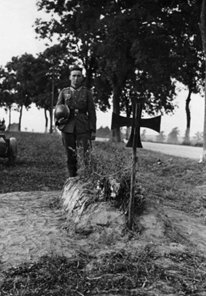
Fig. 5 (left, front) and Fig. 6 (right, back):

German soldier with his steel helmet taken off, standing in front of a soldier’s grave marked with an Iron Cross. On the back of the paper print of the PK photograph is a pre-printed caption slip with typewritten entries and approval stamps from the Wpr Department of the OKW and the Main Photo Press Office [Hauptreferat Bildpresse] of the RMVP. Contemporary caption: “Soldier’s grave near Crone. One of the first victims of the German advance into Poland. By the roadside lies the grave of a German combat engineer who gave his life for the Führer and the Volk on September 2.” [„Soldatengrab vor Crone. Eines der ersten Opfer des deutschen Vormarsches in Polen. Am Wegesrand liegt das Grab eines deutschen Pioniers, der am 2. September für Führer und Volk sein Leben ließ.“] September 6, 1939, Photographer: Heinz Boesig, PK 689 (Front: BArch, Image 183-2008-0415-507/CC-BY-SA; Back: BArch, Image 183-2008-0415-507/CC-BY-SA)

These slips differed in color depending on their intended use: PK prints “for official use only” [„nur für den Dienstgebrauch“] were to be accompanied by yellow slips, while those for press use were to be accompanied by white “Bildbegleitzetteln”. [80] The slips were to contain the following information: the photographer’s name, the location and time the photo was taken, and details about the image’s content. [81] Apparently, during the invasion of Poland, the PK photographers often submitted their prints with insufficient captions. This is suggested by repeated requests from the WPr Department to the censorship officers, such as the following one dated October 13, 1939: “All image material is to be censored and approved only if it includes a caption (explanation of the image). This will ensure that Bildberichter provide proper captions.” [82]

The PK paper prints, which were provided with sufficiently labeled “caption slips” were then subjected to military censorship. [83] This task was carried out by officers seconded from WPr Department III, who received their instructions directly from the OKW/WPr in Berlin and from the Staff Officer Ic (Enemy Reconnaissance and Counterintelligence, “Feindaufklärung und Abwehr”) of their respective army headquarters. The military censorship primarily ensured that all information regarding operational command, armaments factories, friendly casualties, and the supply situation was excluded. [84] After being cleared by the military censorship, the PK photo prints were stamped on the back with the abbreviation “Fr. OKW” (Fig. 6). [85]

The photos were then sent by courier to the RMVP in Berlin, where staff from the Press Photo Department [Bildpresse-Referat] carried out political censorship. [86] There, the PK press photo prints were stamped on the back with an approval stamp [Freigabestempel] that included a space for a date to be entered by hand (see Fig. 6: Stamp under “Fr. OKW”). If an image was not approved, this did not necessarily result in a permanent ban; it could also have been temporarily blocked for reasons related to current daily events. [87]

Once approved by the political censorship, the Photo Press Department [Bildpresse-Referat] forwarded the press prints of the PK photographs to the oligopoly of officially licensed, previously “Aryanized” photo news agencies [Bildnachtrichtenbüros], which then distributed them both domestically and abroad. [88] The “image caption labels” [“Bildbegleitzettel”] of the PK photos published by the photo news agencies [Bildnachrichtenbüros] were structured somewhat differently in terms of content than the labels for the prints produced by the PK itself. [89] They also differed in color to indicate different purposes: In addition to white accompanying labels for standard press usage, red “image labels” [“Bildbegleitzettel”] were also in use; these were intended for photo reports “whose publication is a priority” and which were to be printed “in a prominent position.” [90] A red “caption label” [“Bildbegleitzettel”] was attached for example to the press print of a PK photograph which shows dead bodies near Bromberg (Bydgoszcz) presented to foreign journalists during a press tour organized by the RMVP on September 7, 1939. [91]

The direct transfer of PK photos to newspaper and magazine publishers had been expressly prohibited in September 1939. [92] PK photographers did not receive a share of the proceeds from the sale of PK photographic material; instead, these proceeds were credited to a “Dr. Goebbels Fund.” [93] This circumstance may be the decisive reason why some of the most prominent PK photographers did not submit all of their photographs through official channels. [94] Various pieces of evidence and circumstantial evidence also suggest that quite a few PK photographers produced photographs and prints for private purposes, for example as gifts for superiors or the soldiers depicted. [95]

The PK photos reached the widest audience through the German press. Of particular note is their use in illustrated magazines and nearly 40 Wehrmacht field newspapers, [96] since during the war almost all men in the middle age groups – and later also teenagers and older men – were drafted into the military. PK photos were also used for posters, leaflets, and wall newspapers in the occupied territories [97] and distributed as picture postcards. [98] Numerous books published in 1939-40 following the end of the combat operations in Poland and illustrated with PK photos were also aimed at a wider audience. [99] Among the contemporary types of publications is also a lavishly illustrated pictorial book on the “Polish Campaign”, co-edited by Hasso von Wedel, containing 100 black-and-white stereoscopic photographs that, when viewed through the enclosed Raumbildbrille/3D glasses, were meant to convey a three-dimensional visual impression of the combat operations of 1939. [100] Press photographs from the “Polish Campaign” were also presented to smaller audiences in exhibitions [101] that sought to elevate the press images produced within military chains of command to the status of art.

The photographs of the combat operations in Poland published in the German press were by no means as reliable as they claimed to be. On November 24, 1939, the WPr Department informed its censorship officers that photographs of pre-war military exercises were being used to illustrate current military operations. [102] Sometimes, positive retouching [103] was also used to alter the content of a PK photo. A prime example of this is a photograph from the “Polish Campaign” of 1939 taken by PK photographer Sturm of the Luftwaffe War Correspondents Company 4, which depicts two PK men at work as war correspondents [“Kriegsberichter”]. [104] This image was published several times by Deutscher Verlag (formerly Ullstein-Verlag) starting in 1940, with a heavily retouched background: The image, dramatized with bright, blazing flames added later behind the two war correspondents, adorned among other places the cover of the first issue of the magazine Signal in 1940, which was intended to promote the German Wehrmacht in occupied, allied, and neutral countries abroad. [105]

PK photographs were also used in the German press directed at the Polish public. [106] The general tone of the Polish-language occupation press was that Poland’s defeat was final and that the power of Germany and its Wehrmacht was insurmountable. At the same time, attention was deliberately directed toward certain “enemies”: Jews in general, primarily England in 1939–40, and, from 1941 onward, chiefly the Soviet Union. [107] As in the former German Reich, daily newspapers in occupied Poland usually only printed a few PK photos. Their primary purpose was to illustrate the Wehrmacht’s successful advances on the battlefronts. PK photos were regularly used in larger quantities mainly in illustrated magazines. Several German-language illustrated magazines were published in Polish in the General Government. [108] The Ilustrowany Kurier Codzienny, [109] produced in Kraków by what was then Poland’s largest and most modern press enterprise, was appropriated by the German “Zeitungsverlag Krakau-Warschau GmbH” [110] in the course of the dismantling of the Polish press system [111]. In accordance with directives issued by the Main Department for Public Enlightenment and Propaganda [“Hauptabteilung Volksaufklärung und Propaganda”] in the General Government [112], its publications were intended to influence the Polish population intellectually and emotionally in line with the aims of the National Socialist regime. To give the appearance of continuity, the newspaper initially continued to appear under its former title [113] after Polish staff had been replaced with German managerial and journalistic personnel, and was then renamed to Ilustrowany Kurjer Polski (IKP) [114]. The editorial staff, consisting of German journalists who spoke Polish, used PK photographs supplied by the press services [Pressediensten] [115] of the Main Department for Public Enlightenment and Propaganda [Hauptabteilung für Volksaufklärung und Propaganda] in Kraków. The IKP also used PK photographs as elements in photomontages (Fig. 7).

Fig. 7: IKP, Vol. 3, No. 25, 12 June 1942, front page (photomontage)

The IKP used the PK’s photographs for its visual coverage of the war and for anti-Soviet propaganda with anti-Semitic undertones. [116] Although the IKP consistently defamed Jews, photographic depictions of Jews in occupied Poland were a rare exception in this publication. [117] In comparison, starting in 1941, some of the Americans who were frequently depicted in the IKP, on the one hand [118], and Soviet citizens, on the other, were regularly portrayed as “Jews.” [119] An examination of all issues [120] of the IKP led to the conclusion that – to an increasing extent starting in 1941 – up to about three pages per issue contained PK photos, the origin of which, however, was concealed from the readership. [121] Instead, named as image suppliers were the firms belonging to Berlin’s oligopoly of “Aryanized” photo agencies (Atlantic, P.B.Z., Scherl, Weltbild), the firm Presse-Illustrationen Heinrich Hoffmann, and, above all, Associated Press, thereby creating the impression that the photographs had originated from an American source.

Fig. 8: IKP, Vol. 2, No. 30, July 27, 1941, pp. 4–5. Title of the two-page photomontage, “To była linia Stalina,” printed in red on a two-color (red-green) background

In the IKP of July 27, 1941 (Fig. 8), a two-page spread was intended to illustrate the Wehrmacht’s advance into Soviet territory. The upper half of this double-page spread consists of a montage of three press photos – in the tradition of battle paintings – depicting the positions of German soldiers; these photos were retouched to link them together and enhance the drama. The German soldiers are depicted from behind, to give viewers the impression that they themselves are eyewitnesses to the events at the front. To illustrate the Wehrmacht’s air raids on “the enemy,” cutouts of airplanes were inserted into the sky at the top of the image. The transitions between the soldiers fighting on the ground and the aircraft in the sky were connected – especially on the left side – by clouds of smoke that were partly photographed and partly retouched into the image later. The horizon line outlined in the smoke was captioned in red, hatched capital letters: “That was the Stalin Line!” [„Das war die Stalin-Linie!“]

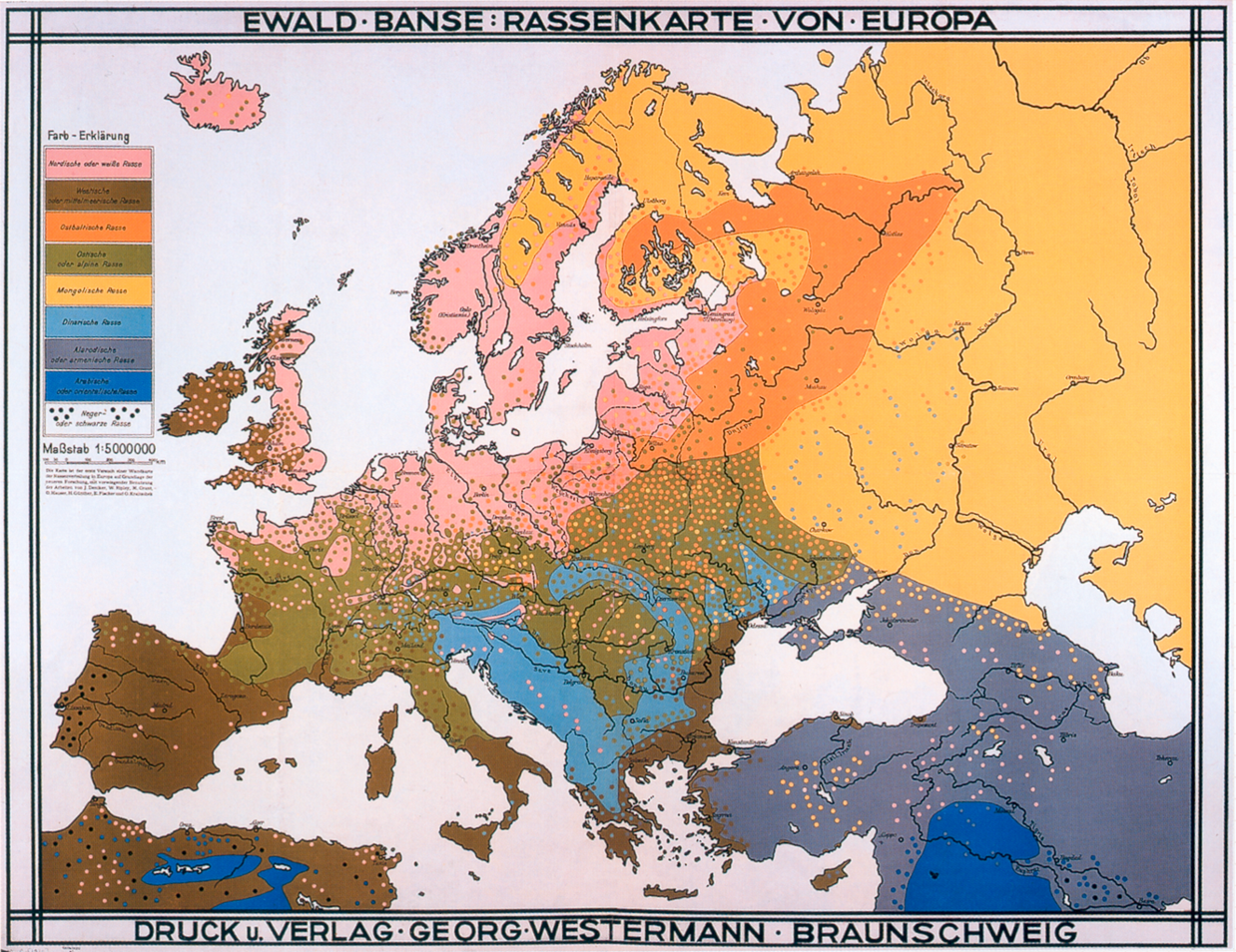
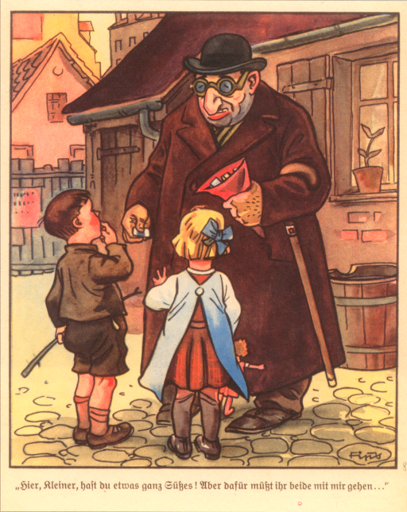
The cropping of a propagandistically significant image element in the IKP layout also played a key role in visually conveying the image of the enemy by directing the viewer’s attention to a specific focal point. In wartime propaganda, this occurred within the context of visual tropes that had already been employed in National Socialist visual propaganda of the 1930s, [122] including the visually contrasting juxtaposition of a national socialist group, identifiable by certain external characteristics (“cleanliness,” “uniformity” in movement and dress), and their “enemies.” This visual motif was also used to a limited extent in anti-Polish visual propaganda in 1940. [123] In the context of the invasion of the Soviet Union, this visual motif was used not only in the Berliner Illustrirten Zeitung, [124] but also in the IKP, primarily to portray Soviet soldiers and civilians in a derogatory way. Soviet citizens, who were portrayed as “unclean” or even “animalistic” [125], were visually contrasted with “clean” Germans, with the latter intended to appear not only technically but also “racially” superior. In the case of the Soviet Union, this iconography can also be traced back to the “Guidelines for Anti-Bolshevik Propaganda”, [126] issued as early as 1937, and an order from Propaganda Minister Goebbels dated July 5, 1941, which stated:

“A well-chosen selection of images – in which the animalistic [“vertierten”] Bolshevik types are contrasted with the free and open gaze of the German worker, the filthy Soviet barracks with German workers’ housing estates, the muddy, unpaved paths with German imperial highways [Reichsstraßen], and so on […] – is of great importance in this context.” [127]
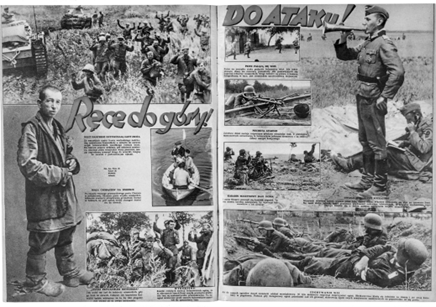
Fig. 9: IKP, Vol. 2, No. 38, Sept. 21, 1941, pp. 4–5. Headings
“Ręce do gory!” and “Do ataku!” in red on a black-and-white background

In this context, one should also note a double-page spread in the IKP (Fig. 9), which, on the left-hand page under the headline “Hands up!” [Ręce do góry!], features a compilation of photographs of surrendering Soviet prisoners of war, while the right-hand page, titled “To the attack!” [Do Ataku!], shows German soldiers during their offensive operations. On the outer edge of the left side is a civilian dressed in rags; based on the caption [128] he is a Soviet Jew captured by the Wehrmacht. [129] The large scale of this “miserable” figure distracts viewers’ attention from the fact that all the other photographs on this page show Soviet soldiers who are not dressed in rags. The IKP editorial team cited the following image providers: Associated Press, Atlantic, Scherl, and Weltbild. However, it is almost certain that these are exclusively PK photos. However, the origin of the visual material can be traced in detail only in rare, isolated cases. Nevertheless, the cropped image on the left of a “deterrent” Jew can undoubtedly be traced back to a photograph by PK photographer Schneider, published on September 3, 1941, by the Scherl company and held in the image archive of the Main Department of Public Enlightenment and Propaganda [Hauptabteilung Volksaufklärung und Propaganda] (Figs. 10 and 11).

Fig. 10 (left, front) and Fig. 11 (right, back):

A pauperly dressed civilian with short-cropped hair standing in front of a wooden wall. A press photo print measuring 18 x 13 cm on silver gelatin paper with a high-gloss finish. On the back is a white “photo caption sheet” [“Bildbegleitzettel”] for press use, containing typewritten information from the Scherl company in Berlin. It indicates that the photograph was taken by PK photographer Schneider and published by Scherl on September 3, 1941. Below the “Bildbegleitzettel” is a stamp from the “Government of the General Government – Propaganda Department” [“Regierung des Generalgouvernements – Hauptabteilung Propaganda”] and the handwritten note “B III 14 Soviet People” [“B III 14 Sowjetmenschen”], which is presumably the signature of the image archive of the Propaganda Department [Hauptabteilung Propaganda] in Krakow. In the lower right corner is a stamp from “Ilustrowany Kurjer Polski – REDAKCJA.” The handwritten notes “38/4/2 – 12.8 x 28” referred to the subsequent graphic processing steps for the publication of the image in the IKP (private collection)

For publication in the IKP, the background of the image was cropped out to make the central subject “stand out” for a montage. Any sympathy that might arise when viewing an “enemy” was prevented by a caption that imposed a negative interpretation of what was visible. This example illustrates the creative approach taken by the IKP’s photo editorial team. However, the way in which the PK photographers themselves visually constructed such enemy stereotypes can only be demonstrated through longer sequences of photographs. [130]

Another visual trope used by the RMVP in both German- and Polish-language “anti-Bolshevik” propaganda during the war was the depiction of the “enemies” from the East as a “mass” [a crowd] and as “types.” [131] In particular, the presentation of certain facial features against the backdrop of previously popularized racial-ideological standards of beauty [132] was intended to evoke revulsion in viewers. Both forms of visual representation of the “enemy” are combined in a photomontage that served as the cover image of the IKP on June 21, 1942 (Fig. 7). The source of the individual images used in this montage was not specified, but in this case as well, it can be assumed that PK photos served as the source material, since there is no evidence of other photographers being active on the German-Soviet front. The contemporary caption for this montage read: “With the help of such hordes, Stalin sought to dominate Europe, and Roosevelt and Churchill viewed this plan as ‘encouraging.’” [133] The term “horde” [“Horde”] is of central importance here, as National Socialist photojournalism sought to illustrate the “racial” inferiority of the Red Army through a repeated visual emphasis on the “Asian” soldiers (Fig. 12). [134]

Fig. 12: IKP, Vol. 3, No. 40, October 4, 1940, back cover of the issue

The visual portrayal of the Soviet military thereby created an anti-Semitic, anti-Bolshevik distortion that aimed to erase from the public consciousness the Poles, Balts, Ukrainians, Belarusians, and Russians who were fighting on the Soviet side against the Wehrmacht or who had become the civilian victims of the German invasion. [135] This becomes clearer when comparing complete sequences of photographs taken by PK photographers with the contemporary photojournalism [zeitgenössischen Fotopublizistik] of the time. The publications from that era document the contemporary visual meanings intended by the client who commissioned these photographs. This “intended iconography” [“beabsichtigte Ikonografie“] was based on the charge of “racial mixing” that the German Reich – invoking a völkisch ideology – had employed from the very beginning to legitimize the persecution, violent harassment, and disenfranchisement of certain groups of people. Before the war began, this primarily affected “Jews”; from 1939 onward, it also affected Poles, and from 1941 onward, the Soviet Union. A hallmark of the iconography of National Socialist visual propaganda directed against the multi-ethnic societies of Eastern Europe during World War II – into which the PK’s photojournalism [PK-Bildberichterstattung] was organizationally integrated – was the regular (indirect or direct) juxtaposition of a “völkisch” idealized self-image and a “racially” demonized image of the other.

On the spectrum of themes regarding PK photographs taken in Poland, with a close focus on the Holocaust

The primary purpose of the PK was to produce war propaganda glorifying the Wehrmacht. [136] The subjects depicted in the PK photographs from occupied Poland are linked not only to the course of the war and the glorification of war but also to the propagandistic objectives of the NSDAP as the state party. The preceding account of how reporting was organized and the procedures in place at the time regarding the PK images makes clear just how significant the German-Soviet conflict was, on the one hand, for the course of the war, and on the other, for the nature of Nazi visual motifs that were now being used on a transnational scale. The main adversary during the war on the Eastern Front was the Soviet Union, which, however, could not ultimately be defeated. The PK photographs taken in occupied Poland must also be understood within this context, particularly with regard to the periods in which they were created. Given the limitations of this framework, it is impossible to provide even a rough overview of all the image themes; therefore, only a few central thematic areas of PK photography and previously unexplored possibilities for their analysis and interpretation will be outlined.

The PK photos of the combat operations in Poland and their immediate consequences focus on September 1939 and the period from mid-1944 to early 1945. They depict German soldiers and their weapons, destroyed Polish military equipment, Polish prisoners of war and civilians, captured Polish cities, and fallen Polish soldiers. [137] Some visual objects that could have contributed to a realistic photographic depiction of the war were completely excluded. This applies in particular to German military casualties: fallen soldiers were to be depicted only in the form of soldiers’ graves (Fig. 5). [138] PK reporting consistently heroized German soldiers and officers. [139] Numerous PK photographs served to showcase the commanders and honor ordinary soldiers. [140] Since the PK units were deployed in consultation with the army staffs, the latter were able to influence the subject matter of the photographs to a limited extent.

The German soldiers who invaded Poland in September 1939 were portrayed as “liberators” of persecuted “Volksdeutscher” [“ethnic Germans”]. [141] This, combined with the claim that England had provoked the war, served as a moral justification for the invasion of Poland. [142]

To reinforce the propaganda message that this was not a war of aggression but a war of defense, the National Socialist leadership ordered that alleged Polish atrocities in and around Bromberg be “highly publicized” using shocking photographs from the PK 689 [143] showing dead civilians. [144]

On October 24, the RMVP issued a directive governing the portrayal of Poland in the German press following the end of German military administration (October 26, 1939). This order, which was given orally to German journalists during the Reich Press Conference [Reichspressekonferenz], has been preserved in two differently worded written versions. [145]

It must “be ensured that the current aversion to all things Polish is maintained for years to come. This aversion must evolve from a latent to a conscious one. Racial infiltration must be prevented. Poland is Subhumanity. Poles, Jews, and Gypsies must be mentioned in the same breath. There is to be no social or any other interaction with the Poles. A Pole is something impure that one does not concern oneself with. We will have to tolerate the Polish farm laborer among us for years to come, but we will isolate him as much as possible. […] Everything that is considered proper in Poland has German roots, including the culture. The idea that Poles are a subhuman race must become a ‘part of the subconscious’ [‘ein Bestand des Unterbewusstseins werden’] Reporting on the occupied territory is to be handled as part of the German living and cultural space.” [146]

This characterization of Polish citizens as “subhumans” in the form of “Poles”, “Jews”, and “Gypsies” was aimed at the long-term indoctrination of German society with ethnic and racial indoctrination [volkstums- und rassenideologische Indoktrination]. [147]

Starting in the spring of 1940, events in occupied Poland barely played a role in the German mass media due to the wars of aggression against other European countries. [148] The mass deportations of Poles that were beginning and the terror of occupation directed against the Polish civilian population were not covered in the mass media, which were controlled by the RMVP. [149] However, a distinction must be made between contemporary photojournalism [der zeitgenössischen Bildpublizistik] and the totality of PK photographs produced, as not all of the images were actually published. There are indeed surviving PK photographs of raids on the civilian population, for example, of a raid by the German Ordnungspolizei in Krakow in 1941, taken by a photographer named Kintscher of the PK 666 (Fig. 13). [150]
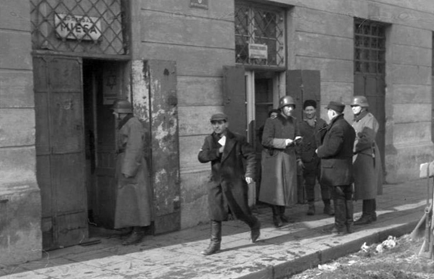
Fig. 13: Raid by the German Ordnungspolizei in occupied Kraków. At the entrance to the store on the left (“Mięsa”), a store sign featuring a Star of David is visible above the policeman’s helmet, January 1941, Photographer: Kintscher, PK 666 (BArch, Image 101I-030-0780-24/Kintscher/CC-BY-SA)

As early as December 1939, the German press published a selection of photographs by Artur Grimm, a member of a propaganda unit directly assigned to the OKW. [151] His photos were intended to make the German Security Police’s [Sicherheitspolizei, Sipo] measures against “Jews” in Warsaw appear necessary. These are staged scenes purportedly showing Jewish resistance fighters who, under the supervision of officials from the Warsaw branch of the Sipo and the SS Security Service [Sicherheitsdienst, SD] were forced to dig weapons out of a grave. The Jewish men were subsequently found guilty by an SD court-martial (Figs. 14–16). [152]

Fig. 14: Arrested Polish Jews are forced to confess to the “crimes” of which they are accused by the SS Security Service (SD) inside the Warsaw Jewish Community building, October 1939. Photographer: Artur Grimm, “OKW” Propaganda Unit (bpk 30032356)

Fig. 15: A detained Polish Jew is forced to sign a “confession” presented to him in Warsaw by the SS Security Service (SD), October 1939, Photographer: Artur Grimm, “OKW” Propaganda Unit (bpk 30010187)

Fig. 16: Arrested Polish Jews during a “trial” staged by the SS Security Service (SD) with a verdict already predetermined, October 1939; photographer: Artur Grimm, “OKW” Propaganda Unit (bpk 30010185)

Fig. 17: A group of SS SD officials in the building of the Warsaw Jewish Community (the same paintings seen in the background on the wall in Fig. 14 are visible in the upper right corner of the image) at 26–28 Grzybowska Street, likely during the announcement of the establishment of a  “Jewish Council” [“Juderat”] for Warsaw on November 28, 1939. Photographer: Artur Grimm, “OKW” Propaganda Unit (bpk 30009881)

In November 1939, Grimm once again put the Warsaw SD staff in the picture when they gained access to the Jewish Community building yet again (Fig. 17), most likely in preparation for the establishment of the “Jewish Council” [“Judenrat”] for Warsaw on November 28, 1939, [153] which was now to comply with all instructions from the German occupiers. The occupying forces appointed Adam Czerniaków (Fig. 18) [154] as the “Jewish elder” [“Judenältesten”]; out of despair over the duty imposed on him to hand over several thousand Jews daily for extermination, he took his own life on July 23, 1942. [155]

Fig. 18: Officials of the SS Security Service (SD) and engineer Adam Czerniaków, whom they had appointed as “Jewish Elder” in Warsaw (center top), presumably also on November 28, 1939; photographer: Artur Grimm, “OKW” Propaganda Unit (bpk 30010016)

The PK photos of the police raid in Krakow and the activities of the Sipo in Warsaw were no longer related to purely military matters: their purpose was the targeted criminalization of civilians, accompanied by the visual reinforcement and construction of “racial” enemy stereotypes. In PK photos “enemies” were often depicted as members of supposedly inferior “races” in contrast to Germans who were considered “racially superior.” [156] While on the Western Front, Black French soldiers were the primary targets of “racial” enemy stereotyping, [157] in German-occupied Poland, Jews in particular were visually portrayed as “racially” foreign.

As early as September 8, 1939, the propaganda units were instructed to produce images for the Illustrierter Beobachter on the theme of “The Polish Jew”. The directive read: “Polish Jewish types of both sexes and various ages / Jewish occupations / Jewish customs / Jewish filth”. Another directive issued on October 2 called on several PK units to photograph “all kinds of Jewish types” in order to intensify anti-Semitic propaganda. [158] According to the prevailing view among the elites of the German Reich, the Second Polish Republic – which had been multi-ethnic until 1939 – represented a “racial mix” [“Rassengemisch“]. [159] Thus, during a visit to Łódź on November 2, Propaganda Minister Joseph Goebbels wrote in his diary:

“A drive through the ghetto. [160] We get out and take a thorough look around. It is indescribable. These are no longer human beings; they are animals. That is why this is not a humanitarian task, but a surgical one. We must make cuts here, and radical ones at that. Otherwise, Europe will one day perish from the Jewish disease. Drive along Polish roads. This is already Asia.” [161]

The terminology chosen by the Minister of Propaganda starkly expressed the highly biologistic and ahistorical worldview of the National Socialists: From the perspective of the NSDAP, which, with the Nuremberg Laws of September 15, 1935, had prohibited any romantic relationships with Jews and subsequently also with other “foreign races” [“Artfremden”] as “racial mixing”, [162] the Jews of Poland were an “Oriental foreign body” [“orientalischer Fremdkörper“] in Europe, equated with a health threat. [163] Starting in 1940, the German occupying forces herded all Jews found in Poland into designated forced-residence districts (ghettos) without adequate food or medical care, then labeled these areas as “quarantine zones” [“Seuchensperrgebiete”] or similar terms, and tirelessly claimed that Jews posed “health” risks. This process is partially documented in PK photos. [164] The ideological worldview of the racial ideologues did not correspond to the reality on the ground in occupied Poland, yet the occupation policy – shaped to a large extent by Heinrich Himmler’s SS and police apparatus – and the visual media controlled by the Propaganda Ministry distorted Poland’s reality of a multi-ethnic society to the extent that it came as close as possible to the racial-ideological utopia of the Nazi regime. [165] From 1941 onward, photopublishing coverage of Polish Jews was limited to visual depictions of closed ghettos. Neither their deportation to the extermination camps nor their uprisings in the ghettos were thematized in the mass media. [166]

Starting in 1941, Poland became a military staging area and a “transit country” for the Wehrmacht on its way to the Soviet Union. [167] Since numerous propaganda companies were deployed to the occupied territories of Poland in preparation for the planned attack, a large number of PK photographs of the ghettos were taken in the summer of 1941. [168] In addition to members of the Luftwaffe War Reporting Company 6169 [Luftwaffen-Kriegsberichterkompanie 6169], photographers from the PK 689 also documented the largest of these ghettos in Warsaw. A selection of the photographs from the PK 689 – which have been the subject of the longest and most extensive scholarly discussion – was published in the Berliner Illustrirten Zeitung in July 1941. [170] In this case as well, a comparison of the surviving photographic sequences with the photo reportage published around the same time leads to the conclusion that the PK photographers in the Warsaw Ghetto deliberately framed certain “types” in their shots in order to create a “deliberate iconography” [“beabsichtigte Ikonografie”] through photography, the meaning of which becomes clear only within the context of its own contemporary publication.

In 1941, additional PK and SS-PK photographs of ghettos in other cities were also taken. [171] These include, for example, photographs by the photographer Rössler (PK 666) from Kraków in 1941, which do not show the ghetto newly established in March 1941 in the Podgórze district – whose gate can be seen in some of the photographs by the PK photographer Koch [172] – but rather a market around the old synagogue in Kraków’s Jewish quarter of Kazimierz. [173] No information is currently available regarding the PK photographs from the Lublin ghetto. Photographer Johannes Hähle (PK 637) photographed two German soldiers strolling through the city here in May 1941 (Fig. 19). [174]

Fig. 19: Two German soldiers strolling through the streets of Lublin, May 1941, Photographer: Johannes Hähle, PK 637 (BArch, Image 101I-019-1229-34/Hähle/CC-BY-SA)

Upon closer examination of the people depicted in the middle ground of this photograph, it is impossible to uphold the tenet of racial-ideological anti-Semitism that Jews can be distinguished from other people by certain physical characteristics. Since the supposed visible differences between Jews and non-Jews were not a reliable distinguishing feature, the German occupying forces introduced a clearly visible identifier for Jews in late 1939: a yellow star in the “annexed eastern territories” [eingegliederte Ostgebiete] and a white armband with a blue star in the “General Government” [Generalgouvernement].

Apart from Warsaw, the most extensive collection of photographic sources pertains to the ghetto in Łódź. It differs from the collection concerning Warsaw in that there are a great many photographic sources by Jewish photographers from this ghetto, [175] which can be used for comparison with the PK photographs. By conducting a comparative analysis of photographs on the same subject that were taken independently of one another, the source value of individual images can be determined more precisely. [176] Such a comparison yields the remarkable result that PK photographs by no means consistently verify the axiom of racial-ideological antisemitism, but can also falsify it when analyzed in a source-critical manner with an understanding of the control processes described at the outset.

The multi-ethnic city of Łódź was renamed “Litzmannstadt” on April 11, 1940, on Hitler’s orders, in honor of his political ally General Karl Litzmann. [177] On April 30, German task forces established a completely sealed-off ghetto. [178] This was preceded by a requirement, effective November 7, 1939, that businesses be labeled according to their German, Polish, or Jewish “ethnic identity” [“Volkstumszugehörigkeit”]. [179] The ghettoization of Jews in 1939–40 went hand in hand with urban planning reforms aimed, in the medium term, at strictly segregating the “ethnic groups” [“Volksgruppen”] [180] within the city and, ultimately, at completely “Germanizing” them. This population policy segregation and town planning “Germanization” process, as captured in a photograph by PK photographer Knobloch (PK 689) taken in Litzmannstadt, appears to focus solely on the German construction efforts, the “Aufbau”-Leistung, in the city. [181]

Fig. 20: A PK member photographs a “Jew,” ca. 1940, Litzmannstadt (Łódź), Photographer: SS-PK Schilf (BArch Image 101III-Schilf-003-23/CC-BY-SA)

Presumably in 1940, SS-PK photographers Schilf and Wisniewski captured images of Jews crammed into the Litzmannstadt ghetto. [182] One of Schilf’s photographs (Fig. 20) provides insight into both historical realities and the social relationship between the German photographers and their photographed subjects. The photo shows a clean-shaven man in uniform holding a camera up to his face to take a close-up photo of a bearded civilian. The only way to identify someone as a “Jew” under the National Socialist racial laws is, at first glance, by the star that people classified as belonging to this group were required to wear on the right side of their chest and on their back in Łódź starting on December 11, 1939. [183] Schilf and the photographer pictured chose as the subject of their photographs a man who was visually identifiable as a “Jew” not only by the bright star on his coat, but also by the long dark coat itself (“kaftan”), combined with a full beard and head covering. Hasidic Jews dressed in this traditional manner were particularly often humiliated and photographed by German soldiers in uniform. [184]

Schilf’s photograph also allows us to analyze the nonverbal interaction between the photographers and the subject, as well as their positioning within the space. [185] The man, identified as “Jewish” by both his traditional clothing and the star he wears, stands frozen in place on an otherwise deserted square, facing two uniformed Germans who are photographing him at the same time. He is not looking in the direction of the photographer visible in the picture, who has approached him to take a close-up of “the Jew”, but is looking directly into the lens of SS-PK photographer Schilf, whose photograph is shown here. The two uniformed men taking the photograph reproduce a military and political power dynamic vis-à-vis the civilian being photographed, a dynamic that underlay all PK photographs of Jewish and non-Jewish Poles. As members of a technologically superior occupying power, they used the act of photography to demonstrate their power to a powerless man by taking pictures of him over which he had no control. The fact that the PK soldier visible in the picture is photographing him from as close a distance as possible is certainly not due to an inner empathy. [186]

In 1941, in addition to Knobloch from the PK 689, which was stationed in Warsaw, a photographer named Zermin [187] was also assigned to Litzmannstadt. [188] As a comparison of his photographs with those of the SS-PK photographers Schilf and Wisniewski shows, he portrayed the ghetto inmates differently than they did. For example, one of his photographs shows a Jewish ghetto policeman at work on the street, [189] whereas the two SS-PK photographers apparently intended, through their medium and close-up shots of ghetto policemen, to emphasize their “physiognomies” in particular. [190]

Numerous PK photographs by Zermin show Jews in the Litzmannstadt ghetto in 1941 as people who, apart from being marked with a star, did not differ from other Polish civilians (Fig. 21). [191] Some of his photographs show ghetto inmates at work in a tailor shop that produced uniforms for Wehrmacht soldiers (Fig. 22). [192]

The photographs taken by PK photographer Zermin convey a different impression than those taken by the SS-PK photographers of the Jews confined in the ghetto. Zermin’s images are more similar to those of the Jewish ghetto photographers, as they do not suggest any physiognomic or cultural difference of Jews. Why Zermin depicted Jews here as disciplined textile workers who were distinguishable from non-Jewish workers only by a sewn-on star cannot be clarified at this time. Like the PK photographs of middle-aged Jewish men working in the Warsaw Ghetto, these photographs were not published at the time. [193] It can be concluded, however, that PK photographs captured certain aspects of reality in the large ghettos; these must be precisely defined through comparison with other visual and written sources in order to distinguish, on a case-by-case basis, between objective information and propagandistic intentions.

Fig. 21: “Jews” confined in the ghetto, 1941, Litzmannstadt (Łódź), Photographer: Zermin, PK 689 (BArch Image 101I-133-0703-19/Zermin/CC-BY-SA)

Fig. 22: Tailoring workshop in the ghetto, production of Wehrmacht uniforms, 1941, Litzmannstadt (Łódź), Photographer: Zermin, PK 689 (BArch, Image 101-133-0719-02/Zermin/CC-BY-SA)

It is easier to distinguish between the objective informational content and the propagandistic intentions in cases where the available source material is relatively extensive and research into the historical context of the photographed events is relatively advanced. This applies, for example, to the Warsaw Uprising of 1944.

On August 1, 1944, the Armia Krajowa [Home Army], which was under the command of the Polish government-in-exile in London, launched an uprising in Warsaw that the German security forces – despite their superior weaponry – were only able to suppress after 63 days. Nearly 23,000 Polish insurgents engaged in a bitter struggle against the German occupying forces. By 1944, those fighting against the Polish insurgents in German uniforms no longer bore the slightest resemblance to the propagated ideal of “racial purity”: they included Hungarians, Belarusians, Russians, and numerous Azerbaijanis. [194]

Although the German leadership was determined to keep the public in the dark about the uprising, German war correspondents worked tirelessly on the ground, resulting in a large number of PK and SS-PK photographs documenting the fighting with the insurgents, surviving to this day. [195] On October 30, 1944, the RMVP banned the publication of all photographs of the Warsaw insurgents, claiming that they looked too “heroic” and “good.” [196] However, after several weeks of fighting, the RMVP and the OKW could no longer conceal this largest and longest uprising against the German occupying forces in Europe without suffering a significant loss of credibility. Consequently, reports on the fighting were distorted for propaganda purposes: General Tadeusz “Bór” Komorowski and his forces were portrayed not as Polish patriots, but as “tools in the hands of foreign powers” – namely, England and the Soviet Union. Komorowski was said to have forced the Polish civilian population to fight, thereby causing their suffering. [197] Correspondingly, a special edition of Signal published on 15 November 1944 also presented a distorted account of the armed uprising:

“The prelude to the Third World War – The Warsaw Uprising. On 1 August 1944, an uprising broke out in Warsaw. A few days later, it was crushed.” [198]

Fig. 23: Capture of a Polish “sewer fighter” [“Kanalgängers”] in the Mokotów district, Warsaw, 1944. Contemporary caption: “Warsaw – the end of a rebellion. After the collapse of the Warsaw Uprising. Fig. 23: Capture of a Polish “sewer fighter” [“Kanalgängers”] in the Mokotów district, Warsaw, 1944. Contemporary caption: “Warsaw – the end of a rebellion. After the collapse of the Warsaw Uprising. From crumbling cellars and damp sewer shafts, the half-starved insurgents, abandoned by Moscow and London, crawl out and go right into captivity” published on October 6, 1944, photographer: SS-PK-Ahrens (BArch, Image 146-1994-054-30/Ahrens/CC-BY-SA)

The RMVP had already banned all verbal and visual information intended for the public that could have led to the German population sympathising with opponents of the National Socialist regime. [199] Accordingly, the insurgents in Warsaw were now referred to, in line with the RMVP’s official rhetoric, as “fanatical bandits” [“fanatische Banden”], [200] whose “pockets of resistance” [“Widerstandsnester”] were being wiped out. Yet the PK and SS-PK photographs documented the use of heavy artillery, tanks, and the Luftwaffe against the insurgents. [201] These PK images, which remained unpublished at the time, together with other documents, demonstrate just how much the scale of this uprising was downplayed. On the instructions of the RMVP, foreign prisoners of war were generally to be portrayed as looking as “dejected” as possible. This general directive is also reflected in a photograph of a Polish insurgent who, like many others during the fighting, was able to move forward only by taking shelter in the underground sewer system (Fig. 23). [202]
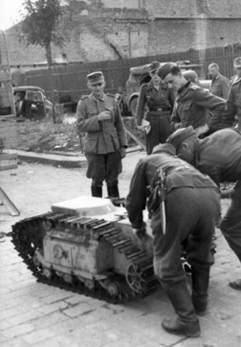
Fig. 24: German infantrymen deploying the “Goliath,” a miniature tracked vehicle loaded with explosives, against Polish insurgents in Warsaw, August 1944. Photographer: Götze, PK KBZ HG Mitte (BArch, Image 101I-895-0412-19/Götze/CC-BY-SA)

As the severe defeats suffered on all fronts from 1942 onward made it increasingly difficult to report on the heroic deeds of German soldiers and officers, the introduction of new weapons systems came to the forefront of PK reporting. [203] This likely also applies to many PK and SS-PK photographs of the fighting against the Polish insurgents in Warsaw in 1944, which focused the viewer’s attention not so much on the individual men as on the weapons they were using (Fig. 24). [204]

This also made it easier to conceal from the public the high proportion of non-German “auxiliary troops” [“HIlfstruppen”] wearing German uniforms.

Summary

As can be seen from the above, PK photographs depict only what is visible. However, since not all historically relevant events were or are visible, their analysis and interpretation should, as in art history, draw on additional textual and visual sources that shed light on the extent to which the conditions under which these images were created and how their contemporary uses limited the manner of visualization and the visibility of certain phenomena. In addition, their “intended iconography” must be taken into account, which can also be reconstructed by consulting contemporary textual and visual sources – such as relevant instructions and contemporary photopublishing. Such a reconstructive approach clearly reveals that the purpose of PK photographs taken during combat operations in the eastern theaters of war was not merely to report on the war and glorify the Wehrmacht, but also to construct images of the enemy.

As early as 1939, the German press was instructed by the RMVP to portray the population of the multi-ethnic society in the occupied Polish territories as “subhumans”. In 1941, the RMVP combined previously established patterns of anti-Semitic visual propaganda with an “anti-Bolshevik” visual program that had been temporarily suspended from 1939 to 1941. All of these elements of visual war propaganda presupposed the National Socialist racial ideology as the receptive context of the PK photography. In the eastern war zones, it facilitated and supported the Holocaust and the destruction of multiethnic societies in pursuit of a utopia already outlined in Hitler’s programmatic writings prior to 1933: the establishment of a colonial empire in the East, in which masses of impoverished “foreign peoples” [“Fremdvölkischer”] were to serve a minority of “Nordic” master races [“Herrenmenschen”]. [205]

Well before 1933, the NSDAP had clearly articulated the worldview that underpinned its violent assault on “foreign peoples” in the anti-Marxist slogan “Race instead of class” [“Rasse statt Klasse“]. Since the invasion of Poland, this motivation for action has been reflected in the criminal conduct of the German occupying power toward the members of a multiethnic society, which had now been divided into various “ethnic groups” [“Volksgruppen”]. This process of division and segregation within the multi-ethnic state of Poland – justified by racial ideology and hygienic-medical requirements – can be better understood through the photojournalism [Fotopublizistik] in the IKP than through media products intended for the German-speaking public.

While the construction of a racially ideologically based enemy image in German-occupied Polish territory up until 1941 through the work of the PK photographers – and in particular the SS-PK photographers – was largely limited to Jews, the visual defamation of all multiethnic societies in Central, Southeastern, and Eastern Europe – legitimized by the racial ideology of the “ethnic state” [“völkischen Staat”] – gained prominence through the visual imagery produced by the PK, with the invasion of the Soviet Union in 1941. This defamation became increasingly evident, at least from 1941 onward, in a deliberate exaggeration of the “filthy”, “animalistic”, and “Asian” in the “intended iconography” used to visually depict Soviet soldiers and civilians. [206] Systematic comparisons between complete series of PK photographs from the eastern war zones and their contemporary contexts of use in photopublishing under National Socialist rule can reveal just how great the discrepancy could be between the ethnic-racial [völkisch-rassischen] enemy stereotypes that were to be created and the visible realities encountered on the ground. The PK photographers had to bridge this discrepancy in order to comply with the instructions of the RMVP and the Wehrmacht Propaganda Department [Abteilung Wehrmachtpropaganda] at the OKW. [207]

A comparison of the PK photographs taken in German-occupied Poland with written sources and photographic sources from other producers shows that the PK’s photojournalism not only ignored the occupation’s terror against the civilian population and the industrialized extermination of “the mentally ill”, Jews, “Gypsies”, and Soviet prisoners of war, but also accompanied and supported these crimes through a visual program grounded in racial ideology, which gained its effectiveness not through individual images but primarily through the repetition of certain visual formulas and their mass reproduction. Any visualization of the events in occupied Poland from 1939 to 1945 that takes a critical approach to image sources will therefore not be able to rely solely on PK footage.

Of transnational significance is, first and foremost, the emergence of PK photographs in connection with a state crime of a scale previously unknown. In this context, when examining the photographs produced by the German Wehrmacht’s PK from a source-critical perspective, the question – formulated here in stark terms – must be asked to what extent they captured these crimes in images or whether they were produced with the intent of facilitating these crimes.

—-

Footnotes

[1] AHLRICH MEYER: Der Blick des Besatzers. Propagandaphotographie der Wehrmacht aus Marseille 1942-1944, Bremen 1999, p. 16.

[2] ANNIKA WIENERT: Tagungsbericht Bilderwelten. Fotografie, Film und künstlerische Bildproduktion in den nationalsozialistischen Lagern und Ghettos und deren Rezeption. 11.02.2011-13.02.2011, Neuengamme, in: H-Soz-u-Kult, March 7, 2011, http:// hsozkult.geschichte.hu-berlin.de/tagungsberichte/id=3566 (accessed March 16, 2011).

[3] See JENS JÄGER: Fotografiegeschichte(n). Stand und Tendenzen der historischen Forschung, in: Archiv für Sozialgeschichte 48 (2008), pp. 511–537.

[4] MIRIAM Y. ARANI: Die fotohistorische Forschung zur NS-Diktatur als interdisziplinäre Bildwissenschaft, in: Zeithistorische Forschungen 5 (2008), 3, pp. 387–412, here p. 393 (with detailed bibliographical references on the history of research), http://www.zeithistorischeforschungen.de/site/40208871/default.aspx (accessed on March 16, 2011).

[5] See W obiektywie wroga. Niemieccy fotoreporterzy w okupowanej Warszawie 1939-1945 = Im Objektiv des Feindes. Die deutschen Bildberichterstatter im besetzten Warschau, edited by CEZARY KRÓL and DANUTA JACKIEWICZ, Warsaw 2009.

[6]  MIRIAM Y. ARANI: Fotografische Selbst- und Fremdbilder von Deutschen und Polen im Reichsgau Wartheland 1939-45. Unter besonderer Berücksichtigung der Region Wielkopolska, Hamburg 2008 (Schriftenreihe Schriften zur Medienwissenschaft, 19).

[7] OLIVER SANDER: Deutsche Bildberichter in Polen, in: W obiektywie wroga (as in note 5), pp. 31–47, here p. 32. See also the online finding aids and publications of the Federal Archives at http://www.bundesarchiv.de/ and http://www.bild.bundesarchiv.de/ (accessed on March 16, 2011). In December 2008, the Federal Archives made approximately 100,000 historical photographs from various periods of German history available to the online encyclopedia Wikipedia under a standard license for free use and redistribution. The archive designations of such licensed PK photographs are marked below with the suffix “CC-BY-SA.”

[8]  http://bpkgate.picturemaxx.com/ (accessed on March 16, 2011).

[9] See Verbrechen der Wehrmacht. Dimensionen des Vernichtungskrieges 1941-1944, ed. by ULRIKE JUREIT, Hamburg 2002; Genesis des Genozids. Polen 1939-1941, edited by KLAUS-MICHAEL MALLMANN et al., Darmstadt 2004 (Veröffentlichungen der Forschungsstelle Ludwigsburg der Universität Stuttgart, 3); “Grösste Härte …” Verbrechen der Wehrmacht in Polen September/Oktober 1939. Exhibition catalog, edited by JOCHEN BÖHLER, Osnabrück 2005.

[10] See NORMAN DAVIES: : Europe at War 1939-1945. No Simple Victory, London 2006, pp. 19 ff., 24 ff., 71 ff., 94, 364–367.

[11] WOLF BUCHMANN: “Woher kommt das Photo?” Zur Authentizität und Interpretation von historischen Photoaufnahmen in Archiven, in: Der Archivar 59 (1999), 4, pp. 296–306, http://www.archive.nrw.de/archivar/hefte/1999/Archivar_1999-4.pdf (accessed on March 16, 2011).

[12] BERND BOLL: Das Bild als Waffe. Quellenkritische Anmerkungen zum Foto- und Filmmaterial der deutschen Propagandatruppen 1938-1945, in: Zeitschrift für Geschichtswissenschaft 54 (2006), pp. 974–998, here pp. 974–975. Most recently on the history and function of propaganda units, see DANIEL UZIEL: The Propaganda Warriors: The Wehrmacht and the Consolidation of the German Home Front, New York 2008; see the review by EUGENIA C. KIESLING, in: Michigan War Studies Review, April 2, 2009, http://www.michiganwarstudiesreview.com/2009/20090402.asp (accessed December 1, 2010).

[13] Many members of the propaganda troops returned to their former professions after 1945 and concealed their previous roles from the postwar public. For example, in 1951 Günther Heysing founded a veterans’ organization of the propaganda troops in Hamburg called “Wildente”, which aimed to portray the propaganda units and the Wehrmacht as separate from the Nazi regime, according to DANZIEL UZIEL: Propaganda, Kriegsberichterstattung und die Wehrmacht. Stellenwert und Funktion der Propagandatruppen im NS-Staat, in: Die Kamera als Waffe. Propagandabilder des Zweiten Weltkrieges, ed. by RAINER ROTHER and JUDITH PROKASKY, Munich 2010, pp. 13–36, here pp. 29 ff.

[14] BOLL (as in note 12), pp. 988, 996.

[15] WINFRIED RANKE: Fotografische Kriegsberichterstattung im Zweiten Weltkrieg. Wann wurde daraus Propaganda? in: Fotogeschichte 12 (1992), 43, pp. 60–73, here pp. 61–67 and 70 ff.

[16] MEYER (as in note 1), p. 17.

[17] HASSO VON WEDEL: Die Propagandatruppen der deutschen Wehrmacht, Neckargemünd 1962 (Die Wehrmacht im Kampf, 34), p. 37; and, in contrast, MEYER (as in note 1), p. 35; SANDER (as in note 7), p. 37.

[18] VON WEDEL (as in note 17), p. 148, and, in contrast, ARANI, Fotografische Selbst- und Fremdbilder (as in note 6), pp. 576 ff.

[19] See BOLL (as in note 12), p. 996; UZIEL (as in note 12), pp. 14 ff.; ARANI, Fotografische Selbst- und Fremdbilder (as in note 6), pp. 217 ff., 228–231, 247 ff.

[20] “Every artifact […] can only be interpreted and understood in terms of the meaning that human action (which may have very different objectives) imparted (or sought to impart) to the production and use of that artifact; without reference to this meaning, it would remain entirely incomprehensible.” MAX WEBER: Soziologische Grundbegriffe, München 1984, p. 22; cf. ARANI, Fotografische Selbst- und Fremdbilder (as in note 6), pp. 90–109, esp. pp. 102 ff.

[21] See ARANI, Die fotohistorische Forschung (as in note 4), and the same author: Fotografien als Objekte – die objektimmanenten Spuren ihrer Produktions- und Gebrauchszusammenhänge, in: Das Objekt Fotografie – „schön und nützlich zugleich“, ed. by IRENE ZIEHE and ULRICH HÄGELE, Münster 2006 (Visual Culture, 2), pp. 29–43.

[22] JAN BIAŁOSTOCKI: Skizze der beabsichtigten und der interpretierenden Ikonographie, in: Ikonographie und Ikonologie. Theorien, Entwicklung, Probleme, ed. by EKK-HARD KAEMMERLING, 4th ed., Cologne 1987, pp. 15–63.

[23]  UZIEL (as in note 12), p. 14.

[24]  Ibid., pp. 13, 28 ff.

[25]  As cited in BOLL (as in note 12), p. 977.

[26] PETER LONGERICH: Nationalsozialistische Propaganda, in: Deutschland 1933-1945. Neue Studien zur nationalsozialistischen Herrschaft, ed. by KARL DIETRICH BRACHER, 2nd expanded ed., Bonn 1993 (Schriftenreihe Bundeszentrale für Politische Bildung, 314), pp. 291–314.

[27] EUGEN HADAMOVSKY: Propaganda und nationale Macht, Oldenburg 1933, p. 22.

[28] UZIEL (as in note 12), pp. 16 ff.

[29] Quoted in SANDER (as in note 7), p. 33; MEYER (as in note 1), p. 30.

[30] Cf. BOLL (as in note 12), p. 977; SANDER (as in note 7), pp. 32 ff.; UZIEL (as in note 12), p. 16.

[31] See BOLL (as in note 12), p. 978; UZIEL (as in note 12), pp. 17 ff. Excerpts from a corresponding publication by HASSO VON WEDEL titled “Wehrmacht und Partei” (1938) are reprinted in: Das Dritte Reich und seine Diener, ed. by LÉON POLIAKOV and JOSEF WULF, Munich, etc., 1978, pp. 421 ff.

[32] BOLL (as in note 12), pp. 979–982.

[33] According to an agreement dated July 26, 1940, the RMVP Department of Reich Defense [RMVP-Referat Reichsverteidigung] was responsible for this; see BOLL (as in note 12), p. 978.

[34] According to UZIEL (as in note 12), p. 26, this recruitment system continued well into the war.

[35] DORIS KOHLMANN-VIAND: NS-Pressepolitik im Zweiten Weltkrieg. Die „vertraulichen Informationen“ als Mittel der Presselenkung, Munich, et al., 1991 (Kommunikation und Politik, 23), pp. 37–40, 43–52, reconstructs the organizational process as follows: The RPA at the headquarters of the respective General Command [Generalkommando], in cooperation with the NSDAP Gau leadership [NSDAP-Gauleitung], compiled lists of eligible journalists. The lists of nominees were then forwarded to the Reich Defense Department [Reichsverteidigungsreferat] of the RMVP, where they were reviewed and supplemented. Subsequently, the nominated journalists were screened once again by the staff of the “Führer’s” deputy to ensure their political reliability.

[36] In each military district command, a Wehrmacht propaganda officer subordinate to Dept. WPr IIc [Abt. WPr IIc] had been assigned to the senior leadership; according to UZIEL (as in note 12), p. 27 ff.

[37]  BOLL (as in note 12), p. 979.

[38]  UZIEL (as in note 12), p. 27.

[39] See ARANI, Fotografische Selbst- und Fremdbilder (as in note 6), pp. 255, 257 ff.

[40] The term “press instructions” [“Presseanweisungen”] refers to the following collections of sources: the notes taken by two journalists at the “Reich Press Conference” [“Reichspressekonferenz”] (BArch, Zsg 101: Brammer Collection; BArch, ZSg 102: Slg. Sänger), the telegrams containing instructions from the “Reichspressekonferenzen” to the Reich Propaganda Offices [Reichspropagandaämter] (BArch, Zsg. 109: Slg. Oberheitmann), and Goebbels’ minutes from the ministerial conferences of 1939–1945.

[41] From the start of the war, ministerial conferences chaired by Goebbels were held daily at the RMVP; see: Kriegspropaganda 1939-1941, ed. by WILLI A. BOELCKE, Stuttgart 1966; Wollt Ihr den totalen Krieg? Die geheimen Goebbels-Konferenzen 1939-1945, ed. by the same author, Stuttgart 1967.

[42] See ARANI, Fotografische Selbst- und Fremdbilder (as in note 6), p. 280 ff.; JÜRGEN HAGEMANN: Die Presselenkung im Dritten Reich, Bonn 1970, pp. 95, 242, 288.

[43] See BOLL (as in note 12), p. 979; see also: Die Gleichschaltung der Bilder. Zur Geschichte der Pressefotografie 1930–1936, ed. by DIETHART KERBS et al., Berlin 1983.

[44] See VON WEDEL (as in note 17), pp. 2, 18 ff.; BOLL (as in note 12), p. 977; UZIEL (as in note 12), p. 15.

[45] BArch RH 19 XVI/8, pp. 102–109; cf. (by contrast) UZIEL (as in note 12), p. 17, based on ORTWIN BUCHBENDER: Das tönerne Erz. Deutsche Propaganda gegen die Rote Armee im Zweiten Weltkrieg, Stuttgart 1978, p. 19. These first five companies – PK 521, 537, 549, 558, and 570 – were assigned new numbers shortly before the invasion of Poland: the leading digit 5 was replaced by a 6.

[46] UZIEL (as in note 12), p. 18.

[47] VON WEDEL (as in note 17), p. 17.

[48] See BOLL (as in note 12), p. 989.

[49] Operational reports of PK 637 from the fall of 1939, BArch, Bild, Army Supplementary Volume to Collection 101I, pp. 45–56. As evidenced by the information compiled by UTE WROCKLAGE for the DVD: Verbrechen der Wehrmacht. Dimensionen des Vernichtungskrieges 1941-1944, published by the HAMBURGER INSTITUT FÜR SOZIALFORSCHUNG, Hamburg 2004, regarding PK photographer Johannes Hähle, photo reporters in the propaganda companies held at least four different military ranks (Sonderführer, Gefreiter, Leutnant, Unteroffizier); see DVD at the following path: Topics & Content/Topic Selection/3. Genocide/PC Station/Babi Yar/The Photographer (facsimile of the initial report on images and reports from PK 637 dated September 30, 1941).

[50] According to SANDER (as in note 7), pp. 31 ff., the units in question were as follows: in the Heeresgruppe Nord: PK 501 and PK 689; in the Heeresgruppe Süd: PK 621, PK 637, and PK 670; in the Luftflotte: Lw-PK 1 and Lw-PK 2, as well as Luftwaffen-Kommando Ostpreußen und Luftwaffen-Propaganda-Zug Ostpreußen; in the Navy: 1. Marine PK Ost. Cf., with some deviations, ARANI, Fotografische Selbst- und Fremdbilder (as in note 6), p. 572 ff.

[51] See SANDER (as in note 7), p. 32; UZIEL (as in note 12), p. 19. The PEA was later renamed the Propaganda Training Department (PAA).

[52] See VON WEDEL (as in note 17), pp. 53 ff.; UZIEL (as in note 12), p. 19.

[53] UZIEL (as in note 12), p. 20.

[54] BOLL (as in note 12), p. 987.

[55]  See UZIEL (as in note 12), p. 20.

[56] Ibid., p. 20.

[57] See MARTIN MOLL: Die Abteilung Wehrmachtpropaganda im Oberkommando der Wehrmacht: Militärische Bürokratie oder Medienkonzern?, in: Bürokratien. Initiative und Effizienz, ed. by WOLF GRUNER and ARMIN NOLZEN, Berlin 2001 (Beiträge zur Geschichte des Nationalsozialismus, 17), pp. 111–150, here pp. 129–130; BOLL (as in note 12), p. 979; SANDER (as in note 7), p. 33; UZIEL (as in note 12), p. 20.

[58] UZIEL (as in note 12), p. 20 ff.

[59] See SANDER (as in note 7), p. 32, and UZIEL (as in note 12), p. 18 ff.

[60] BOLL (as in note 12), p. 984.

[61] Ibid., p. 986.

[62] SANDER (as in note 7), p. 38.

[63] See ibid., pp. 31, 38. For more information on the photograph shown here, see also: BArch, Image 146-1979-056-18A/CC-BY-SA; BArch, Image 183-E10457/CC-BY-SA and -E10458/CC-BY-SA.

[64] UZIEL (as in note 12), p. 21; ARANI, Fotografische Selbst- und Fremdbilder (as in note 6), p. 580.

[65] The regulations in the “annexed eastern territories” [„eingegliederten Ostgebieten“] and the “General Government” [„Generalgouvernement“] differed; see, on Greater Poland [Großpolen]: ARANI, Fotografische Selbst- und Fremdbilder (as in note 6), pp. 440–448, and on the General Government [Generalgouvernement]: Ibid.: Aus den Augen aus dem Sinn? Publizierte Fotografien aus dem besetzten Warschau 1939 bis 1945, in: Fotogeschichte 17 (1997), 65, pp. 33–58 (Part 1) and 18 (1997), 66, pp. 33–50 (Part 2).

[66] See BOLL (as in note 12), p. 994; ROLF SACHSSE: Die Erziehung zum Wegsehen. Fotografie im NS-Staat, Dresden 2003, p. 349; BArch RH 20-8/167: OKW to PK 649, Sept. 11, 1939; BArch RW 4/185, Bl. [fol.] 215: OKW and RMVP to all PK, Oct. 13, 1939.

[67] Beginning on August 1, 1941, responsibility for this fell to the newly established Photo Press Office [Bildpresseamt], a subordinate agency of the RMVP, which by 1943 had over one million PK photographs and an unspecified number of confiscated photographs from abroad; BOLL (as in note 12), p. 995; SACHSSE (as in note 66), p. 257 ff.

[68] BOLL (as in note 12), p. 983; SANDER (as in note 7), pp. 34 ff.

[69] Quoted from SANDER (as in note 7), p. 37.

[70] BOLL (as in note 12), p. 979.

[71] SANDER (as in note 7), p. 37.

[72] BOLL (as in note 12), p. 985.

[73] As quoted in SANDER (as in note 7), p. 37.

[74] As quoted in BOLL (see note 12), p. 992.

[75] See BArch Image 101I-010-0919-39/CC-BY-SA, June 21, 1941, Photographer: Georg Schmidt, PK 621.

[76] GEORG SCHMIDT-SCHEEDER: Reporter der Hölle. Propagandakompanien im 2. Weltkrieg, Stuttgart 1977, pp. 152, 162 ff., and 166, as cited in BOLL (see note 12), p. 992.

[77] A “good photo series” was considered the highest achievement of a PK photographer; see SACHSSE (as in note 66), p. 363.

[78] BOLL (as in note 12), p. 988.

[79] See SANDER (as in note 7), p. 34.

[80] Ibid., p. 33, note 33.

[81] Ibid., note 16.

[82] Quoted from BOLL (as in note 12), p. 990.

[83] Cf. ibid., p. 983.

[84] Ibid., p. 985.

[85] SANDER (as in note 7), p. 33; cf. SACHSSE (as in note 66), p. 343.

[86] BOLL (as in note 12), pp. 983, 986; VON WEDEL (as in note 17), pp. 20 ff.

[87] See BOLL (as in note 12), p. 982; BERND WEISE: Pressefotografie als Medium der Propaganda im Presselenkungssystem des Dritten Reiches, in: Gleichschaltung der Bilder (as in note 36), pp. 141–155, here pp. 148 ff.

[88] See BOLL (as in note 12), p. 983. The photo news agencies [Bildnachrichtenbüros] were subject to the “Reich Press Chamber” [“Reichspressekammer”] and were subject to similar state intervention as publishing houses; ARANI, Fotografische Selbst- und Fremdbilder (as in note 6), pp. 255, 259 ff.

[89] The accompanying notes [Begleitzettel] for the PK images distributed by the photo news agencies [Bildnachrichtenbüros] contained the accompanying text edited by the RMVP and, where applicable, additional instructions to the press editorial staff, the date the image was released, the name of the PK photographer and the photo news agency [Bildnachrichtenbüro], as well as the serial numbers assigned by the agency; see ARANI, Fotografische Selbst- und Fremdbilder (as in note 6), figs. III.30 and III.37.

[90] SACHSSE (as in note 66), p. 342 ff.

[91] ARANI, Fotografische Selbst- und Fremdbilder (as in note 6), pp. 212 ff. and 215, figs. III.36–37, as well as BArch, image 183-2008-0415-505/Fremke/CC-BY-SA (with contemporary markings retouched into the image to delineate the section to be published).

[92] SANDER (as in note 7), p. 33.

[93] SACHSSE (as in note 66), pp. 354–357.

[94] See the cases of Artur Grimm, Gerhard Gronefeld, and Johannes Hähle, whose PK photographs have been preserved in part through private or private-sector channels.

[95] MEYER (as in note 1), p. 30 ff.; SANDER (as in note 7), p. 38.

[96] SANDER (as in note 7), p. 39, notes 61–63 (with title references). As part of its support for the troops, each PK distributed a front-line newspaper for the army to which it was assigned.

[97] BOLL (as in note 12), p. 987.

[98] SANDER (as in note 7), p. 40.

[99] See bibliographic references in SANDER (as in note 7), p. 39.

[100] Die Soldaten des Führers im Felde. Raumbildalbum, edited by HASSO VON WEDEL and HEINRICH HANSEN, Munich 1939.

[101] SACHSSE (as in note 66), p. 352 ff.; SANDER (as in note 7), p. 39; BArch, Image 183- L02529/CC-BY-SA.

[102] According to BOLL (as in note 12), p. 990.

[103] Retouching on a paper print of a photograph, as opposed to retouching on the photographic negative film or glass plate.

[104] BArch, Image 101I-380-0075-15; ALEXANDER ZÖLLER: Soldaten oder Journalisten? Das Image der Propagandakompanien zwischen Anspruch und Wirklichkeit, in: Die Kamera als Waffe (as in note 13), pp. 167–179, here pp. 175 ff.

[105] Ibid., pp. 172–176.

[106] On the legal press in occupied Poland: LUCJAN DOBROSZYCKI: Die legale polnische Presse im Generalgouvernement 1939-1945, Munich 1977; LARS JOCKHECK: Propaganda im Generalgouvernement. Die NS-Besatzungspresse für Deutsche und Polen 1939-1945, Osnabrück 2006 (Einzelveröffentlichungen des Deutschen Historischen Instituts Warschau, 15).

[107] DOBROSZYCKI (as in note 106), pp. 65 ff., 113–117.

[108] Ibid., pp. 93, 95; JOCKHECK (as in note 106), p. 123.

[109] JOCKHECK (as in note 106), pp. 116, 129 ff.

[110] Ibid., p. 92; JOCKHECK (as in note 106), pp. 94 ff.

[111] In late October 1939, Hans Frank and Goebbels agreed to destroy all Polish mass media; DOBROSZYCKI (as in note 106), p. 61.

[A.d.Ü.: Diese zwei Fußnoten (110 und 111) sind aufgrund der anderen Satzstellung im Englischen anders nummeriert als im Originaltext.]

[112] JOCKHECK (as in note 106), pp. 69–79, 348 ff.

[113] Ibid., p. 130.

[114] The IKP was published biweekly starting on February 25, 1940, and weekly starting on October 6, 1940. I was able to examine this magazine thanks to a Feldmann travel grant from the DGIA Foundation.

[115] JOCKHECK (as in note 106), p. 121.

[116] For an example of the iconography, see the double-page spread titled “Czerwone gwiazdy z raju sowieckiego” [Red Stars from the Soviet Paradise] and illustrated with drawings in IKP, Vol. 2, No. 44, October 2, 1941, pp. 4–5. Beyond its connection to anti-Semitic elements, this “anti-Bolshevik” propaganda portraying enemies [Feindbildpropaganda] was part of a broader pattern within the IKP of consistently racist depictions of non-European “peoples” [“Völker”]; see, for example, IKP, vol. 2, no. 7, dated February 16, 1941, pp. 8–9 (Haiti) and No. 42 of October 19, 1941, p. 13 (India).

[117] Jews in German-occupied Poland were depicted in photographs in only two issues from 1940: IKP, Vol. 1, No. 1, dated February 25, 1940, p. 5 (single photograph), and No. 27, dated December 15, 1940, p. 12 (photo essay “Warszawskie Ghetto”).

[118] For example: IKP, Vol. 2, No. 12, March 23, 1941, pp. 2–3; No. 19, May 11, 1941, pp. 4–5; No. 31, August 3, 1941, p. 12; No. 33, August 17, 1941, p. 6; No. 40, October 5, 1941, pp. 8–9. Americans were predominantly represented visually by scantily clad showgirls.

[119] This corresponds to the main trends in anti-Semitic propaganda within the National Socialist controlled press during the war years, as described by HAGEMANN (see note 42).

[120] The 1943 edition could not be examined.

[121] Such unlabeled PK photos, depicting German troops, their successes, their enemies, and their prisoners of war, were found in the IKP for the years 1940 and 1941 in: Vol. 1, No. 7, May 19, 1940, pp. 6–7; No. 8, June 2, 1940, p. 7; No. 9, June 16, 1940, pp. 2–5; No. 10, June 30, 1940, pp. 2–3; No. 16, September 22, 1940, pp. 8–9; Vol. 2, No. 3, January 19, 1941, pp. 2–3; No. 10, March 9, 1941, pp. 4–5; No. 15, April 13, 1941, pp. 4–5; No. 19, May 11, 1941, pp. 4–5; No. 20, May 18, 1941, pp. 12–13; No. 24, June 15, 1941, pp. 4–5; No. 27, July 6, 1941, pp. 2–3, 7; No. 28, July 13, 1941, p. 1 (cover), pp. 2–5; No. 29, July 20, 1941, p. 1 (cover), 4–5, 7; No. 30, July 27, 1941, pp. 2–5; No. 31, August 3, 1941, p. 2; No. 33, August 17, 1941, p. 1 (cover), 2–5 (including Waffen-SS), 8–9; No. 34, August 24, 1941, pp. 2–5; No. 35, August 31, 1941, pp. 4–5, 7, 12; No. 36, September 7, 1941, pp. 2–3; No. 37, September 14, 1941, pp. 4–7; No. 38, September 21, 1941, pp. 2–5; No. 39, September 28, 1941, pp. 2–3, 5; No. 40, October 5, 1941, p. 1 (cover photo), 2–3, 4 (exceptionally explicit mention of the PK photographers Dietrich and G. Schmidt), 8–9; No. 44, October 2, 1941, pp. 2–3; No. 46, November 16, 1941, pp. 1 (cover), 2–5; No. 48, November 30, 1941, p. 1 (cover).

[122] See DIETHART KERBS, WALTER UKA: Beispiele nationalsozialistischer Bildpublizistik, in: Gleichschaltung (as in note 43), pp. 160–171, here pp. 164–171.

[123] See “Noch vor einem Jahr … und heute!” Photo essay by Hilmar Pabel on the Reichsgau Wartheland, in: Illustrierter Beobachter, August 15, 1940, pp. 820–821.

[124] Berliner Illustrirte Zeitung, July 17, 1941, pp. 764–765.

[125] See EDMUND DMITRÓW: Obraz Rosji i Rosjan w propagandzie narodowosocjalistów 1939-1945. Stare i nowe stereotypy [The Image of Russia and the Russians in National Socialist Propaganda, 1939–1945. Old and New Stereotypes], Warsaw 1997; Ibid.: Dehumanizacja obrazu wroga w propagandzie nazistowskiej na przykładzie broszury propagandowej “Der Untermensch” [The Dehumanization of the Enemy Image in National Socialist Propaganda: The Case of the Propaganda Pamphlet “Der Untermensch”], in: Rocznik Polsko-Niemiecki 6 (1997), pp. 91–114.

[126] See the DVD Vernichtungskrieg [War of Annihilation] (as in note 49), path: Themen & Inhalte/Themenauswahl/4. Sowjetische Soldaten in deutscher Gefangenschaft/PC-Station/Das Propagandabild/Antibolschewistische Propaganda im Nationalsozialismus und -/Das „Russenbild“ im Zweiten Weltkrieg. A contemporary “anti-Bolshevik” pictorial publication that conformed to these guidelines was: “Wohnkultur im Sowjetparadies” [“Home Life in the Soviet Paradise”] with seven photographs by SS-PK photographer Roth, in: Illustrierter Beobachter, September 7, 1941.

[127] Quoted from: Wollt ihr den totalen Krieg? (as in note 41), pp. 180–183.

[128] The caption in the IKP read: „‚Jestem przyjacielem Rothschilda‘/Tak wolał ten żyd do żołnierzy niemieckich, gdy go brali do niewoli. Ciekawe czy kapitalista Rotschild będzie wdzięczny za to, by taki plugawy żyd uważał go za swego przyjaciela.“ [“‘I am a friend of Rothschild.’ That is what this Jew shouted to the German soldiers when they took him prisoner. It is questionable whether the capitalist Rothschild will be grateful that such a filthy Jew considers himself his friend.”] The captions for the photographs published under National Socialist rule also followed the language guidelines of the secret press control [geheime Presselenkung], see HAGEMANN (as in note 42), p. 207 ff.

[129] See also other PK photographs of Jews in the territory occupied by Germany in 1941, such as the photo series by PK photographer Rudolf Kessler from Mogilev (Mahilëŭ) in Belarus: BArch, Image 101I-138-1083-3 [to -33]/CC-BY-SA and BArch, Image 101I-138-1084-02 [to -20]/CC-BY-SA; see also BUCHMANN (as in note 11).

[130] In a series of photographs taken by PK photographer Neumann (PK 691) in April 1941, depicting the roundup of Jews in Belgrade for forced labor (BArch, Image 101I-185-0112-03 to -38/CC-BY-SA), it is possible to see how the photographer, on the one hand, captured the “mass” of Jews rounded up for forced labor in wide shots (see BArch, Image 101I-185 -0112-07 to -11/CC-BY-SA) and, on the other hand, deliberately and repeatedly framed individual “types” in the shot (see BArch, Image 101I-185-0112-03, -05, -06, -17 to -19, -31, -32/CC-BY-SA). The defamatory intent of such medium and close-up shots of individual – in this case Jewish – “types” becomes particularly clear in the close-ups of individual facial “types,” understood at the time in “physiognomic” terms, featuring details intended to have a repulsive effect on later viewers: missing teeth, facial asymmetry, and the like. (see BArch, Image 101I-185-0112-20 to -24/CC-BY-SA).

[131] DVD Vernichtungskrieg [War of Annihilation] (as in note 49), Path: Pfad: Themen & Inhalte/Themenauswahl/4. Sowjetische Soldaten in deutscher Gefangenschaft/PC-Station/Das Propagandabild/ Die sowjetischen Kriegsgefangenen im Bild.

[132] See ARANI, Fotografische Selbst- und Fremdbilder (as in note 6), p. 353 ff.

[133] „Przy pomocy takich hord chciał Stalin opanować Europę, a Roosevelt i Churchill uznali ten plan za ‚bardzo podnoszący na duchu‘.“

[134] The caption for this photograph (Fig. 12) read: “Droga do niewoli. Trzej przedstawiciele pstrej mieszanej ludów Unii Sowieckiej, którzy poznali beznadziejność oporu, przechodzą z bronią w ręku na stroną niemiecką.” [“The Road to Captivity. Three representatives of the diverse peoples of the Soviet Union, having recognized the futility of resistance, are defecting to the German side with weapons in hand.”] The “Asians” depicted in German visual propaganda reflected the reality of the time inasmuch as numerous soldiers from Kazakhstan, Uzbekistan, and Tajikistan were indeed serving in the Red Army. For a “comparative viewing” of such images of “Asians” according to art-historical methodology – i.e., the identification of similarities and differences between two images through comparative observation of both – see ARANI, Objekt (as in note 21), pp. 30 ff. and illustrations on pp. 36, 39, and 41 – Barch, Image 146-1989-063-30A/Paris/CC-BY-SA is a good example.

[135] See, for example, DAVIES (as in note 10), p. 367; cf. BArch, Image 101I-006-2230-07/CC-BY-SA and -08/CC-BY-SA; BArch, Image 101I-217-0498-38/CC-BY-SA; BArch, Image 101I-187-0203-06A/CC-BY-SA; BArch, Image 146-1976-112-05A/CC-BY-SA; BArch, Image 183-L28726/CC-BY-SA and -L24469/CC-BY-SA.

[136] See UZIEL (as in note 12), p. 22.

[137] See the summary in SANDER (as in note 7), p. 34.

[138] Ibid., p. 37; see HAGEMANN (as in note 42), p. 286.

[139] UZIEL (as in note 12), p. 23.

[140] See MEYER (as in note 1), pp. 30–31.

[141] Boll (as in note 12), pp. 980 ff.; cf. JÜRGEN SCHRÖDER: Der Kriegsbericht als propagandistisches Kampfmittel der deutschen Kriegsführung im Zweiten Weltkrieg, Berlin 1965, p. 35 ff., and BArch, Image 146-1979-050-21A/CC-BY-SA; BArch, Image 183- E10713/CC-BY-SA.

[142] The fact that the German side had been planning a war of aggression against Poland since the spring of 1939 was to be concealed from the public. The RMVP issued instructions to date the start of the war not as September 1, but as September 3, 1939; see HAGEMANN (as in note 42), pp. 199 ff., 255, 265; cf. Nazi propaganda poster “Anglio! Twoje dzieło” [England! Your Work!] by Theo Matejko, Narodowe Archiwum Cyfrowe, ref. no. 37-242-1, and this poster in a contemporary PK photograph: W obiektywie wroga (as in note 5), p. 257.

[143] See ARANI, Fotografische Selbst- und Fremdbilder (as in note 6), pp. 573 ff., BArch RH 45/2 (family tree of PK 689) and BArch, Image 101I/Volume 121.

[144] For a detailed discussion of the sources and contemporary Bildpublizistik [image publications], see ARANI, Fotografische Selbst- und Fremdbilder (as in note 6), pp. 175–225; Ibid.: Wie Feindbilder gemacht wurden. Zur visuellen Konstruktion von „Feinden“ am Beispiel der Fotografien der Propagandakompanien aus Bromberg 1939 und Warschau 1941, in: Die Kamera als Waffe (as in note 13), pp. 150–163, here pp. 150–156; cf. SANDER (as in note 7), p. 35; BOLL (as in note 12), p. 981; SACHSSE (as in note 66), pp. 343 ff.

[145] EUGENIUSZ CEZARY KRÓL: Die Propaganda des Dritten Reiches gegenüber Polen und den Polen 1939-1945, in: W obiektywie wroga (as in note 5), pp. 15–30, here pp. 16 ff.; ARANI, Fotografische Selbst- und Fremdbilder (as in note 6), pp. 324 ff. A transcript of Press Directive [Pressenanweisung] No. 1306 (BArch Zsg 101/14) is reproduced in: W obiektywie wroga (as in note 5), p. 183; also cited in: HAGEMANN (as in note 42), p. 271, note 518, who excellently highlights the commanding nature of the RMVP’s “press directives,” which is absolutely necessary for understanding the nationalist system of press control.

[146] Quoted from HAGEMANN (as in note 42), p. 271.

[147] KRÓL (as in note 145), pp. 18 ff.

[148] Ibid., p. 20.

[149] Ibid., p. 21.

[150] SANDER (as in note 7), p. 36; BArch, Image 101I-030-0780-24, -25, -26, and -28/Kintscher/CC-BY-SA.

[151] ARANI, Fotografische Selbst- und Fremdbilder (as in note 6), p. 572; SACHSSE (as in note 66), p. 386, states that Artur Grimm was a member of a PK z.b.V. ObdH (zur besonderen Verwendung beim Oberbefehlshaber des Heeres – for special use by the Commander-in-Chief of the Army).

[152] W obiektywie wroga (as in note 5), pp. 194–199, 201. Some images from this photo series were published under the title “Waffen – in Gräbern versteckt! Der deutsche Sicherheitsdienst bei einer Razzia im Warschauer Getto“ in the Berliner Illustrierte Zeitung of Dec. 5, 1939, p. 1876; see also KLAUS HESSE: PK-Fotografen im NS-Vernichtungskrieg. Eine Bildreportage Artur Grimms aus dem besetzten Warschau 1939, in: Die Kamera als Waffe (as in note 13), pp. 137–149. The PK photographers did not capture the SS summary courts [SS-Standgerichte] that were used against non-Jewish civilians in occupied Poland in 1939. See, regarding the SS procedures in Poland that were specifically designed to create the appearance of “legality”: HANS-ERICH VOLKMANN: Verbrechen der Wehrmacht in Polen – Rahmenbedingungen und deutsche Nachkriegsrezeption, in: “Grösste Härte …” (as in note 9), pp. 24–38, here p. 30; DOROTHEE WEITBRECHT: Der Exekutionsauftrag der Einsatzgruppen in Polen, Filderstadt 2001 (Markstein diskursiv, 1), p. 50.

[153] BARBARA ENGELKING, JACEK LEOCIAK: Getto Warszawskie. Przewodnik po nieistniejącym mieście [The Warsaw Ghetto: A Guide to a Non-Existent City], Warsaw 2001, pp. 148 ff.

[154] The occupying forces demanded that Czerniaków submit a list of nominees for a “Judenrat” [“Jewish Council”] by October 13, 1939, and a list of all Jewish residents of Warsaw by October 28, 1939; ibid., p. 148.

[155] Ibid., p. 671. Starting on July 22, 1942, the “Judenrat” was to hand over 6,000 to 7,000 ghetto inmates daily for extermination.

[156] See UZIEL (as in note 12), p. 22.

[157] Ibid.; BOLL (as in note 12), pp. 984 ff.; HAGEMANN (as in note 42), p. 242, note 255; see also MEYER (as in note 1), pp. 90, 117, 140.

[158] As quoted in SANDER (as in note 7), p. 35.

[159] See ARANI, Fotografische Selbst- und Fremdbilder (as in note 6), pp. 420–426.

[160] This likely refers to the northern part of the old town of Łódź and the Baluty district, where the occupying forces subsequently established a forced residential area for Jews; see JULIAN BARANOWSKI: Das Getto Litzmannstadt, in: Berliner Juden im Getto Litzmannstadt 1941-1944. Ein Gedenkbuch, ed. by INGO LOOSE, Berlin et al. 2009, pp. 32–43, here pp. 35 ff.

[161] Die Tagebücher von Joseph Goebbels, ed. by ELKE FRÖHLICH, vol. 7, Munich 1998, p. 177.

[162] The “Gesetz zum Schutz des deutschen Blutes und der deutschen Ehre” [“Law for the Protection of German Blood and German Honor”] of September 15, 1935, was extended to include additional groups of people by Section 6 of the first ordinance on this matter, dated November 14, 1935; see SAUL FRIEDLÄNDER: Das Dritte Reich und die Juden. Die Jahre der Verfolgung 1933-1939, Munich 2000, p. 170.

[163] For a visual representation of this ideologem, see: Deadly Medicine. Creating the Master Race, ed. by UNITED STATES HOLOCAUST MEMORIAL MUSEUM, Washington 2004, ill. p. 103 (cover image “Neues Volk” 1938) and p. 192 (Nazi propaganda poster by G. Peiler “Żydzi – wszy – tyfus plamisty” [Jews – Lice – Typhus] for the General Government), the latter also reproduced in: W obiektywie wroga (as in note 5), p. 271.

[164] BArch, Image 101I-131-0596-13/Knobloch; BArch, Image 101I-322-2470-28/Ohmayer/CC-BY-SA; BArch, Image 101I-030-0794-38A/Brenner/CC-BY-SA; BArch, Image 183-L24628/Brenner/CC-BY-SA.

[165] On the scientific systematization of racial-biological selection and exclusion criteria in occupied Poland, see ARANI, Fotografische Selbst- und Fremdbilder (as in note 6), pp. 420–426, 431–435, 470–473, with further references.

[166] See KRÓL (as in note 145), p. 20 ff.; Im Kampf gegen Besatzung und „Endlösung“. Widerstand der Juden in Europa 1939-1945, ed. by GEORG HEUBERGER, Frankfurt am Main, 1995.

[167] KRÓL (as in note 145), p. 20. Warsaw became a transportation hub for the Wehrmacht’s advance eastward.

[168] SANDER (as in note 7), p. 36.

[169] UZIEL (as in note 12), pp. 22–23.

[170] On this cf. most recently ARANI, Feindbilder (as note 144), pp. 156–161; same author, Abbild oder Trugbild? Deutsche Fotografien von Juden in Warschau 1939–1944, in: W obiektywie wroga (as note 5), pp. 48–57, here p. 52 f.; cf. UZIEL (as note 12), p. 22. The first major German-language publications on the photographs of PK 689 were: Fotografien aus dem Warschauer Ghetto, ed. by ULRICH KELLER, Berlin 1987 (Das Foto-Taschenbuch, 9); SYBIL MILTON, Argument oder Illustration. Die Bedeutung von Fotodokumenten als Quelle, in: Fotogeschichte 8 (1988), no. 28, pp. 61–90, here p. 79.

[171] SANDER (as in note 7), p. 35 ff.

[172] BArch, Image 183-L22986 and -L25517/Koch/CC-BY-SA.

[173] BArch, Image 101I-030-0766-08, -20, -26, and -32/Rössler/CC-BY-SA.

[174] BArch, Image 101I-019-1229-30, -31, -33, and -34/Hähle/CC-BY-SA.

[175] Cf. ARANI, Fotografische Selbst- und Fremdbilder (as note 6), pp. 848–851, 893, 901; TANJA KINZEL, Zwangsarbeit im Fokus. Drei fotografische Perspektiven aus dem Ghetto Litzmannstadt, in: Im Ghetto 1939–1945. Neuere Forschungen zu Alltag und Umfeld, ed. by CHRISTOPH DIECKMANN and BABETTE QUINKERT, Göttingen 2009 (Beiträge zur Geschichte des Nationalsozialismus, 25), pp. 171–204; Das Gesicht des Gettos. Bilder jüdischer Photographen aus dem Getto Litzmannstadt 1940–1944, ed. by STIFTUNG TOPOGRAPHIE DES TERRORS, Berlin 2010.

[176] On methodology cf. ARANI, Fotografische Selbst- und Fremdbilder (as note 6), pp. 86, 106.

[177] BARANOWSKI (as in note 160), p. 32.

[178] Ibid., p. 36.

[179] Deutsche Lodzer Zeitung, November 7, 1939, p. 3, cited in: Germanizacja Łodzi w nazistowskiej prasie z lat 1939-1943. Wybór artykułów – Die Germanisierung von Łódź im Spiegel der nationalsozialistischen Presse (1939-1943), edited by KRYSTYNA RADZISZEWSKA and JÜRGEN RIECKE, Łódź 2004, pp. 14 and 72.

[180] See ARANI, Fotografische Selbst- und Fremdbilder (as in note 6), pp. 425, 470–473.

[181] BArch, Image 101I-133-0747-12/CC-BY-SA. The photo shows the facade of a building on ul. Piotrowska – now renamed Adolf-Hitler-Straße – during its “renovation” by a German “non-profit housing association” [“Gemeinnützige Wohnungsbaugesellschaft mbH”]. The photograph is part of the BArch collection, Image 101I/Volume 133/Film 747, containing photographs by PK photographer Knobloch from Litzmannstadt; see ARANI, Fotografische Selbst- und Fremdbilder (as in note 6), p. 916. The archival caption for the image is inaccurate in one respect: Adolf-Hitler-Straße had been off-limits to Jews since November 1939 and was located outside the ghetto grounds; see BARANOWSKI (as in note 160), p. 34; Germanizacja Łodzi (as in note 179), pp. 14, 25.

[182] On the SS-PK photographers Schilf and Wisniewski, see SANDER (as in note 7), p. 36. The forced resettlement of the Jews of Łódź into the city area designated as the ghetto took place between February and April 1940; see BARANOWSKI (as in note 160), p. 35 ff.

[183] Ibid., p. 32.

[184] See BArch, Image 101I-012-0048-17/Falk/CC-BY-SA; BArch, Image 101I-001-251-34/Schulze/CC-BY-SA; BArch, Image 183-E10855/CC-BY-SA; BArch, Image 101III- Wisniewski-025-21A and -22/CC-BY-SA; BArch, Image 101I-030-0780-25, -26, and -28/Kintscher/CC-BY-SA.

[185] For an analysis of photographic sources from a proxemic and kinetic perspective, see ARANI, Fotografische Selbst- und Fremdbilder (as in note 6), p. 99.

[186] See MEYER (as in note 1), pp. 32–35, and, regarding the operationalization of the analysis, ARANI, Fotografische Selbst- und Fremdbilder (as in note 6), p. 101.

[187] Some of his photographs have already been published by KELLER (see note 170), pp. 12, 171–187; contact prints of the negative film containing the photographs from the Litzmannstadt ghetto: BArch, Image 101I/Volume 133/Film 703.

[188] As evidenced by the surviving fragments of the company’s mission reports, members of this propaganda unit took photographs in the ghetto on February 12, 1941, and September 20, 1941; see ARANI, Fotografische Selbst- und Fremdbilder (as in note 6), pp. 574, 916.

[189] BArch, Image 101I-133-0703-32/Zermin/CC-BY-SA.

[190] BArch, Image 101III-Schilf-003-20 and -21/CC-BY-SA; BArch, Image 101III-Wisniewski-025-17/CC-BY-SA. According to contemporary “racial science” training materials, “Jews” were recognizable by certain physical characteristics, including the nose. However, RUDOLF VIRCHOW had already concluded that such physical characteristics could not be used to distinguish them: “Gesamtbericht über die von der deutschen anthropologischen Gesellschaft veranlassten Erhebungen über die Farbe der Haut, der Haare und der Augen der Schulkinder in Deutschland” [“Comprehensive Report on the Surveys Commissioned by the German Anthropological Society Regarding the Color of the Skin, Hair, and Eyes of Schoolchildren in Germany”] in: Archiv für Anthropologie 16 (1886), pp. 275–282. I would like to thank Prof. Dr. Konrad Vanja for this information.

[191] See also additional individual frames from the contact-printed negative film by PK photographer Zermin: BArch, Image 101I/Volume 133/Film 703; BArch, Image 101I-133-0703-27 and -35/Zermin/CC-BY-SA.

[192] Individual frames from the contact-copied negative film: BArch, Image 101I/Volume 133/Film 719; BArch, Image 101I-133-0719-05, -07, and -16/Zermin/CC-BY-SA.

[193] BArch, Image 101I-134-0770-05; ARANI, Feindbilder (as in note 144), p. 160 ff.

[194] See DAVIES (as in note 10), pp. 208 ff.

[195] Cf. W obiektywie wroga (as in note 5), pp. 336, 339–357.

[196] Quoted from SACHSSE (as in note 66), p. 364.

[197] W obiektywie wroga (as in note 5), p. 337.

[198] Facsimile in: W obiektywie wroga (as in note 5), pp. 364 ff.

[199] See HAGEMANN (as in note 42), p. 182.

[200] From the very start of the war, captured Polish civilians were to be referred to not as “captured Poles” but as captured “Polish bandits”; cited in SACHSSE (as in note 66), p. 344.

[201] See W obiektywie wroga (as note 5), p. 336 f.

[202] Cf. ibid., p. 357.

[203] UZIEL (as note 12), p. 23.

[204] Cf. W obiektywie wroga (as note 5), pp. 342–349.

[205] KARL HEINZ ROTH, „Generalplan Ost“ und der Mord an den Juden. Der „Fernplan der Umsiedlung in den Ostprovinzen“ aus dem Reichssicherheitshauptamt vom November 1939, in: 1999. Zeitschrift für Sozialgeschichte des 20. und 21. Jahrhunderts 12 (1997), no. 2, pp. 50–70. CZESŁAW MADAJCZYK, Vom Generalplan Ost zum Generalsiedlungsplan. Dokumente, Munich et al. 1994 (Einzelveröffentlichungen der Historischen Kommission zu Berlin, 80). Der „Generalplan Ost“. Hauptlinien der nationalsozialistischen Planungs- und Vernichtungspolitik, ed. by MECHTHILD RÖSSLER and SABINE SCHLEIERMACHER, Berlin 1993 (Schriften der Hamburger Stiftung für Sozialgeschichte des 20. Jahrhunderts, 3).

[206] Research into PK photographs from the territory of the former Soviet Union is complicated by the fact that neither the soldiers of the Red Army nor the estimated total of 27 million dead on the Soviet side can be clearly distinguished into Jews, Poles, Balts, Belarusians, Ukrainians, Russians, and “Asians.” This clearly demonstrates how ill-suited the category of national identity is for the scholarly analysis of World War II in Eastern Europe; see DAVIES (as in note 10), pp. 207, 210, 367 ff.

[207] The division of labor in the production, distribution, and publication of the PK photographs “relieved” individuals of responsibility for the final media product and its consequences, which ultimately also made it possible to deny any individual responsibility for the Holocaust and war crimes.

About the author

Miriam Yegane Arani did her doctorate at the UDK in Berlin under the supervision of the photo historian Prof. Diethart Kerbs. Her work focuses on the survey and analysis of photo-historical materials from the NS period. Her dissertation dealt with the Reichsgau Wartheland, where the Nazis implemented “exemplary” oppressive measures against the native Polish population. Similar methods were soon to be used in the old Reich territories in an increased dimension against the antagonized parts of the German, especially the German Jewish population. In the “Reichsgau Wartheland”, a German administrative unit newly formed from previously Polish territories after the military occupation, the Nazi regime realized its population and settlement policy plans for Eastern Europe in an exemplary manner.

Dr. Miriam Yegane Arani, http://propagandaundwiderstand.de

Tierautonomie
Publisher: www.simorgh.de – ‘Society, conflict and the anthropogenic dilemma’. Revised 06/2026. This reader is published in context with the memorial fund dedicated to Miriam’s work by the Edition Farangis.

Citation
Y. Arani, Miriam (2026): The photographs of the German Wehrmacht’s Propaganda Companies as sources on the events in occupied Poland 1939–1945. TIERAUTONOMIE, 12 (3), http://simorgh.de/tierautonomie/JG12_2026_3.pdf.

TIERAUTONOMIE (ISSN 2363-6513)

Our new header is by C. 勒 / Pegi Freespeech.
Original: C. 勒 und Tschördy, Antispeziesismus und Kunst: zu Demarkationslinien, p. 21.
In: E-Reader: Gruppe Messel, Jahrgang 6, Nr. 3, 2024.
ISSN 2700-6905. Edition Farangis.
https://d-nb.info/1323615423
https://d-nb.info/1323615423/34

Revised 12 June 2026

© Edition Farangis 2026


Miriam Y. Arani: Photo-historical research on the National Socialist dictatorship as an interdisciplinary visual science

kts8

Jahrgang 10, Nr. 7, ISSN 2363-6513, Dezember 2024

Translation of: Miriam Y. Arani, Die fotohistorische Forschung zur NS-Diktatur als interdisziplinäre Bildwissenschaft, in: Zeithistorische Forschungen/Studies in Contemporary History 5 (2008), S. 387-412, URL: https://zeithistorische-forschungen.de/3-2008/4393 ; with the friendly permission of > Zeithistorische Forschungen / Studies in Contemporary History via Jan-Holger Kirsch. Translated by Gita Marta Yegane Arani for Tierautonomie, Edition Farangis, Usingen, 2024.

This text as a PDF

Photo-historical research on the National Socialist dictatorship as an interdisciplinary visual science

Miriam Y. Arani

  1. Beginnings of photo-historical research
  2. Research into photography of the Nazi era since the 1980s
  3. Images in the (digital) archive
  4. Which questions about the Nazi dictatorship can be answered by photos – and which cannot?

Archives have long included posters, photos and films in their collections because they consider them to be historically relevant. Under the Nazi regime, “new” mass media captivated the public: print media richly illustrated with photographs, radio, sound and color film. Only the medium of photography is dealt with here. It is often misunderstood as a “self-print of reality” – as if it were not also the artifact of people who procured a camera with film, selected the image section and pressed the shutter release at certain moments. The history of research into photography during the Nazi era is roughly outlined below as the subject of interdisciplinary studies. [1] An outline of the first photo-historical research during the Nazi regime itself and the more recent research paths since the 1980s is followed by a discussion of the special features of photographic sources, their archival indexing and digitization, as well as the possibilities of gaining knowledge in an interdisciplinary field of research.

  1. Beginnings of photo-historical research

The beginnings of German-language research into the history of photography have been recognizable since the early 1930s.[2] Walter Benjamin first published his “Kleine Geschichte der Photographie” in 1931 and the essay “Das Kunstwerk im Zeitalter seiner technischen Reproduzierbarkeit” in 1936. Two years later, he reviewed the photo-historical dissertation of his contemporary Gisèle (Gisela) Freund.[3] Both had already fled Germany because of their Jewish origins. Philological research on photography later favored Walter Benjamin’s approach to the aesthetics and theory of reception,[4] which, however, obscured what had connected him to Gisèle Freund before 1933: the scientific program of the Frankfurt Institute for Social Research, which became known as Critical Theory.

The social researchers’ shared experiences at the time included the spread of new mass media and their use by totalitarian systems, but also by commercial actors and interests in democracies. It was in this context that the first research on the then “new” media was conducted.[5]

Gisèle Freund achieved greater recognition in art studies than in literary studies and sociology. Her book “Fotografie und Gesellschaft”, initially published in France in 1974, was first published in German in 1976. In this overview of social uses of photography since its invention in 1839, she also included examples from the time of the Nazi dictatorship.[6] In her introduction, Freund wrote: “Photography plays a very important role in modern life. There is hardly any human activity that does not make use of it in one way or another. It has become indispensable to both science and industry. […] Every day it is spread across thousands of newspapers and magazines. Photography has thus become an everyday phenomenon. It is so much a part of social life that we no longer notice it because we see it all the time. Its characteristic feature is that it is equally accepted by all levels of society.“[7]

Gisèle Freund did not see photography as art – she emphasized its mass appeal and its acceptance across all social classes. Inspired by Norbert Elias, she used the examination of photography as an opportunity to analyze society. Her sociological approach to the history of photography implied a new methodology of empirical social research, which was to be based on the collection and analysis of data with and about photographs.[8] In contrast, as early as the 1930s, there was a national-historically oriented photographic historiography that was easily adopted by the Nazi state. In 1938, for example, Erich Stenger published his book “Die Photographie in Kultur und Technik” in Leipzig, in which he presented the history of photography as a national history of technical and cultural progress.

After the liberation of Germany in 1945, photographs played an important role in the Nazi trials, but they were mostly understood as objective depictions of reality, without their contexts of origin and their source value being problematized in the academic discussion of the time. The incipient historiographical research into the Nazi era concentrated predominantly on files and other written documents, while the social research based on photographic sources that Freund had suggested initially fell into oblivion.

  1. Research into photography of the Nazi era since the 1980s

Since the early 1980s, a number of art scholars have repeatedly published articles on photography from the Nazi era, including in particular Detlef Hoffmann, Diethart Kerbs, Ulrich Keller and Rolf Sachsse.[9] From the very beginning, research into the photographs taken under the Nazi regime raised the question of the connection between the surviving images, the ideology and the crimes. The aforementioned researchers pursued this question partly explicitly, partly implicitly; however, their answers could sometimes only be justified by the political conviction that the Nazi dictatorship had brought forth previously unimagined dimensions of crime and that the photos of that time should therefore be interpreted in this light.

Already since the 1980s, the American historian Sybil Milton had also been publishing on photographs of the Holocaust.[10] The fact that only a few historians attempted to use source criticism to assess photos at this time is demonstrated by an article by Ulrich Herbert from 1983, which problematized the illustrated books on the Nazi dictatorship that were commercially typically published at the time. Referring to such an illustrated book on “everyday life” in the “Third Reich”, Herbert asked pointedly: Referring to such an illustrated book on “everyday life” in the “Third Reich”, Herbert asked pointedly: “Is this how the Germans lived?” He came to the conclusion that the photos published in it continued the self-stylization of the Nazi regime uninterrupted.[11] Sybil Milton, on the other hand, emphasized that, with adequate methodological reflection, photographs certainly enable a gain in knowledge that cannot be achieved on the basis of written sources alone.[12]

In the 1980s, art historians researching photography under the Nazi regime not only analyzed individual images, but also asked about the specific contexts in which they were created and used at the time. This more comprehensive approach to the object of investigation lost importance in the 1990s, at least within art studies. Photographs now increasingly attracted the research interest of philologists, political scientists and historians, who developed other questions from an angle of their own disciplines.[13] Art historical research on photography during the Nazi dictatorship was increasingly limited to a person-centered analysis of the creation and significance of artistic photographs. This narrowing down to “work biographies” [Werkbiographien] of individual photographers with a legacy judged to be of higher aesthetic value can be understood as an adaptation to the form of presentation of artists’ vitae. The biographical approach means that the criminal character of the Nazi regime usually becomes marginal if no person persecuted by the Nazi state is at the center of the investigation.[14] The fact that German professional photographers successfully cooperated with the NSDAP despite their reservations about it was rarely discussed.[15]

Although no clear caesura is discernible in art historical research on photography under the Nazi regime in 1989/90, the question of the source value of photographs from the eastern sites of the Second World War gained in importance in the 1990s due to the political changes in Eastern Europe. The murder of the Jews of Europe carried out there had long stood in the shadow of the war, which had been visually trivialized and stylized as a “clean” war in the visual media of the Nazi state as well as in those of German post-war society.[16] In Germany, destroyed or chaotically privately handed down – also socially tabooed – image material from private “snappers” of violent acts committed by their own side in the war was purposefully collected in some archives of the “Eastern Bloc” in the post-war period in order to provide evidence of war and Nazi crimes – resulting in an almost complementary visual memory to that of the old Federal Republic.[17] Since the 1990s, these internationally different collective visual memories have increasingly been confronted with each other, sometimes in conflict.

The historiographical research into photographic and filmic representations of Nazi crimes that began in Germany at the end of the 1990s primarily highlighted their de-realization in post-war West German visual publishing.[18] The research was primarily limited to a history of the reception of images already published in Germany. The photographs of Nazi terror in occupied Europe that survived outside Germany thus remained largely “invisible” to the German public. One important exception, however, is the work of Hanno Loewy, who since 1989 has published previously unknown photographic sources on Jews in German-occupied Poland.[19] A few years ago, Janina Struk also presented general problems of determining the origin and transnational reception of photographs of the Holocaust.[20]

In particular, the publication of photos of war and Nazi crimes in Eastern Europe was long opposed in the old Federal Republic of Germany with the claim that they were “falsified” by “the communists” in order to simultaneously deny the crimes as such. This defensive strategy reached both its climax and its conclusion in the German-language controversies surrounding the first “Wehrmacht Exhibition”. The political disputes surrounding the exhibition, which had been escalating since 1997, took on the form of an academic debate about allegedly “faked” photos in 1999.[21] The most important methodological contribution during these controversies was formulated in 1999 by Wolf Buchmann, a senior archivist at the Federal Archives.[22] He had to take a stand on the issue because, apart from the media public, photos of the Wehrmacht propaganda companies from the Federal Archives that were shown in the exhibition had also been attacked as “forgeries”. Alongside the Hamburg Institute for Social Research, the largest archive in the Federal Republic of Germany was confronted with the accusation of disseminating “forged” photographs. In 1999, the two institutions jointly organized a symposium on photographs from the Second World War period, which formulated a groundbreaking resolution on the handling of photographic sources.[23]

The forgery allegations triggered a broader debate in German about the “correct” handling of photographs and led to a noticeable sensitization of historians and archives to this topic.[24] To date, there have been no systematic studies of photographs as sources on the Nazi era. There are also only isolated, scattered studies on the use of photography in the German-occupied countries during the war.[25] However, the source value of photographs of the propaganda companies is now distinctly questioned.[26] There were also an increasing number of articles on the private photography of Germans and their soldiers.[27] Around the turn of the millennium, there was a change in awareness in dealing with photographs of Nazi crimes in Germany and its neighboring countries. This can be seen, for example, in a recent Austrian exhibition catalog on photographic sources relating to the Mauthausen concentration camp, which allows a source-critical perception of the images: groups of photos are differentiated according to their respective contexts of origin, which are explained in short introductory texts.[28]

What relevance does the context in which photographs were taken have for their representation of reality? This question recently became the subject of controversy in France. In 2008, 270 de-contextualized Agfacolor colour slides by the photographer André Zucca, who had worked for “Signal”, the Wehrmacht’s foreign magazine printed in colour, under German occupation, were exhibited in Paris. The French critics objected that Zucca’s photographs concealed the repression of the German occupying forces and that the responsible curator had not sufficiently checked their production context.[29] As in many other cases, the aesthetic value judgment was given higher priority in this exhibition than the question of historical source value. Such a hierarchy of evaluation criteria proves to be particularly problematic in the case of those photographs from the Nazi era that were purposefully produced for press image propaganda at home and abroad. This type of photographic source is aesthetically very appealing and well crafted, but its overriding purpose – documented in numerous press releases and other written sources – was to visually disseminate Nazi ideology while at the same time concealing Nazi crimes. The historical source value of these press photographs taken under the conditions of a totalitarian system cannot be reliably determined without considering their original intention. This shows in particular the methodological limits of a conservative approach to art history, which does not ask about the source value of photographs. In 2001, another French exhibition made the first attempt to document the photographs from the Nazi concentration and extermination camps as comprehensively as possible.[30] The exhibits included reproductions of the only surviving photographs of scenes before and after the murder of Jews in a gas chamber in Auschwitz-Birkenau.[31] Two polemically arguing critics in France attacked Georges Didi-Huberman, author of an accompanying text to these photographs, and, referring to the filmmaker Claude Lanzmann, argued that the Holocaust was unimaginable and therefore could not be depicted. Didi-Huberman defended the presentation of the photos with extensive considerations of reception theory.[32] The controversial pictures were taken by the Polish and Jewish resistance in the summer of 1944 at great risk in order to provide the world with credible evidence of the unbelievable events. A more precise distinction between film-theoretical discourses and unquestionable photographic acts of resistance is therefore useful. Photographs were taken in 1933-1945 under different conditions than film images; they can potentially convey events from the perspective of contemporary resistance organizations more frequently. Moreover, the figures of argument used by Lanzmann and others try to justify a kind of ban on images depicting the Holocaust appear all too apodictic and detached from any research. Recent photo-historical studies have shown how necessary and how fruitful a more precise examination of the images themselves and the contexts in which they were created and used is.

Looking back on around three decades of German-language and international research into photography during the Nazi era, it is astonishing how many specialist disciplines have opened up to this subject. In particular, the sources used, the methods applied and the area of applicability made on this basis remain in need of discussion. Since photographs are undeniably visual mass sources, methods of source analysis and interpretation should also be chosen that are adequate to this mass nature. The socio-philosophical approach of the Frankfurt School, for example, makes it possible to understand repeatedly reproduced photos as products of a “culture industry” or “mass culture” that occurs in totalitarian systems and in democracies. In both social contexts, photographs can become visual symbols of popular myths, as leading media [Leitmedien] of world perception that superficially guarantee factuality. Such processes of symbolic condensation (before and after 1945) are undoubtedly a fruitful subject of investigation at the intersection of history, cultural studies and social sciences. In order to determine the potential cognitive value of photographs for the research of the Nazi era, it makes however sense to also problematize the archival transmission situation and the possibilities of accessing the photo collections via the Internet.

  1. Images in the (digital) archive

In view of the limited repertoire of repeatedly reproduced photographs of the Holocaust, Sybil Milton pleaded as early as 1988 for new image collections to be made accessible through source criticism.[33] As only a small proportion of the photos from the Nazi era have been researched in detail to date, the proposal has lost none of its topicality. There are no scientific aids for the millions of photographic sources that have come down to us from this period. The transmission is fragmentary, and they are also influenced by the media policy interventions of the Nazi regime. Even at the time the photographs were taken, Nazi press control in German photojournalism led to a quantitative over- and under-representation of certain topics and modes of representation. As a rule, Nazi-conformist perspectives on the event field are overrepresented.

For example, it remains a challenge to critically reflect on the images glorifying Adolf Hitler.[34] Heinrich Hoffmann’s political advertising photographs for Hitler and the NSDAP are available worldwide on the Internet. They were acquired by the Bavarian State Library with funding from the German Research Foundation, digitized and made publicly accessible a few years ago in the form of an image database. The introductory page briefly states that the Heinrich Hoffmann photo archive contains “materials about the NSDAP”; the context in which the photographs were taken and their original purpose is not explained.[35] Apparently they arouse little scientific interest and are primarily used by picture editors of non-scientific print media and television channels.[36]

Screenshot of the data record for a photograph of the Heinrich Hoffmann company in the image database of the Bavarian State Library. The photo shows Hitler at the victory parade in Warsaw in October 1939. The relatively extensive archive text accompanying the image, which also contains information about the fact that this photograph was published in the party magazine “Illustrierter Beobachter” at the time, does not provide any information about the format of the digitized paper print; it only provides information about the resolution of the digitized image. The image description is primarily concerned with the identification of people, uniform parts and war equipment. The occupying forces’ repression of the Polish civilian population of Warsaw to ensure that the victory parade proceeds without disruption and to stage these official images of victory is not mentioned.

The euphoria at the end of the 1990s about the seemingly unlimited possibilities of digitization has slowly given way to an awareness of its limits. Paradoxically, the increasing digitization of images does not solve the problems of evaluating and indexing photographic collections, but rather exacerbates them.[37] The image databases of German institutions made publicly available on the internet make the overrepresentation of a Nazi perspective even more apparent, including in the case of the Auschwitz concentration and extermination camp. Most of the photos used today to illustrate the events on the camp grounds during the years 1940-1944 were taken by SS men. More than 99 percent of the surviving photographs were taken according to the instructions of the SS and the police; not even 1 percent of the photos depict the events from the perspective of the prisoners. Anyone entering “Auschwitz” and “1939-1945” as search commands in the digital image archive of the Federal Archives[38] will initially be overwhelmed by many technically brilliant factory photographs [Werksfotografien] depicting the I.G. Farben factories located in Auschwitz at the time in carefully composed exterior and interior views. The interior shots show large, clean factory halls with visually inconspicuous (forced) laborers. The database also lists a frequently reproduced photograph of the gatehouse in Auschwitz-Birkenau, taken by the Pole Stanisław Mucha shortly after the camp’s liberation.[39] The archive caption does not name the author, so users looking specifically for this image would not find it under the photographer’s name.

Screenshot of the data record for the well-known photograph of the gatehouse of Auschwitz-Birkenau in the image database of the Federal Archives. The photo was taken by Polish photographer Stanisław Mucha soon after the liberation of Auschwitz in 1945. The archive text accompanying the image provides no information about the nature of the source or its origin.

In addition to image databases, which break down large photo collections into a large number of individual images, closed provenances are also available on the Internet. A few years ago, the Documentation Centre of Austrian Resistance in Vienna recorded around 3,900 photos of Nazi victims from the Gestapo card index of the Vienna City and Provincial Archives in a database. The identification photographs [erkennungsdienstliche Fotografien] from this card index can be accessed individually on the Internet, supplemented by key biographical data on the persons depicted and information on their persecution by the Gestapo.[40] After several years of preparation, the Staatsarchiv Freiburg [Germany] are now presenting the entire image collection of the professional photographer Willy Pragher (1908-1992) on the Internet and a selection of his pictures in a traveling exhibition with an accompanying publication.[41] The Vienna Gestapo photographs and Pragher’s photographs are reproduced as completely as possible on the Internet, whereby users are left to make their own selection from the extensive collection – which is not necessarily made easier by the pre-structuring of the data records. The Buchenwald Memorial dealt more intensively with the question of how users can make a meaningful selection from a large number of available photos. After receiving financial support for the preparatory work from the German Research Foundation, it recently made the largest photo collection on a concentration camp accessible as a digital image archive on the Internet.[42] The memorial provided an assessment of the relevance of the surviving photos with an exhibition entitled “Black on White”, which presents a selection of recontextualized photos from this microcosm of terror and has also been available as a “virtual exhibition” on the Internet since September 2008.[43] The texts accompanying the pictures explain the contexts in which they were created.

The general problem of image archives on the Internet is not primarily a technical one, but above all insufficient linguistic information about the material form and origin of the respective photographs. The digital copies of photographic sources available on the Internet do not usually contain any information about specific features of the material form of the surviving material, although these features would allow relevant conclusions to be drawn about the origin and original context of use of the photographs. The information about the photographs that is “cut away” during digitization includes, for example, the format and material of the image source as well as inscriptions and notes on the back of the image carrier. (Foremostly positive prints on paper have survived from the Nazi era; negatives and color slides – which were handled in writing by their makers elsewhere – are rarer). The digital representation of the photographs is usually limited to a reproduction of the front of a photographic paper print that has been torn out of its context of transmission. This encourages a primarily illustrative use, as important parts of the image source are completely hidden from the users of the digitized version.

In addition, when image collections are digitized, archival classification systems usually remain in effect, transforming the media-specific information content of photographs. The findings of cultural scientist Karen Becker, who has identified three typical ways of using photographs, each of which produces different insights, have a high explanatory value in this respect:[44]

– the use of the photo as a document, where it only serves as a substitute for something else that is important;

– the use of the photograph as an artifact, in which it is understood as a representational image medium [gegenständliches Bildmedium] that expresses and shapes certain cultural values;

– the use of the photograph as a key to the documentation procedures of the institution in question, in which the image, including its caption, is understood as a representative of the respective institutionalized values and procedures.

The digital presentation of photos from the period of the Nazi dictatorship can thus also be seen as a source for an analysis of the institutionally established norms and values to which the image sources were subjected. The respective classification system creates a framework that defines whether and how certain photographs should be viewed and used; it produces new meanings of the images and influences subsequent research by constructing fields of research with specific research objectives, but also leaves gaps that stand in the way of answering new questions.[45] Yet the fixation of archival classification systems on photographs as documents of something else is the greatest obstacle to gaining further insights: Portrait photographs are often only listed as images of specific people, but not as a photographic genre. Interrelated photo collections are fragmented into chronologically, topographically or thematically sorted individual images, which makes it difficult to reconstruct their contexts of origin and use. Questions about specific photographers or specific uses of photography (press illustration, police photographs, etc.) are not answered by classification systems that refer to photographs as documents of something else.[46] They usually also disregard the fact that photographs reflect the perspective of those who took them.[47] Thus, the overrepresentation of Nazi-conformist photographic material is partly due to archival classification systems that do not capture either the context of production or the social perspectivity of the photographs.

In the meantime, efforts are being made in Germany to regulate and improve the archival cataloging of photographs.[48] In contrast to official documents, state archives do not have a monopoly on accepting photographs. Nevertheless, they are increasingly opening up to the question of how to assess the archival value of photographs.[49] Axel Metz has attempted to identify the special features of the archival evaluation of photographs in comparison to official written sources. According to him, when assessing the archival value of photographs, the focus is on content-related criteria that depend on the collection mandate of the respective institution; archivists therefore usually focus their attention on the image content first.[50] Since the source value and the indexing of a photographic collection are closely related, a photographic collection that has not been indexed is worthless.[51] Ideally, therefore, information on the creation and origin of the photographs should first be collected and documented.[52] Such information has often not been secured to date.

Private snapshot from 1941 showing Soviet prisoners of war in the Crimea; from the estate of German soldier R.P.O. Schindler, who died on the Eastern Front. Schindler. Silver gelatine paper, 6.4 cm x 9.2 cm, front and back (privately owned). The fact that this is a privately produced photograph is confirmed by the shape of the source (including the inscription on the back indicating the location) and the history of its transmission. The photographer’s intention in taking the photograph cannot be reconstructed beyond doubt due to the lack of written contextual information about the image.

The archival value of private photos from the time of the Nazi dictatorship is particularly controversial. From the 1930s at the latest, larger groups of people were taking photographs than before; in addition to the pictures taken by professional photographers, many pictures were taken by private “snapshooters”, which as a rule do not have the same average design quality as professional photographs. However, due to the particular historical significance of the Second World War and the Holocaust, as much meaningful visual material as possible should be preserved.[53] There are few or no professional photographs of many important events and “everyday life” during this period. For this reason, it is also necessary to preserve photographs that are not of optimal quality if they capture events, conditions or changes specific to the Nazi dictatorship. In addition, private photographs document certain perceptions of the Nazi era that do not appear at all or only marginally in official photography.

When assessing the archival value of photos, it is also important to avoid redundancy. Since professional photos of professional politicians are often highly redundant, it is usually sufficient to preserve a representative cross-section.[54] When digitizing the Heinrich Hoffmann photo archive, the Bavarian State Library was clearly not aiming to avoid redundancy: When digitizing the Heinrich Hoffmann photo archive, the Bavarian State Library was clearly not aiming to avoid redundancy: The digital image archive contains multiple copies of Hitler photos. There is no doubt that the National Socialists were among the early protagonists of an aestheticization and visual staging of the political, but multiple copies of the same “Führer images” do not gain any additional source value as a result. It is even more difficult to avoid a redundancy of photographic traditions in the relationship between different public institutions.[55] The limited exchange of information on this could be significantly improved by digital meta-information on the existing photo collections. The “Fotoerbe” [“Photo Heritage”] project is a first attempt to create an overview of photo collections in the Federal Republic of Germany.[56]

A variant of the visualization of the propagandistically constructed “deformed Soviet man” [“vertierten Sowjetmenschen”]: PK photographer Hähle, photograph distributed by Weltbild (Berlin), date of issue: 14.8.1941. Contemporary caption: “The Soviets used these types of criminals [‘Verbrechertypen’] to fight the German soldiers.” The fact that this is a professional German press photograph is confirmed by the shape of the source (including its inscription on the reverse) and its history of transmission.

But what makes photographs so different from text documents? As an archivist, Axel Metz sees the decisive difference between official written sources and photographic collections in the fact that photographs are more heterogeneous in terms of content and more fragmented [kleinteiliger] than subject files.[57] In addition to one main aspect of content, they contain numerous secondary aspects that could be of interest for research. The central problem of their archival indexing lies in the indexing of such secondary aspects. Based on a processing time of around 15 minutes for one photo, the indexing of a photo stock measuring 33 shelf centimeters takes around seven full working days – the indexing of official documents of the same volume, on the other hand, takes only three and a half hours.[58] Metz also introduces the “evidence values” of a photographic record as a new criterion in the archival science discussion. He uses this term to describe the informative value of the photographic primary sources about their producers and their method of organization [Organisationsweise]. Photo albums or photographers’ estates can reveal, for example, how a photographer worked, what interests the clients or the people photographed pursued with the images, but also provide information on the question of how and why which photos were kept and by whom.[59] This refers to the photographic source as a material artifact with visible traces of its context of origin and use, as which it is not yet recorded by the archival classification systems.[60]

Axel Metz also emphasizes a very important but rather vague criterion for the archival evaluation of photographic holdings: their potential usefulness for research.[61] Since photos have long been used by historians hardly as objects of research, but primarily as illustrative tools, a prognosis of their future use cannot be based solely – as Metz suggests – on their previous use. With an expanded research practice and better access and publication conditions, use could also be more extensive. One of the biggest obstacles for students, doctoral candidates and researchers who are not civil servants is the fees charged by the archives for the use of images. Archives could increase the value of their photographic holdings for research simply by not charging academics researching photographic sources for the use of images.[62] The search for free access to image collections for teaching and research purposes, which is being actively pursued by art scholars, can serve as an inspiration here: The Cologne-based organization Prometheus e.V. operates a distributed digital image archive for research and teaching. In 2008, Prometheus concluded a cooperation agreement with the Prussian Cultural Heritage Image Archive, which provides for simplified image rights management for pupils, students and researchers. As a result of this agreement, all digital images from the Bildarchiv Preußischer Kulturbesitz can be used free of charge via the Prometheus Archive in schools, universities and scientific publications up to a circulation of 1,000 copies.[63]

The new opportunities for research offered by digital information and communication technologies should be utilized and further expanded. However, the value of photographic collections for research cannot be increased by increased digitization and easier accessibility alone; improved classification systems (online and offline) are just as necessary, which capture the material form and social perspective of the image sources more broadly than before. Digitization enables and requires a new reflection on the structure [Ordnung] of the image knowledge stored in photographic sources as well as the introduction of documentation that is improved in terms of content.

  1. Which questions about the Nazi dictatorship can be answered by photos – and which cannot?

Photographs can expand the scientific description and analysis of the past to include previously unnoticed aspects. Their particular value lies in the greatest possible temporal proximity to past events and in the multitude of simultaneously conveyed, detailed visual impressions that are difficult to capture by other means. The cultural and social scientific information content of photographs as data sources has already been discussed in detail in American “visual anthropology” and “visual sociology”.[64] Accordingly, a media-specific limit to their informative value lies in the fact that they only represent the visible. Since not all phenomena of the past were visible, they cannot be examined solely on the basis of photographic sources. Accordingly, a media-specific limit to their informative value lies in the fact that they only represent the visible. Since not all phenomena of the past were visible, they cannot be examined solely on the basis of photographic sources. It is also necessary to ask to what extent the largely invisible production conditions of a photograph limited the visibility of certain phenomena or helped to determine the way in which they were made visible. The aesthetic judgment of taste about a person’s appearance was closely linked to the political value judgment about this person and their right to life. The photographic images of the enemy, which illustrated supposedly “racially” inferior opponents in contrast to models [“Leitbildern”] of the “German national body”[65], have hardly been researched to date.[66] However, it can be assumed that this program of images contributed to the escalation of violence against “foreign nationals” [“Fremdvölkische”] and “foreign races”. It was not primarily certain individual images that had a destructive effect, but rather mass-produced images, as “Leitbilder” of the “German” and images of the “foreign” that were disseminated in countless variations.[67]

The effectiveness of photographic images in the communication process cannot be derived from the images themselves, as the decisive prerequisite for their effectiveness is the human production and display of images – as well as the reception behaviour of the people who view these images. In this respect, the photographs disseminated and suppressed by the Nazi regime can be interpreted as a visual and at the same time material objectification of mass communication processes. An overview of the more recent German-language theories of human communication will reveal[68] that these – like the theories of signs [Zeichentheorien] – were mostly derived from linguistic theorems and offer no explanations for the particularities of visual communication. An important exception is the psychological communication theory of Paul Watzlawick, Janet Beavin and Don Jackson, which was developed on a broad empirical basis based on regular communication disruptions [Kommunikationsströrungen] among people.[69] With the help of this theory, photographs can be understood as messages that appeal to a different human communication modality than language – a modality that is referred to as ‘analogue’ in the terminology of this theory.[70] Accordingly, analogue communication represents that what is meant through sensually perceptible imitation. It usually takes place unconsciously, but is relevant to action as it defines the relationship between the communication partners. Analogue messages are ambiguous and cannot express negations, causal connections or alternative relationships. However, socially tabooed phenomena that are no longer or not yet articulated linguistically can be communicated analogously.[71] Of course, the complexity and multi-layered nature of visual messages increases if they are also part of an iconological tradition that goes back further in time and are also embedded in linguistic contexts (to be determined more precisely in each case).

Photographs can therefore communicate something that eludes language or transcends linguistic expression. The historian Sybil Milton had already referred to the gain in knowledge that photographic sources make possible in some cases for which there are no written sources. This possibility of an extended scientific description of the Nazi past is underpinned by recent discoveries of photographic images of anti-Jewish violence in villages and small towns.[72] The German press photographs shown here from the last years of the Second World War contain visually formulated definitions of interpersonal relationships in the sense of the Nazi regime in several respects, which visually concretise and reinforce what is known from written sources: The man leads and fights, the woman fulfils purely reproductive tasks, all ‘Nordic’ types are good and beautiful, while the non-‘racially pure’ types appear untidy and unclean. The images illustrate National Socialist norms and visually demonise any deviation from them. The focus of the National Socialist image programme was on ‘northern racial’ [“nordrassische”] body types, ‘hard’ fighting men, the rustic and folksy and as many blonde children as possible. With iconographic reference to the Nazi racial ideology, the ‘enemy’ was often visualised as a ‘racial mixture’ [“Rassenmischung”] – in deliberate contrast to the ‘racial unity’ [“Rassereinheit”] of the Germans sought by the Nazi regime.

Left: A variant of the visualisation of the national gender role model ‘German man’: PK photographer Fröhlich, photograph distributed via Atlantic (Berlin), date of issue 7.6.1944. Contemporary caption: ‘The combat helmsman [“der Gefechtsrudergänger”] – has a very important function to perform on the ship. He cannot and must not leave his position during an attack.

If he carries out the commander’s orders calmly, safely and quickly, the ship can escape many a bomb and torpedo.’ Archival print, silver gelatine paper, 18 cm x 13 cm, front (privately owned).

right: A variant of the visualisation of the national gender role model ‘German woman’: Unknown photographer on behalf of the National Socialist People’s Welfare (NSV) [Nationalsozialistischen Volkswohlfahrt], photo distributed by Weltbild (Berlin), date of issue 18.12.1943. Contemporary caption: [‘Mutterglück – Fränkische Bäuerin mit ihren Zwillingen.] Mother’s happiness – Franconian farmer’s wife with her twins. The face of the peasant woman – do we not know it immortalised in wooden portraits and paintings from past centuries and does it not seem to us to prove that this type of Franconian woman will be preserved for all time.’ Archival print, silver gelatine paper, 18 cm x 13 cm, front (privately owned).

In terms of social and contemporary history, it is significant here that the National Socialist visual programme generated an apparent visual evidence of the racial doctrine, which, in contrast to the linguistically tangible ideologems and the visual propaganda offences sanctioned by the courts after the end of Nazi rule (use of swastikas, etc.), was still passed on relatively uninterrupted in the visual mass media of the Federal Republic.[73] The peculiarity of mass-distributed visual messages and their iconological traditions lies in the fact that they seem to be effective primarily through their omnipresence – while texts primarily affect those who receive them more or less specifically.

American prisoners of war are visualised as a contrast to the National Socialist ideal of ‘racial unity’ [“Rassereinheit”]: PK photographer Seeger, photograph distributed via Weltbild (Berlin), date of issue 6 March 1944. contemporary caption: ‘As prisoners in Rome! Chicago and New York types [“Chikagoer und New Yorker Typen”] in Rome as prisoners of German paratroopers and grenadiers.’ Archival print, silver gelatine paper, 13 cm x 18 cm, front (privately owned).
The fact that the government-controlled press photographs under the Nazi regime only captured the events of the time very selectively is evident, for example, from comparisons with photographs taken independently. It therefore makes sense to use research concepts that look at a large number of photographs by different authors on the same topic or field of events in parallel – for example, photographs by authors of different nationalities.[74] The term ‘visual studies’ introduced at the beginning marks a detachment from the aesthetic value judgement that has long guided art history in the selection of its research objects and still does so to a large degree (see chapter 2 above). This detachment is a necessary prerequisite for the academic examination of German press photographs from the period of the Nazi dictatorship in order to gain distance from the aestheticisation of the National Socialist world view in the government-controlled image programme of the Nazi dictatorship. All photographs – not just the artistic ones – are a legitimate object of research. Not all photographic sources from the period of the Nazi dictatorship were controlled and directed by the propaganda apparatus. The statement by archivist Axel Metz that they depict phenomena that are not reflected in the official written sources certainly applies to all the surviving photographs.[75] Photographs show in detail the concrete socio-cultural living conditions of people; they record material manifestations of the social and cultural order in a particular space and also enable a generalised examination of a social order, as this is partially manifested visibly.[76] Photographs can be used to analyse the body language messages of individual people (kinetics) as well as the relationships between people and things within a space and the cultural significance of their spatial positioning (proxemics).[77] In this respect, photographs open up various possibilities for gaining social and cultural-historical knowledge. The examination of photographic sources from the period of the Nazi dictatorship also opens up the opportunity to triangulate the knowledge gained from the written tradition in a sociological sense, i.e. to specify the scope of these statements in comparison to knowledge from other data sources – including photographs.[78] While files describe a human population primarily from the perspective of its administration, photographs of different originator groups [Urhebergruppen] on the same subject allow multi-perspectival insights into socio-cultural microcosms under the Nazi regime. However, this diversity of perspectives on the field of events can only be opened up if the currently digitally underrepresented, non-professional and oppositional image production is included to a greater extent.

Since images – according to the view expressed here – appeal to a different communication modality than language, this should be taken into account theoretically and methodologically when researching them. It is also important to determine the similarities and differences between photographs and other visual sources more precisely. This field of research can only be tackled on an interdisciplinary basis, as the individual disciplines cannot provide viable answers to the many questions that arise with regard to photographs from the Nazi era. In the context of interdisciplinary visual studies, a new formulation of epistemological interests could be undertaken that would do greater justice to the changed conditions of visual communication of entire societies since industrialisation than the previous approaches of art history and art studies. When examining photographic sources from the Nazi era, it makes sense to understand the case studies on photographs and photographers that are now increasingly appearing in art history and history studies from a more comprehensive sociological conceptual perspective, the starting points of which could of course only be roughly outlined here. At the same time, the art-scientific standards of object description and iconographic-iconological interpretation methods are undeniably useful for other disciplines that do not have a tried and tested set of tools for reconstructing the contexts of origin and meaning of images. Finally, a closer connection between research-related and archival-practical competences would also be desirable, as more complex research is largely dependent on adequate forms of indexing in the archives.

Dr. Miriam Yegane Arani, http://propagandaundwiderstand.de

Footnotes

[1] The term “visual studies” is understood here as an analysis of images that are not considered artistic, based on art historical methods. Cf. most recently: Daniel Hornuff, Aus dem Blick verloren. Wie sich die aktuelle Bildwissenschaft von ihrem Gegenstand entfernt, in: Merkur 62 (2008), pp. 995-1003. On historical image research, see Gerhard Paul, Introduction, in: id. (ed.), Visual History. Ein Studienbuch, Göttingen 2006, pp. 7-36.

[2] Cf. generally Jens Jäger, Fotografiegeschichte(n). Stand und Tendenzen der historischen Forschung, in: Archiv für Sozialgeschichte 48 (2008), pp. 511-537.

[3] Walter Benjamin, Lehrstück in materialistischer Dialektik, in: Zeitschrift für Sozialforschung

7 (1938), on: Gisèle Freund, La photographie en France en XIX siécle, Paris 1936.

[4] See Jäger, Fotografiegeschichte(n) (note 2), p. 512, p. 515.

[5] Michael Kausch, Kulturindustrie und Populärkultur. Kritische Theorie der Massenmedien, Frankfurt a.M. 1988, pp. 19-28.

[6] Gisèle Freund, Fotografie und Gesellschaft, Reinbek bei Hamburg 1989. This edition includes photographs by Heinrich Hoffmann showing Hitler practising his oratory poses (p. 141), a photomontage by John Heartfield (p. 170) and the best-known photograph of the suppression of the Warsaw ghetto uprising in 1943 (p. 186f.).

[7] Ibid, p. 6.

[8] In current photo-historical research, in contrast, there are signs of a divergence between empirical research and theory development; see Jäger, Fotografiegeschichte(n) (note 2), p. 516ff., p. 535. Critical theory itself did not produce a convincing sociological media analysis; see Dieter Prokop, Medien-Macht und Massen-Wirkung. Ein geschichtlicher Überblick, Freiburg 1995, pp. 160-169, esp. p. 163.

[9] See, among others, Rolf Sachsse, Probleme der Annäherung. Thesen zu einem diffusen Thema: NS-Fotografie, in: Fotogeschichte 5 (1982), pp. 59-65; Diethart Kerbs, Historische Pressefotos im Dienst der nationalsozialistischen Propaganda, in: Fotogeschichte 10 (1983), pp. 25-39; id./Walter Uka/ Brigitte Walz-Richter (Hg.), Die Gleichschaltung der Bilder. Zur Geschichte der Pressefotografie 1930–1936, Berlin 1983; Ulrich Keller (Hg.), Fotografien aus dem Warschauer Ghetto, Berlin 1987; Detlef Hoffmann, Fotografierte Lager. Überlegungen zu einer Fotogeschichte deutscher Konzentrationslager, in: Fotogeschichte 54 (1994), S. 3-30; ders., „Auch in der Nazizeit war zwölfmal Spargelzeit“. Die Vielfalt der Bilder und der Primat der Rassenpolitik, in: Fotogeschichte 63 (1997), S. 57-68; Rolf Sachsse, Die Erziehung zum Wegsehen. Fotografie im NS-Staat, Dresden 2003; Ulrich Keller, Die umgedrehte Swastika. Propaganda und Widerspruch in Fotoreportagen der Machtergreifung, in: Fotogeschichte 107 (2008), S. 35-50. Even these brief references make it clear that the journal “Fotogeschichte”, founded in 1981, played a central role in such research.

[10] For example, Sybil Milton, Argument oder Illustration. Die Bedeutung von Fotodokumenten als Quelle, in: Fotogeschichte 28 (1988), pp. 61-90; id. Images of the Holocaust – Part I, in: Holocaust and Genocide Studies 1 (1986), S. 27-61; id., Images of the Holocaust – Part II, in: Holocaust and Genocide Studies 1 (1986), S. 193-216.

[11] Ulrich Herbert, Bilder vom Alltag im Dritten Reich. Lebten so die Deutschen?, in: Journal für Geschichte Nr. 1/1983, pp. 8-15.

[12] Milton, Argument (note 10).

[13] Cf. Jäger, Fotografiegeschichte(n) (note 2), p. 512, p. 517.

[14] See, for example, Janos Frecot (ed.), Erich Salomon. “Mit Frack und Linse durch Politik und Gesellschaft”. Photographien 1928-1938, Munich 2004; Gabriele Lohmann, Elisabeth Hase. Photographer for press and advertising. The 1930s to 50s, phil. Diss. Bochum 2002, online at URL: <http://www-brs.ub.ruhr-uni-bochum.de/netahtml/HSS/Diss/LohmannGabriele/>; Irme Schaber, Gerta Taro. Fotoreporterin im spanischen Bürgerkrieg. Eine Biografie, Marburg 1994. In several cases, the photographers’ statements about their own actions during the Nazi era were adopted without any comparison with relevant written and pictorial sources on the person in question. Cf. Daniel H. Magilow, The Interpreter’s Dilemma: Heinrich Jöst’s Warsaw Ghetto Photographs, in: David Bathrick/Brad Prager/Michael D. Richardson (eds.), Visualizing the Holocaust. Documents, Aesthetics, Memory, New York 2008, pp. 38-61; and in contrast to this Barbara Stambolis/Volker Jakob (eds.), Kriegskinder. Zwischen Hitlerjugend und Nachkriegsalltag. Fotografien von Walter Nies, Münster 2006.

[15] Cf. Jan Brüning, Dr. Paul Wolff. Ein Fotograf im Kraftfeld seiner Zeit, in: Fotogeschichte 61 (1996), pp. 31-46; Katja Protte, [“Bildberichterstatterin” im “Dritten Reich”], “Photojournalist” in the ”Third Reich”. Photographs from the years 1937-1944, in: DHM-Magazin 20 (1997), pp. 1-60.

[16] Gerhard Paul, Bilder des Krieges – Krieg der Bilder. Die Visualisierung des modernen Krieges, Paderborn 2004, pp. 223-284.

[17] Cf. on the photographic memory of the “Reichsgau Wartheland” after 1945: Miriam Y. Arani, Fotografische Selbst- und Fremdbilder von Deutschen und Polen im Reichsgau Wartheland 1939-1945. Unter besonderer Berücksichtigung der Region Wielkopolska, Hamburg 2008, here Introduction and Chapter II.

[18] See Cornelia Brink, Ikonen der Vernichtung. Öffentlicher Gebrauch von Fotografien aus national- sozialistischen Konzentrationslagern nach 1945, Berlin 1998; id., „Auschwitz in der Paulskirche“. Erinnerungspolitik in Fotoausstellungen der sechziger Jahre, Marburg 2000; Habbo Knoch, Die Tat als Bild. Fotografien des Holocaust in der deutschen Erinnerungskultur, Hamburg 2001.

[19] Hanno Loewy/Gerhard Schoenberner (ed.), “Unser einziger Weg ist Arbeit”. Das Getto in Lodz 1940-1944, Vienna 1990; Hanno Loewy, “Nähmaschinen-Reparatur-Abteilung”. An album from the Lodz ghetto, in: Fotogeschichte 34 (1989), pp. 11-30; he, P.W.O.K. Arieh Ben Menachem’s Album, in: Fotogeschichte 39 (1991), pp. 31-43; ss, “… ohne Masken”. Juden im Visier der “Deutschen Fotografie” 1933-1945, in: Kunst- und Ausstellungshalle der Bundesrepublik Deutschland (ed.), Deutsche Fotografie. Macht eines Mediums 1870-1970, Cologne 1997, pp. 135-149; Kersten Brandt/Hanno Loewy/Krystyna Oleksy (eds.), Vor der Auslöschung…. Fotografien gefunden in Auschwitz, 2nd ed. Munich 2001.

[20] Janina Struk, Photographing the Holocaust. Interpretations of the Evidence, London 2004.

[21] None of the photos shown in this exhibition were “forged” in the sense of a deliberately induced change in the image statement. In very few individual cases, the captions of the images were incorrect, although the error rate did not exceed the number of errors in captions equally found in other historical exhibitions. See also Miriam Y. Arani, „Und an den Fotos entzündete sich die Kritik“. Die „Wehrmachtsausstellung“, deren Kritiker und die Neukonzeption. Ein Beitrag aus fotohistorisch-quellenkritischer Sicht, in: Fotogeschichte 85/86 (2002), pp. 97-124, here pp. 105-112. For a rebuttal, see Ulrike Jureit, „Zeigen heißt verschweigen“. Die Ausstellungen über die Verbrechen der Wehrmacht, in: Mittelweg 36 13 (2004) H. 1, pp. 3-27, and my subsequent, more concrete description of the distinctiveness of the material forms of transmission of photographic sources contested by Jureit: Miriam Y. Arani, Fotografien als Objekte – die objektimmanenten Spuren ihrer Produktions- und Gebrauchszusammenhänge, in: Irene Ziehe/Ulrich Hägele (eds.), Fotos – “schön und nützlich zugleich”. Das Objekt Fotografie, Münster 2006, pp. 29-44. For more details on the methodological instruments I developed: Arani, Selbst- und Fremdbilder (Note 17), Chapter II.

[22] Wolf Buchmann, „Woher kommt das Photo?“ Zur Authentizität und Interpretation von historischen Photoaufnahmen in Archiven, in: Der Archivar 52 (1999), pp. 296-306.

[23] Cf. Sabine Hillebrecht, Bildquellen. Das Foto im Visier von Kunst- und Kulturwissenschaftlern, Historikern und Archivaren, in: Fotogeschichte 74 (1999), p. 68ff. The lecture by the representative of the Federal Archives was published in revised form (together with the resolution): Buchmann, “Woher kommt das Photo?” (note 22).

[24] Cf. Jäger, Fotografiegeschichte(n) (note 2), p. 528.

[25] For a general overview of the current state of research, see ibid. p. 531. For an overview of press photography under the Nazi regime, see Miriam Y. Arani, Deutsche Pressefotografie im Kontext der NS- Kriegspropaganda, in: Kurt Hochstuhl/Josef Wolf (ed.), Brechungen. Willy Pragher. Rumänische Bildräume 1924-1944, published by the Institut für donauschwäbische Geschichte und Landeskunde and the Landesarchiv Baden-Württemberg, Ostfildern 2007, pp. 93-102. On press photography under the Vichy regime: Francoise Denoyelle, La photographie d’actualité et de propagande sous le régime de Vichy, Paris 2003.

[26] On the view before the controversies, see Heinz Boberach, Art. “Quellen zum Nationalsozialismus”, in: Wolfgang Benz/Hermann Graml/Hermann Weiß (eds.), Enzyklopädie des Nationalsozialismus, 3rd ed. Munich 1998, pp. 330-342, here p. 340. In contrast to this: Ahlrich Meyer, Der Blick des Besatzers. Propagandaphotographie der Wehrmacht aus Marseille 1942-1945, Bremen 1999; Bernd Boll, Die Propagandakompanien der Wehrmacht 1938-1945, in: Christian Stadelmann/Regina Wonisch (eds.), Brutale Neugier. Walter Henisch. Kriegsfotograf und Bildreporter, Vienna 2003, pp. 37-46; id., Das Bild als Waffe. Quellenkritische Anmerkungen zum Foto- und Filmmaterial der deutschen Propagandatruppen 1938-1945, in: Zeitschrift für Geschichtswissenschaft 54 (2006), pp. 974-998; Oliver Sander, Deutsche Bildberichter in Polen, in: Danuta Jackiewicz/Eugeniusz Cezary Król (eds.), W obiektywie wroga. Fotoreporterzy niemieccy w okupo- wanej Warszawie 1939-1945/Im Objektiv des Feindes. Deutsche Bildberichterstatter in Warschau 1939-1945, Warsaw 2009, pp. 31-47; see also Claudia Zenker-Oertel, Die Verzeichnung von Fotobeständen am Beispiel des Bestandes M 660/319 im Hauptstaatsarchiv Stuttgart, Transferarbeit im Rahmen der Ausbildung für den Höheren Archivdienst, Marburg 2005, p. 11, p. 19f.

[27] Cf. generally Jäger, Fotografiegeschichte(n) (note 2), p. 526; Timm Starl, Knipser. Die Bildgeschichte der privaten Fotografie in Deutschland und Österreich von 1880 bis 1980, Munich 1995; Alexander B. Rossino, Eastern Europe through German Eyes. Soldiers’ Photographs 1939-1942, in: History of Photography 23 (1999), pp. 313-321; Peter Jahn/Ulrike Schmiegelt (eds.), Foto-Feldpost. Geknipste Kriegserlebnisse 1939-1945, Berlin 2000; Bernd Boll, Zur Überlieferung privater Fotografien aus dem Zweiten Weltkrieg, in: Anton Holzer (ed.), Mit der Kamera bewaffnet. Krieg und Fotografie, Marburg 2003, pp. 167-179; Petra Bopp, Fremde im Visier. Private Fotografien von Wehrmachtssoldaten, in: ibid., pp. 97-117; Sandra Starke, Privates Fotografieren 1933- 1939 am Beispiel von Familienalben, unveröff. geschichtswiss. Magisterarbeit [unpublished master’s thesis in history], Humboldt University of Berlin 2004.

[28] Bundesministerium für Inneres [Federal Ministry of the Interior] (ed.), Das sichtbare Unfassbare. Fotografien vom Konzentrationslager Mauthausen, Vienna 2005. Cf. also the exemplary catalog texts on individual exhibits in: Philippe Arbaizar/Hermann Arnhold (eds.), 1945 – im Blick der Fotografie. Kriegsende und Neuanfang, Münster 2005.

[29] Book accompanying the exhibition: Jean Baronnet, Les Parisiens sous l’occupation, Paris 2008. Zucca was employed by “Paris-Match” until 1940 and was the only foreigner to work for “Signal” (according to Rainer Rutz, Signal. Eine deutsche Auslandsillustrierte als Propagandainstrument im Zweiten Weltkrieg, Essen 2007, p. 152). Cf. the review of the exhibition by Daniela Kneißl: <http://hsozkult.geschichte.hu-berlin.de/rezensionen/id=99&type=rezausstellungen>.

[30] Clément Chéroux (ed.), Mèmoires des camps. Photographies des camps de concentration et d’ex- termination nazis (1933-1999), Paris 2001; see also Ilsen About/Clément Chéroux, Fotografie und Geschichte. Lecture at the Hochschule für Grafik und Buchkunst, Leipzig 2004.

[31] Cf. Judith Lermer Crawley, Acts of Resistance (2005), online at URL: <http://www.sonderkommando-studien.de/artikel.php?c=fotografie/resistance>, and Miriam Y. Arani, Holocaust. Die Bilder des Sonderkommandos Auschwitz 1944, in: Gerhard Paul (ed.), Das Jahrhundert der Bilder. Bildatlas Vol. I: 1900 to 1949, Göttingen 2009, pp. 658-665.

[32] Georges Didi-Huberman, Bilder trotz allem, Munich 2007. On the positions of the two critics (Gérard Wajcman and Elisabeth Pagnoux), see also Ralph Buchenhorst, Der Fotograf in der Gaskammer. Zu einer Debatte über die bildliche Darstellung der Shoah, in: Zeitschrift für Ästhetik und Allgemeine Kunstwissenschaft 53 (2008), pp. 261-283.

[33] Milton, Argument (note 10).

[34] In his dissertation on art history, Rudolf Herz comprehensively analyzed Heinrich Hoffmann’s mass production of Hitler photographs for the first time, narrowed down the iconography and contemporary uses of these photographs more precisely and made it clear that the name Heinrich Hoffmann concealed a rapidly expanding company: Rudolf Herz, Hoffmann & Hitler. Fotografie als Medium des Führer-Mythos, Munich 1994. Cf. Horst-Pierre Bothien (ed.), Adolf Hitler am “Deutschen Rhein”. NS-Prominenz aus der Sicht eines Hobbyfotografen, Essen 2003, and Hans Georg Hiller von Gaertringen (ed.), Das Auge des Dritten Reiches. Hitlers Kameramann und Fotograf Walter Frentz, Berlin n.d. [2006].

[35] Heinrich Hoffmann photo archive in the Bavarian State Library, online at URL: <http://www.bsb-muenchen.de/Bilder.591.0.html>. See also Sonja Meldau, Erschließung durch eine Bilddatenbank. Die Abteilung Karten und Bilder der Bayerischen Staatsbibliothek, in: Rundbrief Fotografie 13 (2006) H. 1, p. 15ff.

[36] Cf. Meldau, Erschließung (note 35), p. 17.

[37] Cf. Axel Metz, Nicht jedes Bild sagt mehr als tausend Worte – Ein Beitrag zur Bewertung von Fotobeständen, Transferarbeit im Rahmen der Ausbildung zum Höheren Archivdienst, Stuttgart 2007, p. 8.

[38] <http://www.bild.bundesarchiv.de>.

[39] See Christoph Hamann, Fluchtpunkt Birkenau. Stanisław Muchas Foto vom Torhaus Ausch- witz-Birkenau (1945), in: Paul, Visual History (note 1), pp. 283-302.

[40] <http://www.doew.at/php/gestapo>.

[41] Kurt Hochstuhl, Fotonachlässe im Staatsarchiv Freiburg i.Br. Überlegungen zu Erschließung und Vermarktung, in: Rundbrief Fotografie 12 (2005) H. 2, pp. 26-32; id./Wolf, Brechungen (note 25). The Internet presentation of the photo inventory of the Staatsarchiv Freiburg [Germany], Bestand W 134-137, Willy Pragher Collection, can be found at <https://www2.landesarchiv-bw.de/ofs21/ olb/struktur.php?stat=1&archiv=5&sprungId=20677&sprungStufe=B7&letztesLimit=suchen>.

[42] <http://www.buchenwald.de/fotoarchiv>. Cf. Silke Betscher, Das digitale Fotoarchiv der Gedenkstätte Buchenwald. Ein Beitrag zur Gedenkstättenarbeit im Internet, in: Rundbrief Fotografie 14 (2007) H. 3, pp. 14-17, who recommends using the sitemap to get an overview of the organization system of this photo archive; see <http://www.buchenwald.de/fotoarchiv/sitemap.php?q=1&page=1&link=k>.

[43] <http://www.buchenwald.de/fotoausstellung>. A book publication has also been announced: Volkhard Knigge/Rikola-Gunnar Lüttgenau (eds.), Schwarz auf Weiß. Fotografien aus dem Konzentrationslager Buchenwald 1937–1945, Göttingen (forthcoming).

[44] Karen Becker, Das Bildarchiv und die Konstruktion von Kultur, in: Zeitschrift für Volkskunde 93 (1997), S. 235-253.

[45] Ibid, p. 249f.

[46] See Diethart Kerbs, Ehrenkodex für den Umgang mit Fotografen-Nachlässen und historischen Bildbeständen, in: Fotogeschichte 22 (1985), p. 2; Arani, Selbst- und Fremdbilder (Note 17), Chapter II.4.a.

[47] Becker, Das Bildarchiv (note 44), p. 241.

[48] Cf. the synopsis of guidelines for photo cataloging published in Germany to date in Zenker-Oertel, Verzeichnung (note 26), pp. 20-25.

[49] Metz, Nicht jedes Bild (note 37), p. 22, p. 2, p. 12, p. 33.

[50] Ibid., p. 12ff.

[51] Ibid., p. 3; Zenker-Oertel, Verzeichnung (note 26), p. 20.

[52] Metz, Nicht jedes Bild (Note 37), p. 25. If the photographs are closely related to certain written sources, the information they contain about them should also be recorded (ibid., p. 16).

[53] One of the criteria mentioned by Axel Metz for the archival value of photographs is their origin from time periods for which, according to today’s assessment, as much as possible should be preserved (ibid., p. 19ff.).

[54] Cf. ibid., pp. 12f., p. 19, pp. 25-32.

[55] Cf. ibid., p. 30, p. 33.

[56] <http://www.fotoerbe.de>. Cf. Stefan Rohde-Enslin, Was ist wo und wer hat was? www.fotoerbe.de: Auf dem Weg zu einer deutschlandweiten Beständeübersicht, in: Rundbrief Fotografie 15 (2008) H. 1, pp. 18-21.

[57] Metz, Nicht jedes Bild (note 37), p. 21, p. 33.

[58] Ibid., p. 3, pp. 5-8; Zenker-Oertel, Verzeichnung (note 26), p. 13.

[59] Metz, Not every picture (note 37), p. 23f.

[60] Cf. Arani, Fotografien als Objekte (note 21).

[61] Cf. Metz, Nicht jedes Bild (note 37), p. 12, p. 22.

[62] Cf. Hanns-Peter Frentz, Leere Kassen – volle Archive. Erlöschancen kommerzieller Verwertung von Sammlungsbeständen öffentlich-rechtlicher Archive und Museen, in: Rundbrief Fotografie 12 (2005) H. 3, p. 20ff.; Holger Simon, Internetpublikationen – Zum Umgang mit Kulturgütern aus öffentlichen Sammlungen, in: Rundbrief Fotografie 13 (2006) H. 2, p. 23ff., Hanns-Peter Frentz, Wunschtraum und Wirklichkeit. Eine Replik auf den Beitrag von Holger Simon [a reply to the article by Holger Simon], in: Rundbrief Fotografie 13 (2006) H. 3, pp. 30-33.

[63] See Prometheus Newsletter 2008/01, online at URL: <http://www.prometheus-bildarchiv.de/index.php?id=384>, as well as the terms of use at <http://www.prometheus-bildarchiv.de/uploads/media/Nutzungsbedingungen_de_01.pdf>.

[64] Jon Wagner (ed.), Images of Information. Still Photography in the Social Sciences, Beverly Hills 1979; cf. also Arani, Selbst- und Fremdbilder (note 17), chapter II.2.

[65] Berliner Blätter. Ethnographische und ethnologische Beiträge 36 (2005): Menschenbild und Volksgesicht. Positionen zur Porträtfotografie im Nationalsozialismus, ed. by Falk Blask and Thomas Friedrich; Ulrich Hägele, Die Visualisierung des “Volkskörpers“. Fotografie und Volkskunde in der NS-Zeit, in: Fotogeschichte 82 (2001), pp. 5-20; id./Gudrun M. König (eds.), Völkische Posen, volkskundliche Dokumente. Hans Retzlaffs Fotografien 1930 bis 1945, Marburg 1999; Ulrich Domröse (ed.), Leitbilder für Volk und Welt. Nationalsozialismus und Photographie, Berlin 1995.

[66] Cf. Paul, Bilder des Krieges (Note 16), p. 236f.; Henrick Stahr, Fotojournalismus zwischen Exotismus und Rassismus. Darstellungen von Schwarzen und Indianern in Foto-Text-Artikeln deutscher Wochenillustrierter 1919-1939, Hamburg 2004. Zur völkisch-rassischen Ikonographie im Nationalsozialismus: Arani, Selbst- und Fremdbilder (note 17), chapter III.3.

[67] For an edition of mass images, see Juliane Peters (ed.), Spott und Hetze. Antisemitische Postkarten 1893–1945, DVD, Berlin 2008.

[68] Cf. for example Carsten Winter/Andreas Hepp/Friedrich Krotz (eds.), Theorien der Kommunikations- und Medienwissenschaft. Grundlegende Diskussionen, Forschungsfelder und Theorieentwicklungen, Wiesbaden 2008. In the case of German-language research on visual communication, it is particularly important to ask to what extent it is internationally compatible, as photographic images, unlike national languages, do not require knowledge of the language in question for their reception. The oldest and most influential anti-democratic essay on the significance of images in mass communication is Gustave Le Bon’s ‘Psychology of the Masses’, written at the end of the 19th century; the NSDAP built its image propaganda on this intellectual foundation. Another point of reference could be, for example, the theory of culture and symbols developed by Ernst Cassirer at the beginning of the 20th century.

[69] Paul Watzlawick/Janet Beavin/Don Jackson, Menschliche Kommunikation. Formen, Störungen, Paradoxien, Bern 1982.

[70] Since the fundamental work of Gregory Bateson, Don Jackson and Paul Watzlawick in the 1960s, the term ‘analogue’ has been used in communication and media theory as the opposite of ‘digital’. While the verbal language referred to as ‘digital’ is based on an arbitrary connection of the meaning with abstract signs, the non-verbal communication modality referred to as ‘analogue’ is based on a relationship of similarity between the messages to that what is meant. For the history of the term, see Alexander Roesler/Bernd Stiegler (eds.), Grundbegriffe der Medientheorie, Paderborn 2005, pp. 9-16.

[71] Watzlawick/Beavin/Jackson, Menschliche Kommunikation (note 69), p. 61ff., p. 98ff., p. 101f.

[72] Cf. Klaus Hesse/Philipp Springer, Vor aller Augen. Fotodokumente des nationalsozialistischen Terrors in der Provinz, Essen 2002; Michael Wildt, Volksgemeinschaft als Selbstermächtigung. Gewalt gegen Juden in der deutschen Provinz 1919 bis 1939, Hamburg 2007.

[73] It must of course be taken into account that this took place in a democratic state, which allows a far greater pluralism of world views disseminated in word and image than the Nazi dictatorship.

[74] Margot Blank (ed.), Beutestücke. Kriegsgefangene in der deutschen und sowjetischen Fotografie 1941-1945, Berlin 2003; Andrzej Rybicki (ed.), Przełamywać bariery – budować mosty. Wojna na fotografiach polskiego i niemieckiego żołnierza [Breaking barriers – building bridges. The war in photographs of Polish and German soldiers], Krakow 2004; Arbaizar/Arnhold, 1945 – im Blick der Fotografie (note 28).

[75] Metz, Nicht jedes Bild (note 37), p. 21.

[76] The visible expressions of a social order include, for example, the furnishings and condition of individual people’s clothing and living space, meeting places, public leisure facilities, trading centres, workshops and industrial plants.

[77] Cf. Wagner, Images of Information (note 64); Ernö Kunt, Fotografie und Kulturforschung, in: Fotogeschichte 21 (1986), pp. 13-31.

[78] Cf. Wagner, Images of Information (note 64), p. 150; Arani, Selbst- und Fremdbilder (note 17), pp. 106f.

About the author
Miriam Yegane Arani did her doctorate at the UDK in Berlin under the supervision of the photo historian Prof. Diethart Kerbs. Her work focuses on the survey and analysis of photo-historical materials from the NS period. Her dissertation dealt with the Reichsgau Wartheland, where the Nazis implemented “exemplary” oppressive measures against the native Polish population. Similar methods were soon to be used in the old Reich territories in an increased dimension against the antagonized parts of the German, especially the German Jewish population. In the “Reichsgau Wartheland”, a German administrative unit newly formed from previously Polish territories after the military occupation, the Nazi regime realized its population and settlement policy plans for Eastern Europe in an exemplary manner.

Tierautonomie
Publisher: www.simorgh.de – ‘Society, conflict and the anthropogenic dilemma’. Revised 12/2024. This reader is published in context with the memorial fund dedicated to Miriam’s work by the Edition Farangis.

Citation
Y. Arani, Miriam (2024): Photo-historical research on the National Socialist dictatorship as an interdisciplinary visual science. TIERAUTONOMIE, 9 (2), http://simorgh.de/tierautonomie/JG8_2024_7.pdf.

TIERAUTONOMIE (ISSN 2363-6513)

Multidimensionaler Aktivismus statt intersektional


Multidimensionaler Aktivismus statt intersektional

Gita Yegane Arani und Lothar Yegane Arani (Prenzel)

Der Begriff der Intersektionalität wurde im Bereich sozialer Gerechtigkeit und juristisch-soziologischer Analyse von der afroamerikanischen Juristin Kimberlé Crenshaw Ende der 1980er Jahre geprägt. Er diente der Hervorhebung und Adressierung der Problematiken von Diskriminierung marginalisierter Gruppen in der US-amerikanischen Gesellschaft. Die Beobachtung, dass verschiedene Diskriminierungsformen im Bezug auf ein betroffenes Subjekt gleichzeitig und überlappend stattfinden können, wird heute soziologisch häufig beschrieben. Man spricht von Überschneidungen unterschiedlicher Diskriminierungsformen: so zum Beispiel von Schwarzen und (anderen) Menschen aus dem globalen Süden, bei „ethnisch“-argumentierenden Formen von Diskriminierung, von Frauen, von Menschen mit nichtnormativem Gender-Verständnis, von Menschen mit Behinderung aufgrund von „Ableismus“, von Menschen, die durch materielle Armut betroffen sind, usw.

Beim Thema „intersektionaler Veganismus“ werden nun auch Themen mit einbezogen, die die natürliche Umwelt und nichtmenschliche Tiere betreffen.

Klassischerweise beziehen wir die Perspektive von „Sozialsein“ primär nur auf Menschen, und so verstehen manche Menschen unter dem Zusatz „intersektional“ zu Veganismus, allein die sozialen und die politischen Komponenten, die der Veganismus für menschliche Gesellschaften in sich birgt – ungeachtet ihrer Zusammenhänge mit Tierleben und umweltethisch-ökosozialen Aspekten.

Die afroamerikanische Philosophin Syl Ko beschreibt Merkmale, die die Diskriminierungsformen ‚Rassismus‘ und ‚Tierobjektifizierung‘ unterscheiden:

Der Rassismus schließt Menschen aus der Gruppe der Menschen als „Untermenschen“ usw. aus, während die Herabsetzung oder Objektifizierung von Tieren beinhaltet, dass der Mensch sich überhaupt erst gar nicht in relevanter Weise mit dem Tiersein jemals befasst hat, und Tiere diskriminiert werden als ultimativer Ausdruck des Desinteresses und der Unkenntnis von ihnen.

Sie lehnt das Konzept „Speziesismus“ daher in seiner gängigen Form als unzureichend ab, in der man Rassismus, Sexismus, und die weiteren bekannten -Ismen, mit der man intrahumane Diskriminierungsformen unter Menschen beschreibt, nun um den Faktor „Spezies“ als Diskriminierungsfaktor, der sich auf Nichtmenschen bezieht, erweitert. Eine Beschreibung von Tierunterdrückung (Tierobjektifizierung, usw.) sollte, nach Meinung von Syl Ko, in ihrer besonderen Problematik abgebildet werden.

Syl Ko kritisiert ebenfalls am antispeziesistischen Diskurs, wie er gegenwärtig geführt wird, dass allgemein eine Spezies-Objektive Sicht auf Tiere angewandt wird. Dass aber genau der Objektivismus gefahren menschlicher verabsolutierter Perspektivität in sich birgt. Menschliches Verhalten muss sich selbst kritisch hinterfragen und korrigieren können. Syl Ko prägt in ihrem gemeinsam mit der Autorin Lindgren Johnson verfassten Essay: ‚Eine Rezentrierung des Menschen‘ den Begriff der Spezies-Subjektivität als Ort sozialer Interaktion zwischen den Spezies, und entbiologisiert und ent-objektifiziert so die Seite des Tierseins und spricht damit im Sinne einer vernünftigen neuen Tiersoziologie.

Wie geht man mit all den Kategorien sozialer Unterdrückung, sozialen Ausschlusses, sozialen Verkanntseins und mit den globalen Themen ökologischer Zerstörung um?

Die Schwester von Syl Ko, die afroamerikanische Autorin und Aktivistin Aph Ko, mit der Syl das in der Tierrechtsbewegung sehr beachtete Buch ‚Aphro-Ism: Essays On Pop Culture, Feminism, and Black Veganism from Two Sisters‘ im Jahr 2017 veröffentlichte, benennt einen wesentlichen Mangel am Konzept von Intersektionalität.

In ihrem 2019 erschienenen Buch ‚Racism as Zoological Witchcraft‘ schreibt Aph Ko, dass „raw oppressions“ (rohe Unterdrückungsformen) existieren und sie adressiert Unterdrückung nicht vom Standpunkt der Intersektionalität, sondern von der Perspektive einer multidimensionalen Befreiungstheorie aus.

Dazu erklärt sie: „Für eine wahre Befreiung empfehle ich kein intersektionales oder interdisziplinäres Denken: sondern ich ermutige zu einen „un-disziplinären“ Denken. Der einzige Weg, der uns weiterführt, besteht daraus, disziplinäre Logik zu transzendieren. Die Lehrfächer selbst (z.B. über „Rasse“/Rassismus, Gender, Klasse, etc.) sind bereits durch Kolonialität infiziert. Diese sozialen Kategorien sind aus einem unterdrückerischen System selbst hervorgegangen – aus genau dem System, das Aktivist*innen vorgeben zu bekämpfen. Indem sie die kolonialisierten sozialen Kategorien in ihrer „Intersektionalität“ beschreiben, hebt dies jedoch noch lange nicht die Struktur von Kolonialität auf, sondern wir umgehen dadurch lediglich die Arbeit, die wir innerhalb der Kategorien selbst zu erledigen hätten.“ (S.15)

Was viele Akademiker*innen und Aktivist*innen miteinander gemeinsam hätten, sei die bedauernswerte Neigung dazu, „Rassismus“, „Speziesismus“ und andere Gesichter von Unterdrückung als eigenständige zu trennende Themen zu begreifen. Dies zeuge von einer beharrlich bestehenden Kolonialität ihres Denkens. Theoretiker*innen, die sich mit Intersektionalität befassten, so warnt Aph Ko, behaupten, sie würden das Problem lösen, indem sie die Kategorien miteinander in Verbindung setzen. In Wirklichkeit würden sie jedoch das Problem verschlimmern, indem sie die Reifikation der Kategorien selbst zuerst verstärkten.

Was wir anerkennen sollten, so sagt Aph Ko, ist, dass weißes Überlegenheitsdenken (white supremacism) multidimensional zu analysieren ist – das heißt dieser Herrschaftsanspruch drückt sich in verschiedenen Registern aus, einschließlich derer von „Rasse“ und von „Spezies“, die allesamt gemeinschaftlich von Grund auf errichtet wurden.

Ethische Lebensweisen

Eine ethische vegane Praxis kann die kritische Kontextualisierung von Unterdrückungsmechanismen auf Tiere und nichtmenschliche Belange über die Speziesbarrieren hin erweitert thematisieren, siehe dazu beispielsweise in unseren Veröffentlichungen Beiträge von Anastasia Yarbrough, Amie Breeze Harper, Aph Ko und Syl Ko und pattrice jones. Diese Autorinnen stellen in ihren Argumentationen gegen oppressive Systeme unterschiedliche Bezüge zwischen Tierobjektifizierung und Herrschaft her.

Eine Überschneidung von Themenfeldern ist der ethisch-motivierten veganen Praxis vom Grundgedanken her inhärent. Unterschiedliche ethische Felder werden berührt, wobei am zentralsten die Themen im Bezug auf das Mensch-Tier-Verhältnis betroffen sind, weil hier eine Lebenspraxis definiert wurde, die Tierleben in ihren Interessen und Rechten versucht zu berücksichtigen. Der Objektifizierung von Tieren als Vermaterialisierung des Tierseins als Konsumgut wird entgegengetreten. Eine bewusste, achtsame und wertschätzende Ebene der Begegnung von Menschsein mit den Tiersein wird angestrebt. An tierrechtsethische Fragen binden sich ökologische Themen und auch diejenigen Fragen, die all das, was ‚ausschließlich Menschen’ anbetrifft, mit einbeschließen.

Ökologisches Bewusstsein und Gesundheit, als zwei tragende Säulen des Mainstream-Veganismus, sind wichtige gesellschaftspolitische Themen. Im Zusammenhang mit dem Veganismus ergeben sich zahlreiche Schnittstellen perspektivischer Ansätze, das heißt: Die ethisch-vegane Praxis und soziale/politische Positionen stehen in relevanter Korrelation miteinander.

Seit den frühen 2000ern existieren vegane Projekte, die sich solchen Schnittstellen zunehmend aufmerksamer zugewendet haben. Wichtige Themen sind dabei die Nahrungsmittelgerechtigkeit, Rassismus, Feminismus, Sexismus, Homophobie, Ableismus, usw. gewesen. Alle diese Themen wurden durch neue Projekte und Initiativen mit dem Veganismus und aus veganer Sicht kontextualisiert. Solche Projekte bildeten einen Kontrast zu einem veganen Mainstream, der Tier- und Umweltthemen in eher starren konservativen Kategorien betrachtet hat, und in denen eine reduktive Sicht auf Tier- und Umweltthemen oftmals dazu genutzt wurde, Themen intrahumaner Un-/Gerechtigkeit aus der Diskussion herauszuhalten.

Die reduktive Sicht von umwelt- und tierrechtsethischen Fragen gerät erst langsam in Erschütterung durch dekoloniale Diskurse, die imstande sind, klassisch-hegemoniale Kategorisierungen zu hinterfragen.

Organisationen, Gruppen und Initiativen wie beispielweise Sistahvegan und Vegans of Color, einige vegan-feministische und anti-ableistische Initiativen und Blogs oder Projekte, wie Microsanctuaries, die sich Speziessubjektivität zugewandt hatten, sind vegane Projekte dieser Art gewesen. Dort konnten wir erweiterte Perspektivmöglichkeiten in der Ethik sehen, bei denen durch verschiedene Schwerpunkte Akzente gesetzt und Denkanstöße gegeben wurden.

Vermieden werden soll durch die Kontextualisierung von Themenschwerpunkten, dass der Veganismus (und andere, ähnliche ethisch-ganzheitliche Lebenshaltungen) die Chance verpassen könnten ihr politisches Potential dazu zu nutzen, in der breite wirksame erweiterte Ansätze zu schaffen, durch die nichtmenschliche Tiere und die natürliche Umwelt verstärkt mit in den Mittelpunkt ethischer Hauptbelange gesetzt werden.

In allen uns bekannten themenübergreifenden veganen tierrechtsethisch-vertretbaren Projekten spiegelt sich der Gedanke wider, dass eine ethische vegane oder vergleichbare Praxis und Demokratie komplementäre Spieler sind, und dass man sich einig ist, dass hier noch zahlreiche weitere neue Wege beschritten und Möglichkeiten der Verbesserung erschlossen werden müssen.

Die Auseinandersetzung mit Schnittstellen politischer Themen wirkt manchmal wie ein Umweg, um spezifische Fragen herum und indirekt. Die Themenbreite im Auge beizubehalten ist in Diskussionen jedoch wichtig, besonders wenn die involvierten Themen zeitgleich und dringlich in ihren Zusammenhängen behandelt werden müssen. Die Schwierigkeit liegt oft darin, dass sich zwar eine Richtung abzeichnet, in der sich das gemeinsame Übel befindet: Ursachen von Unterdrückung, Zerstörung, Unrecht, Diskriminierung und Gewalt – dass es aber keine Allzwecklösungen gibt für die Unzahl komplexer Probleme, denen sich ein pluralistischer Aktivismus gegenübergestellt sieht.

Eines ist klar: wenn eine Aktivitstin über ihre thematischen Schwerpunkte spricht, seien es Tierrechts-, Menschenrechts- oder Umweltschutzbelange, heißt das nicht immer zwingenderweise, dass das Gesagte auch immer insgesamt weiterzuführen scheint. Vieles an Output, den wir von anderen Aktivist*innen erhalten, sind Dinge, die wir schon oft gehört haben, Dinge die leider nicht immer wieder neu auf ihre aktuelle Gültigkeiten hin überprüft oder upgedated werden, um sich an anderen wichtigen Erkenntnissen im Bereich Aktivismus zu orientieren. Auch stellt die Methodik der Heranführung an Fragen eine Herausforderung und besondere Aufgabe dar, der man sicherlich auch manchmal mit kritischer Selbstreflektion gerechter werden könnte.

Wie weit sind wir bereit dazu, die Rahmen unserer Herangehensweise stetig so zu erweitern, dass sie sich nicht allein auf die bislang mehrheitlich begangenen Wege beziehen, die oftmals zu einseitig und politisch zu wenig innovativ erscheinen?

Dort wo beispielsweise eine Form von Diskriminierung gegen Mitmenschen stattfindet, sehen wir unter Bezugnahme auf Tierrechte und Ökologie, dass Hintergründe von sowohl Unterdrückung als auch Zerstörung weiter zu fassen sind, als wir das bislang mit unseren segregativen Erklärungsmodellen tun. Rahmen müssen dazu neu gesteckt werden und multidimensionale Ansätze sind der einzig gangbare Weg.

Auch wir werden uns im Rahmen unseres ethischen Selbstverständnisses weiterhin nach derart Ansätzen umschauen, wie Tierrechtsethik, Umweltethik und Menschenrechte sich im spezifischen in ihrer wechselseitigen Verwobenheit von ihren Verfechter*innen her als demokratische Elemente mit eingebracht werden: Wie werden Menschenrechte, Umweltfragen und Tierfragen heute aus den Konzepten rausgeholt, die ein neues Denken über diese Kategorien bislang noch zu hindern scheinen? Zusammenhänge aufzuzeigen, führt sowohl zu umfassenderen Fragen, sowie zu umfassenderen und adäquateren Antworten.

Miriam Yegane Arani: NS racism as a visual ideology

kts8

Jahrgang 7, Nr. 2, Art. 1, ISSN 2363-6513, Dezember 2020

NS racism as a visual ideology

This text as a PDF

A presentation by Miriam Yegane Arani

Background: This presentation by Miriam Yegane Arani of an introductory iconographic analysis of National Socialist racism, provides a good entry point to Yegane’s basic research on sociological and photo-historical methodology of analyzing visual materials, in particular photographic sources, from the Nazi era. It is striking that the images published under the Nazi regime followed a certain program that polarized between idealized body norms and deviations from them. The Ministry of Propaganda presumably controlled the photo-publication to ensure that only photographs that conformed to the racial ideology were published. It can be assumed that under the Nazi regime there was an increasingly rigid polarization between the guiding and enemy images within the government-controlled image program. During the pre-war period, the focus seems to have been on propagating the “Nordic” model, whose visual counterpart is expressed in the “racially” pejorative enemy images of the war years. Particularly noticeable is the practice of distinguishing between people according to their outward appearance in pairs of pictures typical of the period, which were intended to illustrate “racial” antagonisms.

Tags: NS racism, National Socialism, propaganda, sociology of images

TIERAUTONOMIE, Jg. 7 (2020), Heft 2.

NS racism as a visual ideology

Contextual infos

The pagenumbers in the brackets all relate to: Miriam Y. Arani: Fotografische Selbst- und Fremdbilder von Deutschen und Polen im Reichsgau Wartheland 1939–45 (2008).

After 1945

Race-ideology did not disappear after 1945, partly because of personal continuities that were possible to remain in German society after the Second World War and partly because of the long-term effects this thinking-model had in the everyday conceptions of the vast majority. (426)

From a strictly scientific point of view, race theory had already longer been considered untenable. (426)

Soon after the Second World War, the physical anthropologist Juan Comas clarified on behalf of the newly founded UNO in a paper entitled “Race as a Myth”, that the National Socialist racial teachings were factually incorrect. Human heredity has nothing to do with the blood. (426) Furthermore, the findings of physical anthropology in no way lead to the conclusion that “racial purity” causes cultural development while “race mixture” would cause cultural decay. (427) The results of international anthropological, social and historical research allow much more to conclude that not it’s not different body shapes, skin colors, etc. that are causes of conflicts, but rather conflicts of interest between different social groups, through which visible variedness (body, clothing, religious customs etc.) first become significant as signs of difference. (427)

In particular in biology, the classification of human races is scientifically obsolete, since it’s not a suitable concept for describing the variability of Homo Sapiens. Human populations can’t be adequately classified with the category “race”. A correct biological classification as a “breed” [in German the term race and breed are the same: ‘Rasse’] is not even applicable to natural populations of animals, since an exclusive allocation to a single “race/breed” would be necessary, which is not possible in the case of humans. The only area in biology where “races/breeds” are spoken of now, is in the breeding procedures that affect domesticated nonhuman animals. Only in context with nonhuman animals domesticated by humans the ‘biologically correct’ zoological forms of “breeds” exists. (427)

Racism as a visual ideology

It is noticeable that the pictures published under the NS-regime are subject to a certain program that polarizes between idealized body norms and deviations from them.

The Ministry of Propaganda most likely controlled photojournalism to that effect, that only photographs were published that corresponded to the racial ideology. (430)

I suspect that under the NS regime there was an increasingly rigid polarization between the guiding- and enemy images of the government-controlled image program. During the pre-war period, the propagation of the “Nordic” model seems to be in the foreground, whose visual counterpart becomes expressed as the “racially” pejorative enemy images in the years of war.

Especially striking is the practice of differentiating between people according to their external appearance in pairs of pictures typical of the time, which sought to demonstrate a racial antagonism. To narrow down the high relevance of these “contrast images” more precisely it is helpful to remember that Adolf Hitler, in his time in Vienna became acquainted to the Ostara booklets of Adolf Lanz that contained a Christian religious racial doctrine which described a “racial conflict” between blond-blue-eyed “Ario-Heroicists” and dark “Sodom monkey-likes”. (408)

The NS-ideologist Alfred Rosenberg claimed that the creative power of Europe was to be traced back alone to the Germanic tribes and that their greatest threat were the “mudflows of Mongrel from Asia, Africa, the entire Mediterranean basin and its foothills”. (408)

The precursors of the NS race ideology

The racial ideology was not a new creation of the NSDAP, which merely brought together the already existing racisms in the human sciences and then put it with an incredible radicalism into practical politics. (381, 382)

Since the 18th century and throughout the 19th century, the people of the world have been classified by European anthropologists predominantly on the basis of external, visible characteristics such as skin color, body type, shape of skull, hair color and texture, eye shape, nose shape, etc. On the basis of visible characteristics scholars formed “race-types” and interpreted their outward appearances as signs of moral, emotional and intellectual qualities. (381f., 394)

In the 19th and early 20th century, scientific anthropology was for large parts racial anthropology. (395) At the end of the 19th century racial theory achieved the rank of a scientifically legitimized dogma, that tried to justify political domination with “scientific” arguments. European Scholars mainly used visible characteristics, which usually only change over a long-term (behavior patterns, clothing, traces of specific living conditions), as indicators for the construction of different “races”. (382) The characteristics ascribed to other races usually corresponded to the social prejudices of the involved researchers towards the foreign peoples. (382) The European anthropologists routinely ignored empirical facts in favor of the norms of their own socio-cultural milieu, and the characteristics attributed to the other “races” legitimized above all the claim to leadership of their own “white race”. (395)

Until the end of the 19th century, the racial anthropological model of order was based on a selection of externally visible characteristics (skin color, physique, shape of skull, etc.). With the beginnings of modern genetics at the turn of the 20th century the biological theories about humans detached themselves from the visible exterior. The visible appearance was now called “phenotype” and was attributed to the interaction of hereditary factors and environmental influences. The hereditary factors that are not directly perceptible were called “genotype”. This also meant that human-biological race theory became largely detached from the concrete appearance in favor of abstract considerations, that could no longer be traced by the general public. (395)

Since the middle of the 18th century, European scholars have classified and hierarchized humans as “races” within an anthropology that was understood in terms of natural history, and they interpreted the physical appearance of a person as an exterior indicator of certain mental and spiritual characteristics, which were considered to be hereditary and unchangeable. (391) “Race” became a political term of struggle in the context with the aristocratic counter-revolution at the end of the 18th century in the conflict of the “two races”, in which the “purity” of “race” was first used to serve as a basis of legitimacy for the aristocracy’s claim to power. (391)

Race theory had become an elite ideology already in the German Empire. (390) Around the beginning of the 20th century, race theory developed into the elite ideology of the German academic middle classes. Among their most important supporters were biologists, anthropologists and physicians. In the period between the wars, the number of the followers of ideas of “racial hygiene” (eugenics) increased. ( ) Race theory was a thinking model represented by renowned German scientists during the Nazi dictatorship, from which by no means all of them moved away after 1945. This is also related to the fact that this thinking model was also established in other Western societies. (426)

In the Nazi state, eugenic ideology was propagated as “hereditary and racial hygiene”. (430) In addition, the argumentation of racial ideology was connected with the theorems of the eugenic movement, bringing forth a fearsome horror scenario of the imminent extinction of the “nordic race”. (430)

Content of the NS race ideology

According to the NS racial ideology, based on their outward appearance people could be divided into “races”, which would bequeath not only physical characteristics to their descendants but also a “racial soul”. (380)

Within the Nazi racial ideology, it was assumed that there was a direct relationship between certain physical and psychological characteristics and that a person’s physical appearance could be used to draw conclusions about the individual’s soul and behavior. (381)

The racial theory referred not only to the visible body, but also to the visible behavior. (430)

The Nazi race ideology amounts to a complete biologization of the socially and culturally acquired characteristics of a human. Characteristic is the representation of social conflicts of interest as a violation of a “naturally given” social order. The biologistic view of humans negates the historical, cultural and social influences on human existence. (380)

Racial theory reduced the diversity of humans to a few, statically conceived “racial types”, so that very large numbers of people could be thought of as summarizable and international political conflicts could be rationally explained with supposed biological tendencies of the “races” involved. (382) “Races”, as an absolutized supra-individual structure, became the presumed subject of history (382).

The “Nordic race”

The Nazi dictatorship elevated the “Nordic race” to the physical and mental ideal for the entire German people. The characteristics ascribed to the “Nordic race” were propagated as exemplary: a slender and strong body, a long narrow skull, blond hair and blue eyes. The rosy-white skin was considered the lightest of all the “races” and therefore only it should be called “white”. (405)

According to Nazi race theory, the “German people” consisted of 6 races, whereby the “Nordic” portion was to be increased to 50% by “racial care”. For this purpose, the most valuable “racial” components were to be collected from the population and brought into dominant positions. (380)

Already at the beginning of the 20th century, parts of German society perceived Northern Europe as an untouched counter-world to the modernizing society in their own country. Northern Europe became a projection screen for a racial-biological utopia: the peoples of Northern Europe were declared “Germanic blood relatives” and “noble people”. (405)

The glorification of the “northern race” did not only refer to the physique type of a human being, but also to its allegedly directly connected “racial soul”. (406) The racial theorist Hans F. K. Günther described the following mental “leader-qualities” of the “northern race”: the “ability to judge, truthfulness and energy (‘Tatkraft’)” were outstanding. The “Nordic” human controls him/herself and shows “an objective, prudent attitude that often makes him appear cool and stiff”, his “sense of reality” in combination with his “energy” drives him to great undertakings. He unfolds “objective passion, while passionality (…) is far from him”. In social interaction he/she showed “little inclination to empathize with the nature of other people”. (406) Günther thus described a contemporary bourgeois German habitus and placed it in direct relation to a certain type of physique, which was judged to be exemplary. (407)

The equation of “Nordic” and “Aryan”

The Nazi ideology combined the visual idea of the “Nordic race” with the race-theoretical view of history in the tradition of Houston Stewart Chamberlain, which interpreted both the culture of Greek antiquity, which was regarded as exemplary by the German elites, as well as the “Aryans”, which had been suspected even longer ago, as “Nordic”.

Although the origins of the Aryan language are undoubtedly to be found in the Middle East, the term “Aryan” had already been a synonym for “Christian-German” since the imperial period and was explicitly limited to Nordic-Germanic racial types in the encyclopedias of the Nazi era. (407)

During the Nazi dictatorship, a distinction was made between superior and inferior human races and it was claimed that only “Nordic” people had intellectual and creative cultural potential. The other “human races” were more or less clearly denied a cultural capability. (380)

Hitler attributed the majority of progress in art and science to the “Aryans” as the only culturally creative race; he considered all other races to be uncultured and culturally destructive. Like the race-theoretical ‘pioneers’, he claimed that the culture-creating potency of the “Aryans” was threatened by “racial crossbreeding” and “blood mixing”, because this lead to degeneration and cultural disintegration. (407)

The NSDAP ideology explained more precisely that ancient Greece as a “Nordic” high culture had disintegrated due to the “racial mixture” between Greeks and Turks. (408)

Hitler believed that German “blood” must be kept “pure” because “blood mixing” would lead to a “lowering of the racial niveau”. (407)

Race mixture

In the middle of the 19th century, the French Count Arthur de Gobineau, in his essay “On the Inequality of the Races of Man”, took the view that people in the world were divisible into three main races and the “white Aryan race” was the crowning glory of creation. “Race mixture” would lead to cultural decay, because a “mixed race” was not capable of higher cultural achievements. He thought the “Germanic peoples” were the last “purely preserved branch” of the “Aryans” and threatened by “mixing” with foreign peoples. (391f.) The German Gobineau Society, founded by Richard Wagner, supplemented these assertions with the idea of being able to counter the supposed decline of the “Aryan race” by “breeding”. (392)

Following on from Gobineau, Houston Stewart Chamberlain claimed in “The Foundations of the 19th Century” (1899) that the “Aryans” were “pure-bred” cultural carriers and had been in a “racial struggle” with the “Jews” as a “mixed race” since antiquity. His racial-theoretical historical misrepresentation became widely effective in the German Empire, and Kaiser Wilhelm II made Chamberlain’s publication mandatory reading in the training of German senior teachers. (392) At this time, racial ideology was also a constitutive element of the German Emperor’s worldview. (392)

Finally, under the Nazi dictatorship, schoolchildren were taught that the culture of a people depended on its “race” and that German culture was in the tradition of the Germanic peoples, to whom the “Jews” were completely foreign in nature. (358)

The German-Germanic “People’s Face”

In the public visual world of the Nazi dictatorship – as in the associated politics – the focus of attention was not the individual, but rather the supposedly typical physical and psychological characteristics of large groups. (430)

Erna Lendvai-Dircksen’s books on the “German People’s Face” connected with the agrarian-romantic and anti-metropolis ideas, that became known under the slogan “blood and soil”, that were supported by the “völkischen” [Editor’s Note: a homogenous concept of “people” and “state” as an organic unity] groups of the Weimar Republic and the agricultural political apparatus of the NSDAP. Behind this was the idea of a social and biological unity of the Germans an based on a “piece of agrarian homeland” that was threatened by ”deracination”. (358)

Already in the last third of the 19th century, the “völkische” understanding of the German nation became the dominant ideology in the Prussian-dominated German Empire. (359)

The “völkischen” groups in the Weimar Republic also clung to the idea of a “racial hierarchy” associated with the “Volksgemeinschaft”-ideology [Editor’s Note:: unity of the ethnically homogenous ‘own’ people]. (379)

The “völkische” understanding of the German nation contradicts the democratic republican concept of nation, according to which “nation” is a political and “people” an ethnic category, so that from a democratic republican perspective a nation can also be composed of several peoples. (359)

The “average image” as a precursor of the “people’s face” (“Volksgesicht”)

The iconological roots of the German “people’s face” propagated in the Nazi era are to be found in the imperial era and the at that time still elitist racial anthropological-eugenic world of ideas. (430) Lendvai-Dircksen’s “people’s face” was preceded by the “average pictures”. (386)

The Prussian government established a non-democratic state in 1871 in the form of an empire. Now the elites involved in the rule “from above” made a supposed “essence” of the German people the nexus of national identity formation, and sought this in Christian, Aryan-Germanic and biological terms. (396)

Since the end of the 19th century, “illustrations” of a new way of thinking of the Western elites have been found in the form of “average pictures” or “composite photographs”. They were discussed within a transnational network of scholars around 1890-1920. What has come down to us is, among other things, an average image of Saxon soldiers, which belongs to the legacy of the first professor of photography at the TH Dresden (Robert Luther) at the beginning of the 20th century. He had received the picture from the art historian Georg Treu, who tried to prove that Classical Greek art had the purest ideal of beauty that was valid regardless of time and place. (385) For his research he also used average pictures, which he had become aware of through publications by Henry Pickering Bowditch of the Harvard Medical School. In the 1890s, Bowditch had been given with Saxon soldiers as photo objects by General von Funcke in Dresden. From numerous photographs of different individual heads, an average photo of the soldiers was finally produced by multiple exposures of these photographs on one and the same surface. (386) The average photograph of Saxon soldiers was to be compared with an “average face” of Slavic soldiers produced in the same way. Treu and Bowditch claimed that the “Germanic” head was rounder and the “Slavic” head was more angular. (386)

In the second half of the 19th century it became more common in Prussia to assume that the Germans were superior to the Poles. At the end of the 19th century, especially the Poles in Poznan became objects of an increasingly colonial self-image of the German Empire. (396) The continuing migration from divided Poland westwards into the German Empire and beyond became a political issue, which racial-theory-arguing-Germans portrayed as a “flooding” of the Germans by “the Slavs”. (398) The German Empire strived for an imperial world status and pursued a colonial policy both internally and externally. (399) The polarization between “Germans” and “Slavs” that began in anti-Polish journalism during the imperial era was a mental abstraction and imagination that did not do justice to the political realities on the ground. The “average photographs” of Saxon and Wendish soldiers were not only a synthesis of “scientific” images of humans with aesthetic values. They also represent an abstracting pictorial conception of the imperial elites of their “people” in a racial-ideological-eugenic context. (402)

The inventor of the average picture method was Sir Francis Galton, who also came up with the hypothesis, adopted by the previously mentioned two, that average pictures would lead to conclusions about the nationality, the “race” and the intelligence of the group in question. (386)

Galton is considered the founder of “eugenics”. He wanted to use quantitative methods to create the basis for the social selection of people in order to improve the quality of the “British race”. With his publications on the heredity of intelligence and talent, he laid the scientific foundations for a concept for the “ennoblement” of society, which he called eugenics from 1883 onwards: the allegedly too high birth rates of the weak, sick and poor were to be reduced and the allegedly too low birth rates of the intelligent, healthy and rich were to be increased. (386f.) Eugenics gained in importance above all because of the new, “biological” perspective on human beings. (387) It completed the arsenal of arguments put forward by the Social Darwinists who sought to apply Darwin’s theory of evolution to social life and who held the view that human beings were biologically determined to occupy certain positions in society. (387) Towards the end of the 19th century the eugenic movement also established itself among the economic and political elites of the German Empire and was institutionalized at German universities under the term of “racial hygiene”. (390)

The defining power of a minority of scientists became an instrument of power to control a majority. (388)

Visual enemy images

Physiognomics provided in particular explanations for the internal structure of the Germans, who were outwardly quite different. (361) Race theory, on the other hand, served primarily to scientifically rationalize the exclusion and devaluation of “Jews” and “foreigners” („Fremdvölkischen”). (361)

Enemy images of “the degenerated”

Since Darwin’s theory of evolution, the line between “human” and “nonhuman animal” seemed to become more fluid. European racial anthropologists took up this idea, arguing that the non-European “races” had not yet completed the process of becoming human and that Europeans too could “degenerate” and sink back to “animal” life forms. The “mentally ill” were now settled at a level of development between ‘humans’ and ‘animals’. (387f.)

The National Socialist “hereditary and racial hygiene” amounted to a breeding concept affecting German society. Initially, “hereditary patients” (“erbkrank”), “asocial” and “Jews” were to be excluded. The corresponding laws to legalize state exclusion measures were passed in the mid-1930s (Law against Habitual Criminals 1934, Inheritance Health Law 1935, Blood Protection Law/Nuremberg Laws 1935). (428)

During the Nazi dictatorship, the process of visual exclusion even became part of the state health care system. In the context of state-“hereditary and racial care”, the “foreign” and “sick” were excluded by aesthetic taste judgements in the guise of medical expertise. “Aryanised” German doctors judged the people entrusted to them in relation to a model of the “inherited healthy” (“erbgesunden”), supra-individual German “people’s body” (“Volkskörper”) with a “Nordic race ideal”. In the medical field, the aesthetic taste judgement about the body of a person became a medical judgement about the “racial” inheritance-value (“Erbwert”) of a person for the “people’s body” (“Volkskörper”) and a right to life based solely on this. (409) These processes are also reflected in visual communication: under the Nazi regime, visual representations of “abnormal” or “degenerated” human bodies were repeatedly used to evoke fear, disgust and contempt in viewers. The “abnormal” body was considered a sign of a “sick” mind. (409)

The iconography of the “abnormal” human being, popularized under the Nazi regime, was in line with the view held by the Italian doctor Cesare Lombroso as early as 1876 that there were “born criminals” who differed from other people in their physical build. His student Hans Kurella declared in 1893 that people “born to crime” had typical physical characteristics: a skull that was too small or too large, thick and dark hair, an asymmetrical face, deformed ears, large and wide or long and thin noses. (409)

Under the Nazi regime, aesthetic taste judgement, “racial hygiene” and criminal anthropology merged seamlessly. (409) Accordingly, the prisoners of Dachau concentration camp were presented in the NSDAP party magazine “Illustrierter Beobachter” as “deformities” (“Missgestalten”) with deep-set eyes, hollow cheeks, crooked mouths, protruding ears, scars etc. (410).

Enemy images of “foreign peoples” and “foreign races”

Of significance for the intended iconography of the “völkische” portrait photography is the exclusion of “un-German” physiognomies, which was also intended by the manufacturer. (364) In 1933 Erna Lendvai-Dircksen expressly advocated the exclusion of aesthetic figures of “foreign style” from the German pictorial world, because this would “not allow a national community”.

Images of the enemy / Jews

The government-controlled visual self-image of the Germans under the Nazi regime is primarily revealed in relation to the visually expressed image of the enemy “Jew”. During the Second World War, Nazi press propaganda used Jews as a central enemy image, with which other enemy images were associated. For example, anti-Polish Nazi propaganda was repeatedly closely linked with anti-Semitic propaganda. (384)

Enemy images / Polish

In order to understand the visual representation of the Poles in the National Socialist imagery of the Second World War, it is useful to be aware that at the beginning of the Second World War the mental border between Europe and Asia was moved by the Nazi regime to the western border of the Soviet Union – and thus ran through the previously Polish territory. (420)

“Racial science” (“Rassenkunde”)

In the Nazi state, racial research scientifically underpinned the ideology and policies of the NSDAP. The Polish civilian population also became the subject of German-language race research. (420)

In the Reichsgau Wartheland in particular, a professionalising and radicalising centre of racial selection of people was established. Experts of the SS on race and folklore tried to put their “folklore” political (“volkstumspolitischen”) measures on a scientific basis, in cooperation with the German civil administration and the Reichs-University of Poznan. (422f.) With the introduction of the DVL-procedure (Deutsche Volksliste) in all “incorporated eastern territories” in 1941, a “racial patterning” of the inhabitants in accordance with the SS’s RuSHA (SS Race and Settlement Main Office) was enforced in the Warthegau, which was also applied in other German-occupied territories in Eastern Europe and came to a provisional conclusion in the Warthegau in 1943. (426) The anthropologists Egon von Eickstedt and Ilse Schwidetzky used “racial formulae” to calculate allegedly exact percentages of “racial proportions” of individuals in the incorporated eastern territories. (420f.)

At the “Reichs-University of Poznan”, application-oriented race research was conducted for the Nazi dictatorship. Here, for example, the “Völkerpsychologe” Rudolf Hippius and the biologist Konrad Lorenz carried out race-relevant studies on the civilian population in cooperation with SS functionaries. This included, in particular, “Mischlingsforschung” (“mixed-race-research”) as a special branch of research which would have had no right to exist without the race ideology. In 1942, Rudolf Hippius carried out a psychological study of German-Polish “half-breeds” in order to prove that the degree of “racial mixing” had an effect on the psychological structure of a person. He assumed that Germans and Poles had fundamentally different personality structures and that German rule over Poland was legitimate because they were only prepared to “use their forces regularly and in an orderly manner” under duress. He came to the easily predictable conclusion that “racial mixing” between Germans and Poles would lead to “character disharmonisation”. (421, 422)

Heinrich Himmler believed that “Nordic” children were more creative than “racial mongrels” and that the Poles had only joined Europe through “Nordic” Germans. He fantasized that “inferior foreign host peoples” such as the Poles would want to drain “Nordic blood” from the Germans, because all cultural and state-forming achievements would go back to the “Nordic race”. (421)

National Socialist racism as a visual ideology; picture panels

Table of nations, middle 18th century.

The term “racism” describes a specific relation of social oppression and violence in which the ruling groups differentiate a very large number of people according to physical and cultural characteristics. Allegedly typical character and behavioral traits are attributed to them, which imply an alleged “natural” hierarchy of people. The “racial” attributions of characteristics serve to justify unequal treatment of people in economic and political life.

From: Eugen Fischer, Grundlagen der Humangenetik und Rassenhygiene (1921/1923).

With regard to National Socialist racism in particular, there are certain communication problems due to the different perspectives on the facts. For most Germans under Nazi rule, racial ideology seemed to be insignificant, as people were not consciously aware of the resulting unequal treatment. From their perspective, the theory and practice of Nazi racial ideology seemed to diverge widely. Accordingly, a German whisper joke of the time said: “What does the ideal German look like? Blond like Hitler, tall like Goebbels, slim like Göring (…)”. The racial ideology in the Nazi state before the Second World War affected mainly minorities and marginal groups in German society. With the beginning of the war, however, racial ideology became more relevant for numerous people in German-occupied foreign countries, who were now declared “racially” inferior by the Nazi state. In occupied Poland in particular, it became apparent that it was directed not only against the Jewish minority but also against the Christian majority of the population. The racial ideology was of central importance for the moral legitimization of the NS crimes of murder against millions of people and formed the ideological core of the National Socialist policy of extermination.

Hitler Youth learning the definitions of “full Jew”, “half Jew” and “quarter Jew” (Nuremberg Laws), 1938.

Racial studies for school assistants, 1943.

[Plates 3, 4; Heredity and Racial Studies].

The concept of “race” is one of the core elements of Nazi ideology and was propagated linguistically, primarily in the guise of a scientific theory of heredity. In addition, the race ideology was also visually popularized to a considerable extent during the Nazi dictatorship. During this period, masses of widespread pictorial representations of so-called Nordic people and their supposed enemies, scientific racial anthropology and the “völkisch” utopia of a “racially pure” German nation merged into one another. The historian George Mosse described racism as a “visual ideology” and saw visuality in particular as one of its greatest strengths. However, the specifics of this visual ideology have not yet been sufficiently researched in relation to National Socialism.

Cover of the magazine “Neues Volk” with “Nordic” ideal types, 1938.

Poster of the exhibition “The Eternal Jew”, which was shown in several German cities in 1937/38.

[Plates 5, 6; “New People” and “The Eternal Jew”]

The Germans under the Nazi regime were educated in educational institutions and through the mass media controlled by the Ministry of Propaganda to a folkish-racial vision standard. They were to view their own nation in a “racial” way. They were continuously given a conventionalized visual idea of what Germans should look like by the government and the feeling that they should stay away from “foreign”, supposedly inferior “blood”.

Touring exhibition “Degenerate Art” (“Entartete Kunst”) – defamation of modern art with racist slogans.

Cover of the publication “Entartete Musik” 1938 on the occasion of the eponymous exhibition against “the penetration of brutal jazz rhythms into the German world of music”.

[Plates 7, 8; “degeneration” through “niggering” (“Verniggerung”)]

By means of Nazi pictorial propaganda and racial education, in which the use of pictorial material was common, an emotionally guided distinction between “Germans” and “foreigners” (“Fremdvölkischen”) was practiced, which further spread and consolidated the Nazi racial ideology.

From: Illustrierter Beobachter, July 1933, showing the scientists of the Kaiser Wilhelm Institute Otmar von Verschuer (above) and Wolfgang Abel (below). [The title says: “The racial image in the family tree”.]

From: Märkischer Adler, 7 June 1936, comparison of antique and contemporary heads. At the top: Equating Augustus with the “Nordic race”. [The title says: “Race, unchanged throughout centuries”]

[Plates 9, 10; “Racial studies in the press”]

Looking at other people was broadly coupled with a process of distinguishing between “own” and “foreign” physiognomies, between norm and deviation, good and bad. The processes of exclusion initiated at the visual level related to easily recognizable external characteristics such as physical appearance, clothing and behaviour. On the basis of published photographs, aesthetic taste judgements about people of different cultural backgrounds were practiced, which were transferred to the social interaction with real people.

I would like to try to illustrate the self-image of the Germans propagated under National Socialism by means of Erna Lendvai-Dircksen’s “völkischen” portrait photographs. The photographer achieved a relatively high level of recognition under the Nazi regime through her photo albums on the “German” or also the “Germanic folk face” (“germanischen Volksgesicht”).

Erna Lendvai-Dircksen, photographs from the years 1933-1945.

[Plates 11, 12, 13; Lendvai-Dircksen]

Her “völkischen” portrait photographs have also been published since the 1930s in large mass magazines and racial-political journals in hundreds of thousands of copies. Lendvai-Dircksen’s portrait photographs usually follow a consistent concept: they show close-ups of faces, with all socio-cultural contextual information about the person in question being blanked out. Her photographic models were usually German farmers, initially older ones with faces marked by wind and weather, later younger ones with smoother faces. The photographer depicted the faces of the individual people like light, rigid masks against a dark background. Often they are photographed from a slight view from below, so that they appear slightly raised to the viewer. With her subject matter and stylistic features of the picture design, which were intended to remind of old German and folkloric-realistic paintings, the photographer underpinned the idea of a centuries-long “German” community of descent. Lendvai-Dircksen’s illustrated books, in which she summarized these portraits, served to illustrate a biologically and socio-culturally homogenous German or Germanic “Volkskörper”. The faces she presented met widespread ideas of the appearance of the Germans. At the same time, they were consistent with the National Socialist ideas of the “Nordic race”.


Winner of the competition for the best Nordic breed head of the magazine “Volk und Rasse” (1926).

[Plates 14, 15, 16, 17; winner of the competition for “Nordic heads”]

Lendvai-Dircksen’s portraits of German farmers and Nordic people [plates 11, 12, 13] corresponded to the preferences of the “völkischen” groups and the romantic agricultural and anti-government “blood and soil” ideology of the Weimar Republic. Under the Nazi dictatorship, the term “völkisch” denoted a “racially” understood national feeling, according to which Germans were a “blood and ‘species’ community” (“Bluts- und Artengemeinschaft”).

Lendvai-Dircksen’s photographs and illustrated books [plates 11, 12, 13] gave the public an aesthetic model of what a “German” physiognomy looks like and a visual sense of the so-called “German way”. According to the Physiognomy of the Zurich vicar Lavater, the head and face were the external expression of a person’s soul and morality. This idea from the 18th century was increasingly combined with the search for anthropological types in the 19th century. At the beginning of the 20th century, therefore, pictorial representations of individual people often did not have the purpose of showing a particular individual, but were intended to represent an anthropological type. This led to the endeavor to identify a specifically “German” type of person. Erna Lendvai-Dircksen stylised a non-representative selection of German faces in the “völkisch” sense into a superordinate, de-individualised “folk face” (“Volksgesicht”). She illustrated physiognomies in the sense of a community that extended beyond Germany into northern Europe.

Legend of the race map (1925): pink “Nordic or white race”, brown “Westic or Mediterranean race”, orange: “Eastern Baltic race”, olive green “Ostic race”, yellow “Mongolian race”, light blue “Dinaric race”, violet “Armenian race”, dark blue “Arab or Oriental race”, at the bottom “Negro or Black race”.

[Picture plate 18; “race map” (“Rassenkarte”)]

The Nazi state saw itself as a “völkischer” state, whose basis was to be a “social unit” founded “in blood”. Hitler wrote in “Mein Kampf” that the “völkische Weltanschauung”, the “völkische” worldview, denied the equality of people and assumed the existence of higher and inferior human “races”. He interpreted world history as a “racial struggle”.

At that time, people with the same physical and psychological characteristics were considered a “race”. In the tradition of European racial anthropology and against the background of Gobineau’s and Chamberlain’s racial theories, the outward appearance of a “race” was directly inferred from a supposedly “racially” conditioned mental and spiritual state and a certain cultural status. The National Socialists elevated the so-called “Nordic race” to the physical and mental ideal for the entire German people. In the tradition of the racial theoreticians, the so-called “northern race”, the “Germanic” and the “Aryans” were equated, because the Germans, and before them the Germanic people, were said to have preserved the “blood” of the “Aryans” in the purest possible way.

Adolf Hitler: “The ‘völkische Staat’ must place race at the center of general life”

Information- and Worksheets for ‘Reichskunde’, Magdeburg 1941.

[Plates 19, 20; worksheets on “racial studies”, Hitler quote: ethnic national state – race]

Information- and Worksheets for ‘Reichskunde’, Magdeburg 1941.

[Plates 19, 20; worksheets on “racial studies”, Hitler quote: ethnic national state – race]

German children in the Nazi state were taught “racial studies” (“Rassenkunde”) from adolescence onwards, and the use of visual material was common practice. I show two pages here from the “Merk- und Arbeitsblätter für Reichskunde” (Information- and Worksheets for Reichs-Studies) from 1941, which were aimed at young vocational school pupils. Why lessons in racial studies were given is clear from the Hitler quotation in the first line: “The entire educational work of the ‘völkische’ state must find its crowning glory in the fact that it burns the sense of race and racial feeling instinctively and rationally into the heart and brain of the youth entrusted to it.”

The text of the worksheet stated that all European peoples would be made up of six races, with the proportions of “races” varying in each case. Peoples would be always made up of several “races”, with one or two “races” leading the way. In the case of the German people, the “Nordic” and “Faelic” (fälische”) races would be dominant and decisive. The proportion of “Nordic” people would be higher among the Germans than among other peoples: 10% of Germans were “pure Nordic” and the majority of Germans had “Nordic blood”.

A table on the worksheet is to represent the six European “races”. Each one of the so-called “races” is assigned a portrait. In the following rows of the table you find information on the physical appearance of the “races”. Remarkably, only the skin of the “Nordic” and the “Faelic race” is described as light and rosy and the eye colors as “blue to grey”. All other “races” are described as more colorless or darker. The worksheet contains no information about the alleged “mental characteristics” of these alleged “races”. However, they can be found, for example, in Hans F.K. Günther and a devaluation of all non-“Nordic” and “non-Faelic breeds”. The text for the pupils is limited to the statement that in Germany “pure-bred” representatives of other European breeds were rare.

The authors emphasize that people of the “Nordic race” have excellent qualities and are therefore particularly promoted by the Nazi state. They were “gifted with imagination”, had a “sharp mind”, had a “sense of responsibility” and were “born to be leaders”. They had a “matter-of-fact and sober view”, a “good organizational talent”, “drive to action” and “creative urge”. In conclusion, the authors emphasize that it is not only physical appearance that is decisive for the assessment of a person, but also the “attitude” and “sort of display of oneself”, which would indicate the “racial soul”. Thus, even a person who looks “Ostic” (“ostisch”) could be “Nordic” in thought and action.

This restriction was necessary in order to be able to relativize the appearance of the Nazi top officials by referring to their “racial soul”. At the same time, however, the relativization of the visible appearance of a “race” also meant the opening of infinite discretionary scope for the so-called race experts of the Nazi regime. For the assessment of the relevance of the visible exterior of a human being was ultimately withheld from these racial experts in individual cases, which the “völkisch” state produced. For in the case of people discriminated against and persecuted by the Nazi regime, the racial argumentation modules were used specifically against those affected. For example, Poles could look “Nordic”, but in cases of doubt, the “racial soul” attributed to them was always considered “foreign”.

Another worksheet presents “The three race circles” and is introduced with the Hitler quote: “The völkische state must place race at the center of general life.” The text that follows explains that the people of the earth could be divided into three “race circles” “purely outwardly”: “whites, yellows and blacks”. The subgroups of these “racial circles” would be called “races”. A “race” would be a group whose members display a large number of the same physical and mental characteristics that were equally present in their descendants.

The three “race circles” are presented in tabular form for comparison. They are distinguished according to the criteria: “important representatives of the race circle”, “physical characteristics” and “mental characteristics”. In the line “important representatives” the faces of a “White”, a “Yellow” and a “Black” are shown. The “White” is represented by a young man in a white shirt, tie and suit jacket; he looks – photographed from a slightly lower perspective – beyond the viewer into the distance. The “Yellow”, on the other hand, is depicted as a male child in nature-loving and poor-looking clothes, looking past the viewer at the side of the picture. The “Black” is presented as an adult man without clothing. His head is photographed from above, so that it appears that the man is looking up at the viewer. In the next lines the “race” subordinated to the “race circles” and their “residential areas” are listed: The “white race circle” is assigned the supposed six European “races”, the “yellow race circle” is assigned the Chinese and Japanese, Lapps, Eskimos and Indians, as well as Turks, Arabs and Iranians. The “black race circle” includes Africans and Afro-Americans, Australian natives and South Sea Islanders.

In the line on “physical characteristics”, there is surprisingly little information on the “white race circle”, which is only described as “fair-skinned”, and relatively much information on the other “race circles”. However, these only mention characteristics of individual sub-groups, which are then transferred to the entire “race circle”. Accordingly, “the Yellow” have a yellow to reddish skin color, a flat, broad face, “slit eyes”, a stocky figure and “short limbs”. According to this, “Blacks” have a “broad, flat nose”, “bulging lips”, curly hair, a “slender figure” and “long limbs”. The implied hierarchy of the “racial circles” among themselves is mainly based on the “mental characteristics” attributed to them. The “Whites” would be “spiritually” leading, “cultural creators” and “state-forming”; the “Yellows” were “empathetic”, “stuck on old cultural levels” but receptive, and the “Blacks” were “little capable of development” and had “low intellectual abilities”.

After confrontation with this table, students should apply what they have learned in an exercise and draw the distribution areas of the three “race circles” on a small map of the world. Those who do this will inevitably get the impression that the “yellow ones” pose a threat to the “white ones” because of their spatial extension and developmental capacity.

Anti-Semitic graphics in “Stürmer” style.

Jews in Poland, before 1939.

[Plates 21, 22, 23, 24; NS graphics “Jews” and photos of Polish Jews before 1939].

The doctrine of race offered a pattern of interpretation of apparently great explanatory power, as it provided a key of interpretation for the different manifestations of people in the world. Interestingly, the two sheets just presented do not contain any statements about Jews, who during the Nazi dictatorship were often classified “racially” as “Middle Eastern” types, although they had lived in Europe since Roman times at the latest. One reason for this is that the National Socialists propagated the principle of “racial purity” (“Rassereinheit”) and stylized Jews into a counter-principle of “racial mixing” (“Rassenmischung”). This figure of thought was not new, but already pre-formulated by Houston Stewart Chamberlain. On the visual level, the Nazi state produced various enemy images of Jews, some of which propagated the supposedly “Middle Eastern” (“vorderasiatisch-orientalische”) appearance, others the danger of “racial mixing” and others anti-Semitic fantasies. In addition to the very striking images of the enemy, relatively subtle photopublicistic depictions were also created, whose contemporary anti-Semitic significance is difficult to recognize for today’s viewers without knowledge of Nazi racial theory.

Photofreund-Yearbook 1939: “Work Break” (“Werkpause”).

Photofreund-Yearbook 1939: “Philosophers of doing nothing” (“Philosophen des Nichtstuns”).

[Plates 25, 26; picture pair “Photofreund” 1939]

An example of this are pairs of pictures consisting of an “Aryan” and a “Semitic” page, which appeared repeatedly in the yearbooks of the magazine “Photofreund” at that time.

As a generalization of the racial ideological Nazi image propaganda, it can be said that it linked an aesthetic judgement of taste about the appearance and visible behaviour of people very closely to political meanings.

Photofreund-Jahrbuch 1942: “Study” (“Studie”).

Photofreund-Yearbook 1942: “The Thoughtful One” (“Der Nachdenkliche”).

[Plates 27, 28; picture pair “Photofreund” 1942]

The conformity of a person’s appearance and behaviour with the “Nordic” racial ideal was considered “beautiful”, whereas the deviation from this ideal was considered “ugly”. All physique types and mental impulses considered “foreign” were to be intuitively and emotionally excluded by the German “Volksgenossen”. Under the Nazi dictatorship, the so-called “instinctive” recognition of the “foreign folk” (“des Fremdvölkischen”) was regarded as proof of the so-called “healthy folk soul” (“gesunde Volksseele”). The process of social exclusion under the Nazi regime, which was initiated on the basis of aesthetic taste judgements about the visual appearance of a person, can also be partially proven existent in the scientific-medical field. The biologist Konrad Lorenz, for example, wrote in 1940 that the so-called “species-specific (‘arteigene’) perception of beauty and ugliness” allows a correct distinction between valuable forms of life and so-called “degenerative mutations”. The term “degeneration” leads into the field of eugenics, which unfortunately cannot be dealt with further here for reasons of time. Eugenics, like racial ideology, attributed all violations of the normative concepts of the ruling elites to supposed biological deficiencies of the ruled, which were regarded as hereditary and unchangeable. Also in the context of National Socialist “hereditary and racial hygiene”, “the sick” and “the foreign” were excluded by aesthetic taste judgments in the guise of medical expertise. The overlap between the eugenic and racist dimensions of National Socialism is also reflected in the pictorial world.

Press photo of the propaganda companies of the German Wehrmacht, 14.8.1941. Caption: “The Soviets used such criminal types to fight German soldiers.”

“Scum of humanity” (“Abschaum der Menschheit”). Page from the report by Jürgen Stroop on the suppression of the 1943 uprising in the Warsaw Ghetto.

[Plates 29, 30; Soviet war prisoner of war / Hähle, and “degenerated” Jewish bodies / Stroop].

Under the Nazi regime, visual representations of “abnormal”” or “degenerated” human bodies were repeatedly used to evoke fear, disgust and contempt in the viewers.

The propagandistic success of the dissemination of the Nazi racial ideology is partly due to the fact that it was an elite ideology that was already widespread among many German and “Western” academics before 1933. The widespread effect of the racial ideology is – apart from the aforementioned school indoctrination of German youths – very probably due to the aggressive image propaganda of the Nazi regime. In the 1930s, the number of photographs published in newspapers, magazines and books increased in Germany.

Press photo of the SS propaganda company (“SS-Propagandakompanie”) of the German Wehrmacht, no date, caption: “On the Soviet front. The gaze of this Kradmelder, a young Dane who fights as a volunteer in the Waffen SS on the Eastern Front, is clear and certain.”

Press photo of the propaganda companies of the German Wehrmacht, 7.6.1944, caption: “The battle rudder man has a very important function to fulfil on the ship. He cannot and must not leave his place during an attack. (…).“

[Plates 31, 32; press photos of “Nordic” soldiers]

While the Germans and their supposed “Artverwandten” were stylized in the visual mass media of the Nazi state towards the so-called “North-Racial” (“nordrassischen”) ideal, Jews and Soviet Russians in particular were presented as unhuman-like enemies who seemed to be standing on a lower level of cultural development. The Germans, on the other hand, were portrayed in the photojournalism of the Nazi state as “sympathetic” as possible in the sense of the racial ideology.

Two German press photos of the propaganda companies of the German Wehrmacht, ca. 1941/42, caption:

„Figures from the ‘Sowjet-Paradise’. In the prison camps, the types of criminals we remember from the worst times of the ‘commune’ are now multiplying. Among the Jews in uniform of the Soviet Army there are also types who are seen to be capable of all kinds of murder, but who nevertheless fail as soldiers at the given moment. – On the right, a pockmarked Mongolian who fits worthily into the ranks of the Bolsheviks.”

[Plates 33, 34; press photos “Asians”]

German press photographs of Russians from 1941 onwards show them in a way that the German public was supposed to find “unsympathetic”. Very interesting and so far unexplored are the iconographic parallels between the anti-Soviet and anti-American Nazi image propaganda of the last years of the war. The Nazi regime accused both states of being a “mixture of races” (“Rassengemisch”).

Press photograph of the propaganda companies of the German Wehrmacht, 6.3.1944, caption: “As prisoners in Rome! Chicago and New York types in Rome as prisoners of German paratroopers and grenadiers.”

Press photograph of the propaganda companies of the German Wehrmacht, 5.7.1944, caption: “After a short fight in German captivity. The American soldiers in a collection camp are glad to have escaped from the ‘hell of the Atlantic Battle’ at least with their lives. (…)“

[Plates 35, 36; press photos “Americans”]

This accusation can only be understood if the Nazi ideal of “racial purity” is included in the analysis.

In the course of research for my dissertation I was able to prove in regard to Poles in the Reichsgau Wartheland, that German Nazi photojournalism did not produce a tangible visual image of the “Pole” in this area, which would have visualized deviating human physique types. If possible, the Poles in this area were not depicted at all. In this way, Nazi propaganda informed the Poles in the Gau non-verbally: you do not exist. What is interesting in this case is above all the political tactical use of National Socialist race research. For during the non-aggression pact with the Nazi state, the Poles were characterized by German race researchers as rather “Nordic”, whereas after the beginning of the war, German race research tended to judge the Poles as “instinctive” and “uncultured” and brought so-called “Ostic” and “Mongolian” race shares of the Poles to the foreground. During the war and occupation years, the tenor of German racial researchers was that no predominant “racial types” could be identified among the Poles, but only a high degree of “mixture” of many “races”, whereby the negative influence of “Asian races” was particularly emphasized.

Wolfgang Abel, picture panel on research into “mixed-race”/”hybrids” (allegedly physically and psychologically “degenerated” Moroccan-German and Vietnamese-German people), 1937.

Alphonse Bertillon (Paris Police Prefect), survey of physiognomic features, around 1895.

[Plates 37, 38; photos Mischlingsforschung / “mixed-race studies“]

The Reichsführer SS Heinrich Himmler believed that “Nordic” children were more creative than “racial hybrids”. In order to give this belief greater prominence, the Nazi regime produced numerous German contributions to “research into hybrids” (“Mischlingsforschung”), which would have had no right to exist without the racial ideology. Such research was carried out on various people from bi-national couples. In 1942, German-Polish “Mischlinge” amongst others, were psychologically researched in the Gauhauptstadt of the Wartheland Posen, to prove that “racial mixing” led to psychological instability. Empirical data were interpreted in such a way that the political cause of the discomfort of those people who were now classified as “half-breeds” was completely ignored. And this was due to the fact that the National Socialist occupying power subjected the multi-ethnic population of Poland to a radical segregation according to “völkisch-rassischen” criteria, thus constructing a supposed “mixed race” problem.

A large amount of research has shown that in the case of “racially” motivated discrimination, it is not the actual characteristics of the person discriminated against that are decisive, but rather those characteristics that are ascribed to him or her by the discriminator – depending on his or her self-image. From a scientific – and especially biological – perspective, racial theory is obsolete. It would be very desirable if the historiography of National Socialism would emphasize more strongly that racial theory does not say anything reliable about the people defamed by it, but primarily something about the political strategies and methods of legitimation of such elites who systematically mistreated and murdered other people.

About the author

Miriam Yegane Arani did her doctorate at the UDK in Berlin under the supervision of the photo historian Prof. Diethart Kerbs. Her work focuses on the survey and analysis of photo-historical materials from the NS period. Her dissertation dealt with the Reichsgau Wartheland, where the Nazis implemented “exemplary” oppressive measures against the native Polish population, which were soon to be used in the old Reich territories in further increased brutality against the antagonized parts of the German, especially the German Jewish population.

Tierautonomie

Publisher: www.simorgh.de – ‘Open Access in animal-, human- and the earth liberation’. Revised 12/2020. Published with the kind permission of the author and the Edition Farangis.

Citation

Yegane Arani, Miriam (2020). Presentation: NS racism as a visual ideology. TIERAUTONOMIE, 7(2), http://simorgh.de/tierautonomie/JG7_2020_2.pdf.

(Rev. 07.12.2020)

TIERAUTONOMIE (ISSN 2363-6513)

by-nc-nd.eu

Dieses Werk ist lizenziert unter einer Creative Commons Namensnennung – Nicht-kommerziell – Keine Bearbeitung 3.0 Deutschland Lizenz.

Leser_innen dürfen diese Publikation kopieren und verbreiten, solange ein Verweis auf den/die Autor_innen und das Journal TIERAUTONOMIE gegeben wird. Die Verwendung ist ausschließlich auf nicht-kommerzielle Zwecke eingeschränkt und es dürfen keine Veränderungen am Textmaterial vorgenommen werden. Weitere Details zu dieser Creative Commons Lizenz findet sich unter http://creativecommons.org/licenses/by-nc-nd/3.0/. Alle anderen Verwendungszwecke müssen von dem/den Autor_innen und den Herausgeber_innen von TIERAUTONOMIE genehmigt werden.

Miriam Yegane Arani: Der NS-Rassismus als visuelle Ideologie

kts8

Jahrgang 7, Nr. 1, Art. 1, ISSN 2363-6513, Mai 2020

Der NS-Rassismus als visuelle Ideologie

Eine Präsentation von Miriam Yegane Arani

Dieser Text als PDF

Hintergrund: Diese Präsentation von Miriam Yegane Arani einer einleitenden ikonographischen Analyse des nationalsozialistischen Rassismus bildet einen guten Einstieg in Yeganes Grundlagenforschung zu einer sozialwissenschaftlichen und fotogeschichtlichen Methodik der Analyse von Bildmaterialien, und dabei insbesondere fotografischer Quellen, aus der NS-Zeit. Es ist auffällig, dass die unter dem NS-Regime publizierten Bilder einem gewissen Programm folgten, das zwischen idealisierten Körpernormen und Abweichungen davon polarisiert. Das Propagandaministerium kontrollierte die Fotopublizistik wahrscheinlich darauf hin, dass nur Fotografien veröffentlicht wurden, die der Rassenideologie entsprachen. Zu vermuten ist, dass es unter dem NS-Regime zu einer immer rigideren Polarisierung zwischen den Leit- und Feindbildern des von der Regierung gesteuerten Bildprogramms kam. Während der Vorkriegszeit scheint die Propagierung des „nordischen“ Leitbilds im Vordergrund gestanden zu haben, dessen visuelles Pendant in den „rassisch“ pejorativen Feindbildern der Kriegsjahre zum Ausdruck kommt. Besonders auffällig ist dabei die Einübung einer Unterscheidung von Menschen nach ihrem äußeren Erscheinungsbild in zeittypischen Bildpaaren, die einen rassischen Antagonismus veranschaulichen sollten.

Schlagworte: NS-Rassismus, Nationalsozialismus, Propaganda, Bildsoziologie

TIERAUTONOMIE, Jg. 7 (2020), Heft 1.

Miriam Yegane Arani: Der NS-Rassismus als visuelle Ideologie (für die komplette Fassung bitte diesem Link zur PDF Version folgen)

Kontextinfos

Die in den Klammern angegebenen Seitenzahlen beziehen sich sämtlich auf: Miriam Y. Arani: Fotografische Selbst- und Fremdbilder von Deutschen und Polen im Reichsgau Wartheland 1939–45 (2008).

Nach 1945

Nach 1945 verschwand die Rassenideologie nicht, einerseits wegen der personellen Kontinuitäten, die in den Nachkriegsgesellschaften möglich waren, und andererseits wegen dem längerfristigen Niederschlag dieses Denkmodells im Alltagswissen der breiten Bevölkerung. (426) Aus streng naturwissenschaftlicher Sicht gilt die Rassentheorie schon länger als nicht haltbar. (426)

Schon bald nach dem Zweiten Weltkrieg stellte der physische Anthropologe Juan Comas im Auftrag der neu gegründeten UNO in einer Schrift mit dem Titel „Rasse als Mythos“ klar, dass die nationalsozialistische Rassenlehre sachlich falsch ist. Menschliche Vererbung hat nichts mit dem Blut zu tun. (426) Außerdem lassen die Erkenntnisse der physischen Anthropologie in keiner Weise den Schluss zu, dass „Rassereinheit“ zu Kulturentwicklung und „Rassenmischung“ zu Kulturverfall führe. (427) Die Ergebnisse der internationalen anthropologischen, sozial- und geschichtswissenschaftlichen Forschung lassen sehr viel mehr darauf schließen, dass nicht die verschiedenen Körperformen, Hautfarben usw. die Ursache von Konflikten sind, sondern vielmehr Interessenskonflikte verschiedener sozialer Gruppen, durch die sichtbare Unterschiede (Körper, Kleidung, religiöse Sitten usw.) erst als Zeichen von Differenz bedeutsam werden. (427)

Insbesondere innerhalb der Biologie ist die Klassifizierung von menschlichen Rassen wissenschaftlich obsolet, weil es sich um kein geeignetes Konzept zur Erfassung der Variabilität des Homo Sapiens handelt. Menschliche Populationen können mit der Kategorie „Rasse“ nicht angemessen erfasst werden. Eine korrekte biologische Klassifikation als „Rasse“ ist noch nicht einmal auf natürliche Populationen von Tieren anwendbar, weil eine exklusive Zuordnung zu einer einzigen „Rasse“ erforderlich wäre, die bei Menschen nicht möglich ist. Der einzige Bereich in der Biologie, in dem von „Rassen“ gesprochen werden kann, ist die Haus- und Nutztierzucht. Nur unter den von Menschen domestizierten Tieren gibt es ‚biologisch korrekt‘ als „Rassen“ bezeichenbare zoologische Formen. (427)

Rassismus als visuelle Ideologie

Es ist auffällig, dass die unter dem NS-Regime publizierten Bilder einem gewissen Programm folgen, das zwischen idealisierten Körpernormen und Abweichungen davon polarisiert. Das Propagandaministerium kontrollierte die Fotopublizistik sehr wahrscheinlich darauf hin, dass nur Fotografien veröffentlicht wurden, die der Rassenideologie entsprachen. (430) Ich vermute, dass es unter dem NS-Regime zu einer immer rigideren Polarisierung zwischen den Leit- und Feindbildern des von der Regierung gesteuerten Bildprogramms kam. Während der Vorkriegszeit scheint die Propagierung des „nordischen“ Leitbilds im Vordergrund gestanden zu haben, dessen visuelles Pendant in den „rassisch“ pejorativen Feindbildern der Kriegsjahre zum Ausdruck kommt.

Besonders auffällig ist die Einübung einer Unterscheidung von Menschen nach ihrem äußeren Erscheinungsbild in zeittypischen Bildpaaren, die einen rassischen Antagonismus veranschaulichen sollten. Um die hohe Relevanz dieser „Kontrastbilder“ genauer einzugrenzen, ist es hilfreich sich zu vergegenwärtigen, dass Adolf Hitler in seiner Wiener Zeit durch die Ostara-Hefte von Adolf Land eine christlich-religiöse Rassenlehre kennengelernt hatte, die als ein „Rassenkampf“ zwischen blond-blauäugigen „Ario-Heroikern“ und dunklen „Sodoms-Äfflingen“ dargestellt wurde. (408)

Der NS-Ideologe Alfred Rosenberg behauptete, die schöpferische Kraft Europas gehe allein auf die Germanen zurück und deren größte Bedrohung seien die „Schlammfluten der Mischlinge Asiens, Afrikas, des gesamten Mittelmeerbeckens und seiner Ausläufer“. (408)

Die Vorläufer der NS-Rassenideologie

Die Rassenideologie war keine Neuschöpfung der NSDAP, die lediglich bereits existierende Rassismen in den Humanwissenschaften zusammenfasste und sie dann mit unglaublicher Radikalität in praktische Politik umsetzte. (381, 382)

Seit dem 18. Jahrhundert und das 19. Jahrhundert über wurden die Menschen der Welt von europäischen Anthropologen vorwiegend anhand äußerer, sichtbarer Merkmale wie Hautfarbe, Körperbau, Schädelform, Haarfarbe und –beschaffenheit, Augenform, Nasenform usw. klassifiziert. Anhand der sichtbaren Merkmale bildeten die Gelehrten „Rassetypen“ und deuteten deren Äußerlichkeiten als Anzeichen für ihre moralischen, seelischen und intellektuellen Eigenschaften. (381f., 394)

Im 19. und im frühen 20. Jahrhundert war die wissenschaftliche Anthropologie in weiten Teilen Rassenanthropologie. (395) Ende des 19. Jahrhunderts erlangte die Rassenlehre den Rang eines wissenschaftlich legitimieren Dogmas, das politische Herrschaft mit „naturwissenschaftlichen“ Argumenten zu rechtfertigen suchte. Den europäischen Gelehrten dienten dabei hauptsächlich sichtbare Merkmale, die meist nur längerfristig veränderlich sind (Verhaltensmuster, Kleidung, Spuren spezifischer Lebensumstände), als Anhaltspunkte bei der Konstruktion unterschiedlicher „Rassen“. (382) Die anderen Rassen zugeschriebenen Eigenschaften entsprachen üblicherweise den sozialen Vorurteilen der involvierten Forscher über die fremden Völker. (382) Die europäischen Anthropologen setzten sich zugunsten der Normen ihres soziokulturellen Milieus wiederholt über empirische Fakten hinweg und die den anderen „Rassen“ zugeschriebenen Eigenschaften legitimierten vor allem den Führungsanspruch der eigenen, „weißen Rasse“. (395)

Das rassenanthropologische Ordnungsmodell hat bis zum Ende des 19. Jahrhunderts auf einer Auswahl äußerlich sichtbarer Merkmale aufgebaut (Hautfarbe, Körperbau, Schädelform usw.). Mit den Anfängen der modernen Genetik lösten sich die biologischen Theorien vom Menschen in der Wende zum 20. Jahrhundert vom sichtbaren Äußeren des Menschen. Die sichtbare Erscheinung wurde nun „Phänotypus“ genannt und auf das Zusammenwirken von Erbanlagen und Umwelteinflüssen zurückgeführt. Die nicht direkt wahrnehmbaren Erbanlagen dagegen wurden als „Genotypus“ bezeichnet. Damit löste sich auch die humanbiologische Rassentheorie großteils von der konkreten Erscheinung zugunsten abstrakter Überlegungen, die von der Öffentlichkeit nicht mehr nachvollzogen werden konnten. (395)

Seit Mitte des 18. Jahrhunderts klassifizierten und hierarchisierten europäische Gelehrte innerhalb einer naturgeschichtlich verstandenen Anthropologie Menschen als „Rassen“ und interpretierten das körperliche Erscheinungsbild eines Menschen als Veräußerungsform von bestimmten geistig-seelischen Eigenschaften, die für erblich und unveränderlich gehalten wurden. (391) Zum politischen Kampfbegriff wurde die „Rasse“ im Kontext der aristokratischen Gegenrevolution Ende des 18. Jahrhunderts im „Streit der zwei Rassen“, in dem die „Reinheit“ der „Rasse“ erstmals als Legitimationsgrundlage für den Herrschaftsanspruch der Aristokratie dienen soll. (391)

Die Rassentheorie war bereits im deutschen Kaiserreich zu einer Eliten-Ideologie geworden. (390) Etwa seit Beginn des 20. Jahrhunderts entwickelte sich die Rassentheorie zur Eliten-Ideologie der deutschen akademischen Mittelschichten. Zu ihren wichtigsten Trägern zählten Biologen, Anthropologen und Ärzte. In der Zwischenkriegszeit nahm insbesondere die Zahl der Anhänger „rassenhygienischer“ Ideen (Eugenik) zu. (    ) Die Rassentheorie war während der NS-Diktatur ein von renommierten deutschen Wissenschaftlern vertretenes Denkmodell, von dem keineswegs alle nach 1945 abrückten. Dies hängt auch damit zusammen, dass dieses Denkmodell auch in anderen westlichen Gesellschaften etabliert war. (426)

Im NS-Staat wurde die eugenische Ideologie als „Erb- und Rassenhygiene“ propagiert. (430) Darüber hinaus wurde die Rassenideologie argumentativ mit Theoremen der eugenischen Bewegung verbunden, woraus sich ein angsterregendes Schreckensszenario vom drohenden Aussterben der „nordischen Rasse“ ergab. (430)

Inhalt der NS-Rassenideologie

Der NS-Rassenideologie zufolge konnten Menschen aufgrund ihres äußeren Erscheinungsbildes in „Rassen“ aufgeteilt werden, die ihren Nachkommen nicht nur körperliche Eigenschaften, sondern auch eine „Rassenseele“ vererben würden. (380)

Innerhalb der NS-Rassenideologie wurde vorausgesetzt, dass eine direkte Beziehung zwischen bestimmten physischen und psychischen Eigenschaften besteht und dass vom körperlichen Erscheinungsbild eines Menschen auf seine Seele und sein Verhalten schließen könne. (381) Die Rassenlehre bezog sich nicht nur auf den sichtbaren Körper, sondern auch auf das sichtbare Verhalten. (430)

Die NS-Rassenideologie läuft auf eine vollständige Biologisierung sozial und kulturell erworbener Merkmale eines Menschen hinaus. Charakteristisch ist die Darstellung von sozialen Interessenkonflikten als Verstoß gegen eine „naturgegebene“ Gesellschaftsordnung. Das biologistische Menschenbild negiert historische, kulturelle und gesellschaftliche Einflüsse auf das menschliche Dasein. (380)

Die Vielfalt der Menschen wurde durch die Rassenlehre auf wenige, statisch gedachte „Rassetypen“ reduziert, so dass sehr große Zahlen von Menschen gedanklich zusammengefasst und internationale politische Konflikte mit vermeintlich biologischen Anlagen der betreffenden „Rassen“ rational erklärt werden konnten. (382) „Rassen“ wurden als verabsolutierte überindividuelle Struktur zum vermeintlichen Subjekt von Geschichte (382).

„Nordische Rasse“

Die NS-Diktatur erhob die „nordische Rasse“ zum körperlich-seelischen Ideal für das gesamte deutsche Volk. Die der „Nordrasse“ zugeschriebenen Eigenschaften wurden als vorbildlich propagiert: ein schlanker und kräftiger Körper, ein langer, schmaler Schädel, blonde Haare und blaue Augen. Die rosig-weiße Haut galt als hellste aller „Rassen“ und deshalb sollte nur sie als „weiß“ bezeichnet werden. (405)

Der NS-Rassenlehre nach setzte sich das „deutsche Volk“ aus 6 Rassen zusammen, wobei der „nordische“ Anteil durch „Rassenpflege“ auf 50% gesteigert werden sollte. Zu diesem Zweck sollten die wertvollsten „rassischen“ Bestandteile in der Bevölkerung gesammelt und in beherrschende Stellungen gebracht werden. (380)

Schon zu Beginn des 20. Jahrhunderts nahmen Teile der deutschen Gesellschaft den Norden Europas als unberührte Gegenwelt zu der sich modernisierenden Gesellschaft im eigenen Land wahr. Nordeuropa wurde zur Projektionsfläche für eine rassenbiologistische Utopie: die nordeuropäischen Völker wurden zu „germanischen Blutsverwandten“ erklärt und zu „Edelmenschen“. (405)

Die Verherrlichung der „Nordrasse“ bezog sich nicht allein auf den Körperbautypus eines Menschen, sondern auch auf seine vermeintlich direkt damit verbundene „Rassenseele“. (406) Der Rassekundler Hans F. K. Günther führte folgende seelische „Führereigenschaften“ der „nordischen Rasse“ an: herausragend seien die „Urteilsfähigkeit, Wahrhaftigkeit und Tatkraft“. Der „nordische“ Mensch beherrsche sich und zeige „eine sachliche, abwägende Haltung, die ihn oft als kühl und steif erscheinen lässt“, sein „Wirklichkeitssinn“ treibe ihn in Verbindung mit seiner „Tatkraft“ zu großen Unternehmungen an. Er entfalte „sachliche Leidenschaft, während ihm Leidenschaftlichkeit (…) fern liegt“. Im sozialen Umgang zeige er „wenig Neigung zur Einfühlung in das Wesen anderer Menschen“. (406) Günther beschrieb damit einen zeitgenössischen bürgerlichen deutschen Habitus und setzte diesen in direkte Beziehung zu einem bestimmten Körperbautyp, der als vorbildlich beurteilt wurde. (407)

Gleichsetzung von „Nordisch“ und „Arisch“

Die NS-Ideologie verband die visuelle Vorstellung von der „nordischen Rasse“ mit dem rassentheoretischen Geschichtsbild in Tradition von Houston Stewart Chamberlain, dass sowohl die von den deutschen Eliten als vorbildhafte Kultur der griechischen Antike als auch die vor noch längerer Zeit vermuteten „Arier“ als „nordisch“ interpretierte.

Obwohl die Ursprünge des Arischen zweifellos im Mittleren Osten zu suchen sind, fungierte der Begriff „Arier“ bereits seit der Kaiserzeit als ein Synonym für „christlich-deutsch“ und wurde in den Lexika der NS-Zeit ausdrücklich nur auf nordisch-germanische Rassetypen beschränkt. (407)

In der NS-Diktatur wurde zwischen höher- und minderwertigen Menschenrassen unterschieden und behauptet, nur „nordische“ Menschen würden über ein geistiges und schöpferisches Kulturpotential verfügen. Den anderen Menschenrassen wurde eine Kulturfähigkeit mehr oder weniger deutlich abgesprochen. (380)

Hitler führte die Mehrzahl der Fortschritte in Kunst und Wissenschaft auf die „Arier“ als einzig kulturschöpferische Rasse zurück, alle anderen Rassen hielt er für kulturlos und kulturzerstörerisch. Er behauptete wie die rassentheoretischen Vordenker, die kulturschöpfende Potenz der „Arier“ sei durch „Rassenkreuzung“ und „Blutsvermischung“ bedroht, denn dies führe zu Degeneration und Kulturzerfall. (407)

Der NSDAP-Ideologe erklärte genauer, das antike Griechenland als „nordische“ Hochkultur sei durch die „Rassenmischung“ zwischen Griechen und Türken zerfallen. (408) Hitler meinte, das deutsche „Blut“ müsse „rein“ gehalten werden, weil „Blutsvermischung“ zur „Senkung des Rasseniveaus“ führen würde. (407)

Rassenmischung

Der französische Graf Arthur de Gobinau vertrat Mitte des 19. Jahrhunderts in seinem Essai „Über die Ungleichheit der Menschenrassen“ die Auffassung, die Menschen auf der Welt seien in drei Hauptrassen aufteilbar und die „weiße arische Rasse“ sei die Krönung der Schöpfung. „Rassenmischung“ führe zum Kulturverfall, weil eine „Mischrasse“ zu keinen höheren Kulturleistungen fähig sei. Er meinte, die „Germanen“ seien der letzte „rein erhaltene Zweig“ der „Arier“ und durch „Vermischung“ mit fremden Völkern bedroht. (391f.) Die von Richard Wagner ins Leben gerufene deutsche Gobineau-Gesellschaft ergänzte diese Behauptungen um die Idee, den vermeintlichen Verfall der „arischen Rasse“ durch „Züchtung“ entgegen treten zu können. (392)

An Gobineau anknüpfend behauptete Houston Stewart Chamberlain in „Die Grundlagen des 19. Jahrhunderts“ (1899), die „Arier“ seien „reinrassige“ Kulturträger und stünden seit der Antike in einem „Rassenkampf“ mit den „Juden“ als „Mischlingsrasse“. Seine rassentheoretische Geschichtsklitterung wurde im Deutschen Reich breitenwirksam, das Kaiser Wilhelm II. Chamberlains Veröffentlichung zur Pflichtlektüre in der Ausbildung deutscher Oberlehrer machte. (392) In dieser Zeit war die Rassenideologie auch ein konstitutives Element der Weltanschauung des deutschen Kaisers. (392)

In der NS-Diktatur schließlich wurde schon den Schulkindern beigebracht, die Kultur eines Volkes sei abhängig von seiner „Rasse“ und die deutsche Kultur stehe in der Tradition der Germanen, denen die „Juden“ völlig wesensfremd seien. (358)

Das deutsch-germanische „Volksgesicht“

In der öffentlichen Bildwelt der NS-Diktatur stand – wie in der dazugehörigen Politik – nicht das Individuum im Zentrum der Aufmerksamkeit, sondern das vermeintlich körperlich und seelisch Typische großer Gruppen. (430)

Erna Lendvai-Dircksen schloss mit ihren Büchern zum „deutschen Volksgesicht“ an die agrarromantische und großstadtfeindliche Ideenwelt an, die unter der Parole „Blut und Boden“ bekannt wurde und von den „völkischen“ Gruppierungen der Weimarer Republik und dem agrarpolitischen Apparat der NSDAP getragen wurde. Dahinter stand die Vorstellung von einer auf eine „heimatliche Scholle“ bezogenen sozialen und biologischen Einheit der Deutschen, die durch „Entwurzelung“ bedroht werde. (358)

Das „völkische“ Verständnis von der deutschen Nation wurde schon im letzten Drittel des 19. Jahrhunderts zur vorherrschenden Ideologie im preußisch dominierten deutschen Kaiserreich. (359)

Die „völkischen“ Gruppen in der Weimarer Republik hingen auch der Vorstellung von einer „rassischen Hierarchie“ an, die mit der „Volksgemeinschafts“-Ideologie verbunden war. (379)

Das völkische Verständnis von der deutschen Nation widerspricht dem demokratisch-republikanischen Nationsbegriff, demzufolge „Nation“ eine politische und „Volk“ eine ethnische Kategorie ist, so dass sich eine Nation aus demokratisch-republikanischer Perspektive auch aus mehreren Völkern zusammensetzen kann. (359)

Das „Durchschnittsbild“ als Vorläufer des „Volksgesichts“

Die ikonologischen Wurzeln des im NS propagierten deutschen „Volksgesichts“ liegen in der Kaiserzeit und der zu diesem Zeitpunkt noch elitären rassenanthropologisch-eugenischen Ideenwelt. (430) Lendvai-Dircksens „Volksgesicht“ gingen die „Durchschnittsbilder“ voraus. (386)

Die preußische Regierung errichtete 1871 einen nicht-demokratischen Staat in Gestalt eines Kaiserreichs. Nun machten die an der Herrschaft beteiligten Eliten „von oben“ ein vermeintliches „Wesen“ des deutschen Volkes zum Knotenpunkt der nationalen Identitätsbildung und suchten dies im Christlichen, im Arisch-Germanischen und im Biologischen. (396)

Seit Ende des 19. Jahrhunderts finden sich „Veranschaulichungen“ eines neuen Denkstils der westlichen Eliten in Gestalt von „Durchschnittsbildern“ oder „composite photographs“. Sie wurden innerhalb eines länderübergreifenden Netzwerks von Gelehrten etwa 1890-1920 diskutiert. Überliefert ist u.a. ein Durchschnittsbild sächsischer Soldaten, das aus den Hinterlassenschaften des ersten Professors für Fotografie an der TH Dresden (Robert Luther) zu Beginn des 20. Jahrhunderts zählt. Er hatte das Bild von dem Kunstwissenschaftler Georg Treu erhalten, der nachzuweisen versuchte, dass die klassische griechische Kunst das reinste Schönheitsideal aufweise, das zeit- und ortsunabhängig gültig sei. (385) Für seine Forschungen nutze er auch Durchschnittsbilder, auf die er durch Veröffentlichungen von Henry Pickering Bowditch von der Harvard Medical School aufmerksam geworden war. Bowditch hatte in den 1890er Jahren von General von Funcke in Dresden sächsische Soldaten als Foto-Objekte zur Verfügung gestellt bekommen. Aus zahlreichen Aufnahmen von unterschiedlichen einzelnen Köpfen wurde schließlich durch Mehrfachbelichtung dieser Aufnahmen auf ein- und dieselbe Fläche ein Durchschnittsfoto der Soldaten hergestellt. (386) Die Durchschnittsfotografie sächsischer Soldaten sollte mit einem auf gleiche Weise hergestellten „Durchschnittsgesicht“ slawischer Soldaten verglichen werden. Treu und Bowditch behaupteten, der „germanische“ Kopf sei runder und der „slawische“ eckiger. (386)

In der zweiten Hälfte des 19. Jahrhunderts wurde es in Preußen üblicher, von einer Überlegenheit der Deutschen den Polen gegenüber auszugehen. Ende des 19. Jahrhunderts wurden insbesondere die Polen in Posen zu Objekten eines zunehmend kolonialen Selbstverständnisses des deutschen Kaiserreichs. (396) Die anhaltende Migration aus dem geteilten Polen nach Westen in das Deutsche Reich hinein und darüber hinaus wurde zu einem Politikum, das rassentheoretisch argumentierende Deutschnationale als „Überschwemmung“ der Deutschen durch „die Slawen“ darstellten. (398) Das deutsche Kaiserreich strebte imperiale Weltgeltung an und betrieb nach innen und außen Kolonialpolitik. (399) Die in der antipolnischen Publizistik der Kaiserzeit einsetzende Polarisierung zwischen „Germanen“ und „Slawen“ war eine gedankliche Abstraktion und Imagination, die den politischen Wirklichkeiten vor Ort nicht gerecht wurde. Die „Durchschnitsfotografien“ sächsischer und wendischer Soldaten waren nicht nur eine Synthese „naturwissenschaftlicher“ Menschenbilder mit ästhetischen Wertvorstellungen. Sie repräsentieren auch eine abstrahierende bildliche Vorstellung der kaiserzeitlichen Eliten von ihrem „Volk“ in einem rassenideologisch-eugenischen Kontext. (402)

Der Erfinder der Durchschnittsbild-Methode war Sir Francis Galton, von ihm stammte auch die von den beiden zuvor genannten übernommene Hypothese, die Durchschnittsbilder würden Schlussfolgerungen über die Nationalität, Rasse und Intelligenz der betreffenden Gruppe gezogen werden. (386)

Galton gilt als Begründer der „Eugenik“ (engl. Eugenics). Er wollte mit quantitativen Methoden die Grundlage für die soziale Selektion von Menschen schaffen, um die Qualität der „britischen Rasse“ zu verbessern. Mit seinen Publikationen zur Erblichkeit von Intelligenz und Begabung legte er die wissenschaftlichen Grundlagen für ein Konzept zur „Veredelung“ der Gesellschaft, das er seit 1883 als Eugenik bezeichnete: die vermeintlich zu hohen Geburtenzahlen von Schwachen, Kranken und Armen sollten reduziert und die angeblich zu niedrigen Geburtenzahlen von Intelligenten, Gesunden und Reichen sollten gesteigert werden. (386f.) Die Eugenik gewann vor allem durch die neue, „biologische“ Perspektive auf den Menschen an Bedeutung. (387) Sie komplettierte das Arsenal der Argumentationsfiguren der Sozialdarwinisten, die Darwins Evolutionstheorie auf das gesellschaftliche Leben zu übertragen trachteten und die Auffassung vertraten, Menschen seien biologisch zu bestimmten Positionen in der Gesellschaft determiniert. (387) Die eugenische Bewegung etablierte sich gegen Ende des 19. Jahrhunderts auch in den wirtschaftlichen und politischen Eliten des deutschen Kaiserreichs und wurde an den deutschen Universitäten unter dem Begriff „Rassenhygiene“ institutionalisiert. (390)

Die Definitionsmacht einer Minderheit von Wissenschaftlern wurde zu einem Machtinstrument zur Beherrschung einer Mehrheit. (388)

Visuelle Feindbilder

Die Physiognomik lieferte v. a. Erklärungen zur Binnenstrukturierung der äußerlich durchaus verschiedenen Deutschen. (361) Die Rassenlehre diente dagegen primär zur wissenschaftlich rationalisierten Ausgrenzung und Abwertung von „Juden“ und „Fremdvölkischen“. (361)

Feindbilder „Degenerierte“

Seit Darwins Evolutionstheorie erschien die Grenze zwischen „Mensch“ und „nichtmenschlichem Tier“ fließender zu werden. Europäische Rassenanthropologen knüpften daran an und meinten, die außereuropäischen „Rassen“ hätten den Prozess der Menschwerdung noch nicht abgeschlossen und auch die Europäer könnten „degenerieren“ und auf „tierische“ Lebensformen zurücksinken. „Geisteskranke“ wurden nun auf einer Entwicklungsstufe zwischen Mensch und Tier angesiedelt. (387f.)

Die nationalsozialistische „Erb- und Rassenhygiene“ lief auf einen die deutsche Gesellschaft betreffenden Zuchtgedanken hinaus. Ausgegrenzt werden sollten zunächst „Erbkranke“, „Asoziale“ und „Juden“. Die entsprechenden Gesetze zur Legalisierung entsprechender staatlicher Ausgrenzungsmaßnahmen werden Mitte der 1930er Jahre verabschiedet (Gesetz gegen Gewohnheitsverbrecher 1934, Erbgesundheitsgesetz 1935, Blutschutzgesetz/Nürnberger Gesetze 1935). (428)

Der visuelle Ausgrenzungsprozess wurde in der NS-Diktatur sogar zu einem Bestandteil des staatlichen Gesundheitswesens. Im Kontext der staatlichen „Erb- und Rassenpflege“ wurde das „Fremde“ und „Kranke“ durch ästhetische Geschmacksurteile im Gewand der medizinischen Expertise ausgeschlossen. „Arisierte“ deutsche Ärzte beurteilten die ihnen anvertrauten Menschen bezogen auf ein Leitbild vom „erbgesunden“, überindividuellen deutschen „Volkskörper“ mit „nordischem Rasseideal“. Das ästhetische Geschmacksurteil über den Körper eines Menschen wurde im medizinischen Bereich zu einem ärztlichen Urteil über den „rassischen“ Erbwert eines Menschen für den „Volkskörper“ und einem nur darauf aufbauenden Lebensrecht. (409) Diese Vorgänge schlagen sich auch in der visuellen Kommunikation nieder: Unter dem NS-Regime wurden wiederholt visuelle Darstellungen „abnormer“ oder „degenerierter“ menschlicher Körper dazu eingesetzt, um bei den Betrachtern Ängste, Ekel und Verachtung hervorzurufen. Der „abnorme“ Körper galt als ein Anzeichen für einen „kranken“ Geist. (409)

Die unter dem NS-Regime popularisierte Ikonografie des „abnormen“ Menschen schloß an die schon 1876 von dem italienischen Arzt Cesare Lombroso Auffassung an, es gebe „geborene Verbrecher“, die sich in ihrem Körperbau von anderen Menschen unterscheiden. Sein Schüler Hans Kurella erklärte 1893, „zum Verbrechen geborene“ Menschen würden typische körperliche Merkmale aufweisen: einen zu kleinen oder zu großen Schädel, dichtes und dunkles Haar, ein asymmetrisches Gesicht, deformierte Ohren, große und breite oder lange und dünne Nasen. (409)

Unter dem NS-Regime gingen das ästhetische Geschmacksurteil, die „Rassenhygiene“ und die Kriminalanthropologie fließend ineinander über. (409) Dementsprechend wurden die Häftlinge des KZ Dachau in der NSDAP-Parteizeitschrift „Illustrierter Beobachter“ präsentiert als „Missgestalten“ mit tiefliegenden Augen, hohlen Wangen, schiefen Mündern, abstehenden Ohren, Narben usw. (410).

Feindbilder „Fremdvölkische“ und „Fremdrassige“

Von Bedeutung für die beabsichtigte Ikonografie der „völkischen“ Porträtfotografie ist die von der Herstellerin mitbeabsichtigte Ausgrenzung „undeutscher“ Physiognomien. (364) Erna Lendvai-Dircksen sprach sich 1933 ganz ausdrücklich für eine Ausgrenzung von ästhetischen Gestalten „fremden Stils“ aus der deutschen Bildwelt aus, weil damit „keine Volksgemeinschaft möglich“ sei.

Feindbilder / Juden

Das regierungsamtlich gesteuerte visuelle Selbstbild der Deutschen unter dem NS-Regime erschließt sich primär in Bezug auf das auch visuell zum Ausdruck gebrachte Feindbild „Jude“. Die NS-Pressepropaganda benutzte während des Zweiten Weltkriegs Juden als zentrales Feindbild, mit dem weitere Feindbilder assoziiert wurden. Beispielsweise wurde auch die antipolnische NS-Propaganda wiederholt eng mit antisemitischer Propaganda verknüpft. (384)

Feindbilder / Polen

Um die visuelle Darstellung der Polen in der nationalsozialistischen Bildwelt des Zweiten Weltkriegs zu verstehen, ist es sinnvoll, sich bewusst zu machen, dass die gedankliche Grenze zwischen Europa und Asien zu Beginn des Zweiten Weltkriegs vom NS-Regime an die Westgrenze der Sowjetunion verlegt wurde – und damit durch das zuvor polnische Staatsgebiet verlief. (420)

Rassekundliche Forschung

Im NS-Staat untermauerte die rassenkundliche Forschung die Ideologie und Politik der NSDAP wissenschaftlich. Auch die polnische Zivilbevölkerung wurde zum Gegenstand der deutschsprachigen Rasseforschung. (420)

Insbesondere im Reichsgau Wartheland entstand ein sich professionalisierendes und radikalisierendes Zentrum rassekundlicher Selektion von Menschen. Rasse- und Volkstumsexperten der SS versuchten hier in Zusammenarbeit mit der deutschen Zivilverwaltung und der Reichsuniversität Posen ihre „volkstumspolitischen“ Maßnahmen auf eine wissenschaftliche Grundlage zu stellen. (422f.) Mit der Einführung des DVL-Verfahrens in allen „eingegliederten Ostgebieten“ 1941 wurde im Warthegau eine „rassische Musterung“ der Einwohner nach Maßgabe des RuSHA der SS durchgesetzt, die auch in anderen deutsch besetzten Gebieten Osteuropas angewandt wurde und im Warthegau 1943 zu einem vorläufigen Abschluss kam. (426) Die Anthropologen Egon von Eickstedt und Ilse Schwidetzky rechneten mit „Rasseformeln“ vermeintlich prozentgenaue „Rasseanteile“ einzelner Menschen in den eingegliederten Ostgebieten aus. (420f.)

An der „Reichsuniversität Posen“ wurde anwendungsorientierte Rasseforschung für die NS-Diktatur betrieben. Hier führten beispielsweise der „Völkerpsychologe“ Rudolf Hippius und der Biologe Konrad Lorenz in Kooperation mit SS-Funktionären rasse-relevante Untersuchungen an der Zivilbevölkerung durch. Hierzu zählte insbesondere auch die „Mischlingsforschung“ als ein spezieller Forschungszweig, der ohne die Rassenideologie keinerlei Existenzberechtigung gehabt hätte. Rudolf Hippius untersuchte 1942 deutsch-polnische „Mischlinge“ psychologisch, um nachzuweisen, dass die der Grad der „Rassenmischung“ auf die psychische Struktur eines Menschen auswirke. Er setzte voraus, das Deutsche und Polen grundsätzlich verschiedene Persönlichkeitsstrukturen aufweisen und dass eine deutsche Herrschaft über Polen legitim sei, weil diese nur unter Zwang zu „einem regelmäßigen und geordneten Kräfteeinsatz bereit“ seien. Er gelangte zu dem leicht voraussehbaren Ergebnis, dass „Rassenmischung“ zwischen Deutschen und Polen zu „charakterlicher Entharmonisierung“ führe. (421, 422)

Heinrich Himmler glaubte, „nordische“ Kinder seien schöpferischer als „Rassemischlinge“ und die Polen hätten nur durch „nordische“ Deutsche Anschluss an Europa gefunden. Er fantasierte, „minderwertige fremde Wirtsvölker“ wie die Polen würden den Deutschen „nordisches Blut“ abringen wollen, weil alle kulturellen und staatenbildenden Leistungen auf die „nordische Rasse“ zurückgehen würden. (421)

Link zum Weiterlesen der kompletten Präsentation:

Mit dem Begriff „Rassismus“ wird ein bestimmtes gesellschaftliches Macht- und Gewaltverhältnis bezeichnet, in dem die herrschenden Gruppen eine sehr große Zahl von Menschen nach körperlichen und kulturellen Merkmalen unterscheiden. Ihnen werden vermeintlich typische Charakter- und Verhaltensmerkmale zugeschrieben, die eine angeblich „natürliche“ Hierarchie der Menschen implizieren. Die „rassischen“ Eigenschaftszuschreibungen dienen dabei dazu, eine Ungleichbehandlung der Menschen im wirtschaftlichen und politischen Leben zu rechtfertigen … weiterlesen als PDF


Weiße Ignoranz bremst die Pluralität im Tierbefreiungsaktivismus aus

Weiße Ignoranz bremst die Pluralität im Tierbefreiungsaktivismus aus

Aktivismus auf bestimmte Wege und Mittel zu reduzieren, halten wir nicht für zielführend. Wenn wir sagen, jede Form des Aktivismus besitzt ihre eigene Legitimität, heißt das auch, dass bestimmte Methoden nicht unter- oder überbewertet sollten. Die meisten Aktivist_innen in der BRD wählen den kollektivistischen und körperpräsenten Aktivismus, sie blenden dabei aber andere mögliche Diskurswege und kommunikative Möglichkeiten erstmal und letztendlich aus.

Dabei wird die Gesellschaft-als-solche wiedergegeben als homogenes Gebilde, in dem der Einzelne sich konform einfügen kann um effizientes Mitglied der Menge zu sein. Der/die einzelne muss sich Akzeptanz in einer wenig pluralen Menge erarbeiten, wenn er/sie mit seinen/ihren Beiträgen denn wahrgenommen werden wollte. Um so mehr er/sie selbst denkt, um so weniger Akzeptanz findet er/sie jedoch.

Herangehensweisen sind von der überwiegend weißdefinierten Menge vorgegeben, diese sind das Maß dessen, was akzeptabel, relevant und der Anerkennung würdig ist. Ein weißdominierter Objektivitätsfilter findet dabei seinen intentionierten vollen Einsatz.

Der Aktivismus spiegelt dabei die Makroebenen gesellschaftlicher Organisationsformen wieder (Rassismus). In anderen Worten: es wird strukturell das wiederholt, was methodisch ebenso im Großen und Ganzen fungiert. Andere Herangehensweisen, die individualistischer sind, weniger massengesellschaftlich, weniger machtorientiert. die von anderen kulturellen Ansätzen her Tierrechte und Tierbefreiung adressieren, bleiben als bestehende Pluralität unsichtbar und die klassischen Elemente weißer Ignoranz kommen zum Tragen.

Wir… hingegen wollen nicht einbezogen werden in diese gesellschaftlichen Konstrukte, selbst wenn das vermeintliche Ziel das gleiche ist. Doch ist es eigentlich wirklich das gleiche?

Kosmetische kulturelle Vielfalt, wie wir sie hier wenn überhaupt haben, ist noch kein intersektionaler Weg. Wenn die weiß-identifizierte Menge entscheidet, welche Thesen die richtigen sind, dann haben wir ein Problem aber keine kulturelle Pluralität in der Sicht auf die Thematiken.

Die Tierthematik mutiert so zum Gegenstand eines weiß-identifiziertem vorgegebenen Denkens, die Nichtmenschen selbst sind dort ein entkulturalisierter Gegenstand des Rettungskomplexes weißer Arroganz.

In der Vorderfront stellt man den einen oder die andere VOC als Führungspersönlichkeit um die weiße Menge als bloße Anhänger in diffuse Machtbereiche verschwinden zu lassen. Pluralität im Denken findet dort ebensowenig ihren Platz, denn die Strukturen, die Hierarchiebedürfnisse sind die Gleichen, wie wenn der kosmetische Antirassismus ausgeblieben wäre.

Wir… bügeln diese Fehler im weiß-dominierten Denken nicht heraus. Die Leute werden weitermachen, wie sie es eben tun.

Das Thema wächst dank eines gesamtgesellschaftlichen Prozesses. Die Körperpräsenz weiß-identifizierter Menschen und kosmetische kulturelle Pluralität sind nicht mehr, als ein Zerrspiegelbild global-kultureller Veränderungen, die gemeinschaftlich durch einzelne und in Minderheiten adressiert werden ( – das Prinzip herrschender Minderheiten könnte hier erkennbar sein).

Konstruktive Beziehungen sind nicht eurozentrisch monopolisierbar.

Die Definition von Nichtmenschen bleibt Definition. „Das Tier“ bleibt in seiner speziesistischen Definition erhalten, wenn nun auch geliebt und geachtet – als „das Tier“, nicht aber als weitere Kulturen. Der Ansatz von Tierkulturen zu sprechen findet nicht statt, sowenig wie die Anerkennung menschlicher kultureller Pluralität.

Das Herrschaftskonstrukt Speziesismus in seiner Komplexität wird nicht demontiert, es wird weder der Bezug zu innermenschlichen Konflikten noch zu nichtmenschlich-tierlicher kultureller Vielfalt ausgedrückt.

@neovegan / https://derarchimedischepunkt.wordpress.com > https://derarchimedischepunkt.wordpress.com/2018/11/06/white-ignorance-stifles-animal-liberation-plurality/

Wir können uns nicht leisten, unterschiedliche Diskurse über Menschen- und Tierrechte zu führen.
Antispeciesist Animal Sociology

Breeze Harper: Ein Toolkit für Anfänger zum Verständnis über den „Rasse“-Begriff im ethischen Konsum

Dr. A. Breeze Harper, The Sistah Vegan Project: A Critical Race Feminists’s Journey Through the ‘Post-Racial’ Ethical Foodscape … and Beyond.

Das Sistah Vegan Projekt: die Reise einer sich mit den kritischen Rassestudien befassenden Feministin durch die ‚post-rassische’ Landschaft ethischer Nahrungsmittel … und darüber hinaus.

Realitstisch werden was den „Rasse“[1]-Begriff anbetrifft: Ein Toolkit für Anfänger zum Verständnis über den „Rasse“-Begriff im ethischen Konsum (beim Veganismus, in den Tierrechten, usw.)

Dieser Text als PDF

Originaltext: Getting Real about Race: A Starter Toolkit for Understanding Race in Ethical Consumption (Veganism, Animal Rights, and More). Übersetzung: Gita Yegane Arani-Prenzel, mit der freundlichen Genehmigung von Dr. A. Breeze Harper.

Quelle: http://www.sistahvegan.com/2015/11/11/getting-real-about-race-a-toolkit-for-ethical-consumption-veganism-animal-rights-and-more/

If-Race-is-Just-a-Skin-Color...

Wenn es bei „Rasse“ nur um ‚Hautfarbe’ geht, wieso wurde mir dann immer wieder gesagt, ich würde ‚weiß’ klingen? Wie kann man denn jemandes Hautfarbe ‚hören’?
– Dr. A. Breeze Harper, The Sistah Vegan Project.

Ich habe die letzten zehn Jahre darüber publiziert und Vorträge darüber gehalten, wie das Weißsein [2] in den USA den ethischen Konsum und weitere darüber hinaus im Zusammenhang stehende Dinge anbetrifft. Das Hauptthema der Verwirrung, dem ich im Bezug auf die Problematik von „Rasse“ und Weißsein begegnet bin, stammt meistens von weiß-identifizierten Menschen, die tatsächlich nicht verstehen, wie „Rasse“ und Rassifizierung sich geschichtlich, sozial, physisch, geographisch und rechtlich konstituieren. Die meisten weiß-identifizierten Menschen, die ihre prägenden Jahre in den USA oder anderen weiß-dominierten Gesellschaften verbracht haben, scheinen davon auszugehen, dass „Rasse“ einfach eine Frage der „Hautfarbe“ sei, bei der bestimmte Phänotypen wie ‚blondes Haar’ oder ‚schmale Lippen’ die Kennzeichnungen für die jeweilige „Rasse“ ausmachen; darüber hinaus denken die meisten, Rassismus sei kein bedeutendes Hindernis zur Gleichheit und Inklusion, trotz der erschütternden Daten, die noch nach dem Jahr 2000 das Gegenteil beweisen. Für diese Demographie heißt „Rasse“ schlichtweg ‚Hautfarbe’ und ist ein ‚Ding der Vergangenheit’…

… aber nichts könnte den Tatsachen weniger entsprechen.

Einige wesentliche Fragen, die ich in Reaktion auf [weiße] Konstruktionen darüber, dass „Rasse“ eine Frage der ‚Hautfarbe’ sei, gestellt habe, sind folgende gewesen:

Wenn es bei „Rasse“ nur um ‚Hautfarbe’ geht, warum wurde mir dann immer wieder gesagt, ich würde ‚weiß’ klingen? Wie kann man denn jemeades Hautfarbe ‚hören’?

Wenn es bei „Rasse“ nur um Hautfarbe geht, warum hat man die Iren in den Vereinigten Staaten trotz gleicher Hautfarbe bis ins 20. Jahrhundert hinein nicht gleichermaßen als Weiße wie die weißen angelsächsischen Protestanten betrachtet? Wodurch waren sie und andere hellhäutige europäischen Immigranten in der Lage auf das „Weißsein“ hinzuarbeiten?

Wenn es bei „Rasse“ nur um Hautfarbe geht, warum wurde mein neugeborenes Baby im Jahr 2009, das mit einer sehr hellen Hautfarbe, hellblauen Augen und glattem braunen Haar geboren wurde, von manchen als ‚schwarz’ und von anderen als ‚weiß’ eingeordnet?

In dem letzten Teaching-Tolerance-Rundbrief des Southern Poverty Law Centers (SPLC) wurde H. Richard Milner IV zitiert. Ich habe einen Screenshot [3] davon gemacht, wie der SPLC Menschen darüber aufklärt, wie das Konzept von „Rasse“ jenseits des Hautfarben-Mythos funktioniert (siehe folgende Liste):

  1. Physisch konstruiert. Bezugnehmend auf die Pigmentierung der Haut, konstruieren Menschen in der Gesellschaft Vorstellungen, Charakteristiken, Bilder und Glaubenssysteme über sich selbst und andere. Diese physischen Konstruktionen sind manchmal falsch, bleiben aber dennoch in den Köpfen bestehen. Es ist wichtig, sich klar zu machen, dass sich physische Konstruktionen über „Rasse“ von Gesellschaft zu Gesellschaft unterscheiden. So sind zum Beispiel die Konstruktionen von „Rasse“ in Afrika und Asien andere als die auf dem Phänotyp basierenden Konstruktionen von „Rasse“ in Nordamerika.
  2. Sozial konstruiert. Basierend auf einer Reihe von gesellschaftlichen Botschaften und Informationen, kategorisieren Menschen sich selbst und andere. Diese gesellschaftlichen Konstruktionen verbinden sich mit Präferenzen, sind weltanschaulich und haben mit der Art und Weise zu tun, wie Gruppen von Menschen vermeintlich funktionieren. Sie gründen auf unterschiedlichen Perspektiven, die sich aus den Interpretationen der Menschen von Geschichte und Recht speisen, und sie prägen unser Denken im Bezug auf Einzelne und auf Gruppen von Menschen.
  3. Rechtlich konstruiert. Die Gesetzgebung in den USA hat ihren Beitrag zum Rassebegriff geleistet. Rechtspolitik und Grundsatzfälle, wie das Naturalisationsgesetz (1790), Plessy gegen Ferguson (1896), Takao Ozawa gegen die Vereinigten Staaten (1922), Brown gegen das US-Bildungsministerium (1954) und Milliken gegen Bradley (1974) haben allesamt Konstruktionen und Definitionen von „Rasse“ innerhalb der US-amerikanischen Gesellschaft mitbestimmt.
  4. Historisch konstruiert. Die geschichtlichen Realitäten dessen, wie Menschen in einer Gesellschaft, die durch Rassismus und Unterdrückung geprägt war, behandelt wurden und wie es ihnen in dieser Gesellschaft erging, formten auch die Art und Weise, wie Menschen „Rasse“ verstehen, kommunizieren und konzeptualisieren. So beeinflussen beispielsweise die Jim-Crow-Gesetze [4], die Sklaverei und rassistische Diskriminierung, wie Menschen „Rasse“ konzeptualisieren und begreifen.

Die Annahmen von Menschen über „Rasse“, die durch die oben beschriebenen Aspekte beeinflusst sind, prägen deren Handeln und Nicht-Handeln auf praktischer Ebene. Und obgleich „Rasse“ ein zentrales Konstrukt darstellt in der Untersuchung bildungstechnischer Ergebnisse, Verfahrensweisen und Praktiken, so sind Umfang und Ausmaß gewonnener Erkenntnisse über verbesserte Handlungspraktiken im öffentlichen sowie akademischen Diskurs zumeist begrenzt. Es wird beispielsweise häufig über die „Bildungskluft“ und die Disparitäten zwischen weißen und schwarzen/farbigen Student_innen diskutiert, „Rasse“ [A.d.Ü.: im Sinne von ‚Rassismusproblematik’] wird aber dennoch nicht in grundlegender Weise adressiert, außer dass man die Ergebnisse aus Datenerhebungen veröffentlicht. Die Gründe dafür, warum das Thema „Rasse“ so schwierig zu thematisieren ist, sprengen den Rahmen dieses Buches, aber auch meine Erfahrungen über die Jahre, in der Arbeit mit mehr als tausend Pädagog_innen, haben mir gezeigt, dass „Rasse“ ein in „gemischter“ Gesellschaft schwierig zu diskutierendes Problem ist.

Quelle: http://www.tolerance.org/magazine/number-51-fall-2015/feature/excerpt-getting-real-about-race, 01.05.2016.

Das Toolkit zum Verständnis für den Auszug: „Realistisch werden über den ‚Rasse’-Begriff“ im Rahmen einer Welt des ethischen Konsums

Anmerkung: dies ist ein Entwurf, der sich in Arbeit befindet und über die Zeit ergänzt wird …

Der Mainstream in den USA hat Schwierigkeiten damit, sich einen reellen Begriff von der Komplexität von „Rasse“ und Machtverhältnissen, derer Geschichte, Politik, usw. zu machen. Das betrifft insbesondere diejenigen, die rassisch privilegiert sind und sich niemals mit der Problematik auseinandersetzen mussten.

Dieses Toolkit habe ich aus dem Original: „Ein Auszug aus: realistisch werden über den ‚Rasse’-Begriff“ herausgearbeitet, das sich mehr auf Erfahrungen und Praxis im schulischen Bereich bezieht. Ich werde dieses Toolkit verwenden um damit Fragestellungen zu leisten, zur Begleitung der Reflexion und Diskussion darüber, wie die physischen, sozialen, juristischen und historischen Konstruktionen von „Rasse“ Menschen beeinflusst, die sich in den Bereichen des ethischen Konsums bewegen – rangierend vom Veganismus über Tierrechte bis hin zu ‚guter Ernährung’.

Einfühung

In Rac(e)ing to Class: Confronting Poverty and Race in Schools and Classrooms schreibt H. Richard Milner IV: „Pädagogen haben häufig Schwierigkeiten damit, das Thema ‚Rasse’ [A.d.Ü. die Rassismusproblematik] zu adressieren, und damit auch die Frage, in wieweit ihre Arbeit mit den Schülern, den Eltern, mit der Gemeinschaft und mit den Kollegen durch diese Problematik beeinflusst ist.“ Milner empfiehlt eine nuancierte Herangehensweise zur Konzeptualisierung von „Rasse“ als physische, soziale, juristische und historische Konstruktionen. Was folgt sind kurze Auszüge aus Rac(e)ing to Class und sich daran anknüpfende Fragestellungen, die ich für den Bereich des ethischen Konsums adaptiert habe. Diese Tools können von euch, eurer Gruppe oder bei eurem Arbeitsplatz gerne verwendet werden.

Die wesentliche Frage

1. In welcher Weise ist die Gemeinschaft ethischen Konsums, in der ich aktiv bin, durch die physischen, sozialen, juristisch-rechtlichen und geschichtlichen Konstruktionen von „Rasse“ betroffen?

Vorgehensweise

Diese vier Fragen können als Stichpunkte beim Verfassen eines Tagebucheintrags oder in der stillen Reflexion verwendet werden, sie können auch unterstützend bei einer Gruppendiskussion mit Kollegen über das Thema „Rasse“ [Rassismus] zur Hilfe genommen werden, oder beides.

„Rasse“ ist physisch konstruiert.

In seinem Buch Rac(e)ing to Class schreibt Milner:

Bezugnehmend auf die Pigmentierung der Haut, konstruieren Menschen in der Gesellschaft Vorstellungen, Charakteristiken, Bilder und Glaubenssysteme über sich selbst und andere. Diese physischen Konstruktionen sind manchmal falsch, bleiben aber dennoch in den Köpfen bestehen. Es ist wichtig, sich klar zu machen, dass sich physische Konstruktionen über „Rasse“ von Gesellschaft zu Gesellschaft unterscheiden. So sind zum Beispiel die Konstruktionen von „Rasse“ in Afrika und Asien andere als die auf dem Phänotyp basierenden Konstruktionen von „Rasse“ in Nordamerika.

  1. Nenne ein Beispiel dessen, wie „Rasse“ in der Bewegung ethischen Konsums physisch konstruiert ist.
  2. In welcher Weise betrifft die physische Konstruktion von „Rasse“ dich persönlich oder dein Engagement im ethischen Konsum?

Beispielsweise sind ‚normale’ gesunde Körper in der Werbung ethischen Konsums beinahe immer ‚weiße’ und schlanke Personen. Warum sehen wir dunkelhäutigere Menschen und/oder ‚dicke’ Menschen fast nie, wenn überhaupt, als ‚Maßstab’ für normal und gesund? In welcher Weise betreffen sowohl Hautfarbe als auch Körpergröße die Rassifizierung als ein ‚maßgebliches’ Weißsein? In welchen anderen Formen hat ein Verständnis ‚richtigen’ Weißseins einen Einfluss auf den ethischen Konsum?

  1. In welcher Weise betrifft die physische Konstruktion von „Rasse“ die Demographien denen du deine Dienstleistungen anbietest und/oder die du über ethischen Konsum informierst?

Warum werden dunkelhäutigere Menschen die ‚fett’ sind, eher adressiert als Menschen, die man über den ethischen Konsum ‚aufklären’ sollte, als weiße dünne Menschen? Wie und weshalb spielen Rassifizierung in den Intersektionen von Hautfarbe, Körpergröße und Ethik eine Rolle?

  1. Wie beeinflusst die physische Konstruktion von „Rasse“ den Bereich ethischen Konsums in dem Du aktiv bist?

„Rasse“ ist sozial konstruiert.

In Rac(e)ing to Class schreibt Milner:

Basierend auf einer Reihe von gesellschaftlichen Botschaften und Informationen, kategorisieren Menschen sich selbst und andere. Diese gesellschaftlichen Konstruktionen verbinden sich mit Präferenzen, sind weltanschaulich und haben mit der Art und Weise zu tun, wie Gruppen von Menschen vermeintlich funktionieren. Sie gründen auf unterschiedlichen Perspektiven, die sich aus den Interpretationen der Menschen von Geschichte und Recht speisen, und sie prägen unser Denken im Bezug auf Einzelne und auf Gruppen von Menschen.

Ich würde dem hinzufügen, dass die meisten Menschen sich dessen völlig unbewusst sind, inwiefern ihre Auffassungen und Wahrnehmungen eine Voreingenommenheit hinsichtlich „Rasse“ aufweisen.

  1. Nenne ein Beispiel dessen, in welcher Weise „Rasse“ im ethischen Konsum sozial konstruiert ist.
  2. In welcher Weise bist du durch die soziale Konstruktion von „Rasse“ betroffen und wie wirkt sich das auf dein Engagement im Bereich des ethischen Konsums aus, und darauf, wie du die Inhalte wahrnimmst.
  3. In welcher Form sind die Menschen, mit denen du innerhalb deines Sektors des ethischen Konsums zusammenarbeitest oder denen du deine Leistungen anbietest, durch die soziale Konstruktion von „Rasse“ betroffen?
  4. Ich welcher Form ist deine Gruppe oder dein Betrieb durch die soziale Konstruktion von „Rasse“ betroffen?

„Rasse“ ist rechtlich konstruiert.

In Rac(e)ing to Class schreibt Millner:

Die Gesetzgebung in den USA hat ihren Beitrag zum Rassebegriff geleistet. Rechtspolitik und Grundsatzfälle, wie das Naturalisationsgesetz (1790), Plessy gegen Ferguson (1896), Takao Ozawa gegen die Vereinigten Staaten (1922), Brown gegen das US-Bildungsministerium (1954) und Milliken gegen Bradley (1974) haben allesamt Konstruktionen und Definitionen von „Rasse“ innerhalb der US-amerikanischen Gesellschaft mitbestimmt.

  1. Nenne ein Beispiel dessen, wie „Rasse“ in deinem Leben/deiner Kultur/deiner Gesellschaft rechtlich konstruiert ist.
  2. Ich welcher Weise ist dein Engagement im Bereich des ethischen Konsums durch die juristisch-rechtliche Konstruktion von „Rasse“ betroffen?
  3. In welcher Weise betrifft die juristisch-rechtliche Konstruktion von „Rasse“ die Demographien, die du vornehmlich adressierst, denen du deine Leistungen anbietest oder mit denen du zusammen arbeitest (z.B. Auftraggeber_innen, Kund_innen, Schüler_innen und Student_innen, Patient_innen, usw.)?
  4. Wie betrifft die juristisch-rechtliche Konstruktion von „Rasse“ die Konstruktion ethischen Konsums deiner Gruppe oder deines Betriebs?

vegansoso

(Quelle: http://mic.com/articles/127821/the-surprising-way-these-activists-are-using-veganism-to-fight-white-supremacy)

Wenn Du in der Tierrechts- und/oder der veganen Bewegung aktiv bist, verwendest Du solche Bilder, wie das oben abgebildete, ohne Dir dabei bewusst zu sein, dass schwarze Menschen vom rechtlichen Standpunkt her nicht als Menschen, sondern in der Tat als Tiere (in der eurozentrischen speziesistischen und kolonialistisch-rassistischen Art und Weise) betrachtet wurden, während man die Gesamtheit weißer Menschen rechtlich als vollwertige Menschen konstituierte?

Bist Du Dir dessen bewusst, dass, obwohl es heutzutage in den USA verboten ist, schwarze Menschen mit Stricken und Bäumen zu lynchen, immer noch legale Wege existieren um schwarze Menschen zu „lynchen“ – insbesondere mittels Racial Profiling und tödliche Übergriffe durch Polizeibeamte, die immer noch durch die geschichtlichen und rechtlich tolerierten Praktiken des traditionellen Lynchens schwarzer Menschen beeinflusst sind?

Dieses Bild impliziert auch, dass „Rasse“ und Rassismus keine weiteren bedeutsamen Hindernisse in Gesundheitsfragen, in dem Streben nach Glück und nach Sicherheit im Leben schwarzer Menschen darstellen würden. Und, es impliziert auch, dass diejenigen, die dieses Bild verwenden, nicht mit den nach dem Jahre 2000 entstandenen umfassenden Kanon in den Sozial- und Rechtswissenschaften vertraut sind, der aufzeigt, dass der weiße Mainstream in den USA schwarze Menschen immer noch als Tiere konzeptualisiert, und der Meinung ist, dass sie es verdienten „gelyncht“ zu werden – wenn auch nicht mit Stricken und Bäumen, so aber doch dafür, sich ‚hochnäsig’ gegenüber der Polizei zu gebärden, wie Sandra Bland es angeblich tat; oder indem Du als 12-jähriger Junge (Tamir Rice) erschossen wirst, weil eine systemische Negrophobie ein [un]bewusstes rassifiziertes Vorurteil im Denken des Mainstreams in der Bevölkerung geschafften hat, die die Menschen glauben macht, dass ein kleiner schwarzer Junge wie ein „großer angsteinflößender“ schwarzer Mann aussehen kann.

Es existieren eine Unzahl von Formen, in denen systemischer Rassismus das Rechtssystem in negativer Weise beeinflusst. Und, man bedenke, dass Systeme miteinander verbunden sind: das Rechtssystem hat seinen Einfluss auf das Gesundheitssystem, auf das Bildungssystem, auf das Lebensmittelsystem, usw.

„Rasse“ ist geschichtlich und geographisch* konstruiert.

(Anmerkung: in dem originalen Toolkit wird die Geographie nicht mit als ein Teil von Rassifizierung aufgeführt, aber als Cultural Food Geographer [Lebensmittelkulturgeographin] komme ich nicht umhin die Geographie hier mit einzubeziehen.)

In Rac(e)ing to Class schreibt Milner:

Die geschichtlichen Realitäten dessen, wie Menschen in einer Gesellschaft, die durch Rassismus und Unterdrückung geprägt war, behandelt wurden und wie es ihnen in dieser Gesellschaft erging, formten auch die Art und Weise, wie Menschen „Rasse“ verstehen, kommunizieren und konzeptualisieren. So beeinflussen beispielsweise die Jim-Crow-Gesetze [4], die Sklaverei und rassistische Diskriminierung, wie Menschen „Rasse“ konzeptualisieren und begreifen.

  1. Nenne ein Beispiel dessen, wie „Rasse“ in deinem Leben/deiner Kultur/deiner Gesellschaft geschichtlich konstruiert ist.
  2. In welcher Weise bist du und ist dein Engagement in der Bewegung für den ethischen Konsum durch die geschichtliche Konstruktion von „Rasse“ betroffen? Hast Du beispielsweise jemals über die Geschichte der Sundown Towns [5] nachgedacht und in welcher Weise dies die geographische Lokalisierung beispielsweise einer Permakultur-Veranstaltung betreffen kann?
  3. In welcher Form sind dein Arbeitsplatz und/oder die Dynamiken zwischen den Aktivist_innengruppen rund um den ethischen Konsum durch die geschichtlichen, physischen und geographischen Konstruktionen von „Rasse“ anbetroffen?

Für was stehen eigentlich die Vorstellungen rund um den ‚weißen männlichen Farmer’ als die unhinterfragte ‚Norm’ in den gegenwärtigen Mainstream-Abbildungen von Lebensmitteln, Nachhaltigkeit und Landwirtschaft? In welcher Form spielen Geschichte und ländliche Geographien eine Rolle in den Vorstellungen von „Rasse“, und davon, wie man sich ein physisch annehmbares Vorbild des ethischen Konsums vorstellt?

  1. In welcher Weise ist die Auffassung über ethischen Konsum in deiner Gruppe oder im Geschäftsmodel deines Betriebs durch die historische Konstruktion von „Rasse“ betroffen? Wie wirkt sich das auf eure aufklärerische Öffentlichkeitsarbeit und eure Kommunikation aus?

So ist beispielsweise der geschichtliche Hintergrund der US-Agrargesetze und dessen Auswirkungen bis in die Gegenwart hinein stark durch eine systemische Rassifizierung beeinflusst. Die Art und Weise wie rassifizierte Minderheiten in den unterschiedlichen Sektoren des landwirtschaftlichen Systems in den USA behandelt wurden, beeinflusst die Funktionsweisen des heutigen Mainstream-Nahrungsmittelsystems … und erhält die in dem System gegebenen „rassischen“- und sozioökonomischen Ungleichheiten. Geht es um ethische Lebensmittel, wie ‚Grünkohl’ oder ‚Erdbeeren’, muss man die sich die Geschichte der Rassifizierung und seiner Auswirkungen auf die Agrargesetze vergegenwärtigen … die den Weg vom Anbau bis zum Vertrieb und Handel dieser Nahrungsmittel bis hin auf unsere Teller mit beeinflusst hat … . Die individuellen Auffassungen derer, die sich im Bereich des ethischen Konsums engagieren, sind hinsichtlich dessen, wie ein ‚gerechtes’ Lebensmittelsystem aussehen sollte, vor solch einem Hintergrund zu verstehen.

Wenn weiße Menschen in den USA, in der Vergangenheit bis in die Gegenwart, aufgrund rechtlich-juristischer Institutionen des Rassismus, einen sichereren, gesünderen und einfacheren Zugang zu Nahrungsmitteln und medizinischen Ressourcen hatten, in welcher Weise ist deine Konstruktion dessen, wie Menschen Nahrungsmittel in ‚ethischer’ Weise konsumieren sollten, durch diesen geschichtlichen Hintergrund mit beeinflusst? Inwiefern richtet sich Dein Kommunikationsmodel an der Berücksichtigung solcher Fragen mit aus?

Wenn du magst, so kannst du auf einige der oben gestellten Fragen im Kommentarbereich antworten. Ich möchte dies hier zu einem fortlaufenden Dialog umwandeln, statt es bei einem Monolog zu belassen. [6]

Das System „rassischer“ Ungleichheit in dem der ethische Konsum existiert, kann durch eine Vielzahl von Ressourcen besser verstanden werden, so wie durch das vielbeachtete Video Cracking the Codes, das hier eingesehen werden kann: http://crackingthecodes.org/. Kein Mensch der, so wie ich, im Anti-Rassismus arbeitet, hat alle Antworten auf all die Fragen die sich in unserem Kontext stellen; diese Arbeit hier bildet ein Kontinuum und niemand schafft es, bei solch schwerwiegenden Themen von sich zu behaupten ein_e 100% Expert_in zu sein. Ich habe mich nunmehr seit 20 Jahren mit Systemen „rassischer“ Ungleichheit beschäftigt (was meine formale Bildung anbetrifft) und lerne immer noch hinzu.

Zum Schluss will ich noch hinzufügen, dass ich über die oben diskutierten Fragen detailliert in meinem neuen Buch schreiben werde, das Ende 2016 / Anfang 2017 erscheinen wird (siehe folgenden Link):

recipes-for-racial-tension-headcover

http://www.sistahvegan.com/2015/07/10/recipes-for-racial-tension-headaches-a-critical-race-feminists-journey-through-post-racial-usas-ethical-foodscape-2016/

Schau dir mal die Teaching Tolerance-Textsammlung des SPLC an, dort findest du viele Materialien, die du für deinen Aktivismus im ethischen Konsum, für deine Studien in dem Bereich, usw. adaptieren kannst.

Alle Links: letzter Zugriff am 25.05.2016.

Ergänzugen zur Übersetzung:

[1] Der Begriff ‚race’ wird in der kritischen Diskussion über Rassismus im Amerikanischen in seiner politisierten Bedeutung verwendet und ist klar abgegrenzt zu verstehen von einem rassenbiologistischen Begriff, wenn er sich im westlichen Denken auch ursprünglich darauf begründet hat. Ich setze den Begriff „Rasse“ in dieser Übersetzung in Anführungszeichen, da der Begriff im deutschen Sprachgerbauch vorwiegend durch seinen geschichtlichen Hintergrund der rassistischen Propaganda des NS-Regimes gekennzeichnet ist. (In einigen anderen rassismuskritischen Überserzungstexten habe ich nichtdestotrotz bei der Verwendung des Begriffes auf die Anführungszeichen verzichtet, da der Unterschied zwischen politisiertem und rassenbiologistischem Sprachgebrauch aus solchen Texten prinzipiell klar hervorgeht. Da dieser Text einen einführenden Charakter hat, habe ich mich hier für die Setzung in Anfürhungszeichen entschieden.)

[2] Zum Begriff des Weißseins: „Weißsein ist die soziale Lokalisierung von Macht, Privileg und Prestige. Es ist ein unsichtbares Päckchen unverdienter Vorteile. Als eine epistemologische Überzeugung ist es manchmal eine Handhabe der Verneinung. Weißsein ist eine Identität, eine Kultur und eine oft kolonialisierende Lebensweise, die Weißen zumeist nicht bewusst ist, aber selten nicht den ‚People of Color’ [Nicht-Weißen]. Das Weißsein trägt auch die Autorität innerhalb des größeren Kulturraums den es beherrscht, indem es die Bedingungen festlegt wie jeder Aspekt von ‚Rasse’ diskutiert und verstanden wird. Das Weißsein verfügt so über einen Facettenreichtum und ist durchsetzend. Das systemische Weißsein liegt im Mittelpunkt des Problems von ‚Rasse’ innerhalb dieser Gesellschaft.“ Zitiert aus: Barbara J. Flagg, Foreword: Whiteness as Metaprivilege, Washington University Journal of Law and Policy 1-11 (2005).

[3] Ich füge den Screenshot aus Gründen der Übersichtlichkeit an dieser Stelle ein:

GettingRealAboutRace

[4] Die Jim-Crow-Gesetze nannte man in der Geschichte der Vereinigten Staaten eine Reihe von Gesetzten, die eine „rassische“ Segregation erzwangen. Sie galten in den Südstaaten zwischen dem Ende der Rekonstruktion 1877 bis zum Anfang der Bürgerrechtswegegung in den 1950ern. ‚Jim Crow’ (eigentlich ‚Jump Jim Crow’) bezeichnete eine der damals typischen rassistischen „Minstrel“-Darstellungen, bei der schwarze Menschen in herabsetzender Weise von Weißen „karikiert“ wurden. Der Name ‚Jim Crow’ („Jim die Krähe“) wurde zu einem Schimpfwort für alle Afro-Amerikaner_innen und designierte ihre Segregiertheit in der Nation.

[5] Als ‚Sundown Towns’ bezeichnete man eine Form der Segregation, bei der in den USA eine Stadt, eine Ortschaft oder eine Nachbarschaft bewusst nur Weiße ansiedeln ließ und alle ‚People of Color’ (POC, farbige Menschen) ausgeschlossen wurden. Diese Art der rassistischen Einschränkung erwirkte man durch eine Kombination regionaler diskriminatorischer Gesetze, durch Einschüchterung und Erniedrigung und letztendlich auch durch physische Gewalt. Die Benennung stammt von den Schildern, die zum Zwecke der Ausgrenzung errichtet wurden, auf denen die weißen Anwohner kundgaben, dass ‚POC’ die jeweilige Ortschaft bis zum Einbruch der Dunkelheit zu verlassen hätten. Man nannte diese Ortschaften auch ‚Sunset Towns’ oder ‚Gray Towns’. Seit der Entscheidung des Obersten Gerichtshofes von 1917 im Falle Buchanan gegen Warley ist die „rassische“ Diskriminierung beim Verkauf von Immobilien verboten. Die Rassismusproblematik zeigt ihre Auswirkungen auf die Siedlungslandschaft in den USA aber noch bis in die Gegenwart hinein.

Dr. A. Breeze Harper ist die Gründerin von Critical Diversity Solutions und leitet zurzeit das Staff Diversity Initiative’s Multicultural Education Program des UC Berkeley. Im Oktober dieses Jahres wird Dr. Harper bei der Pro-intersectional Vegan Conference zu Gast sein, die vom VegfestUK in Brighton organisiert wird.

Sie finden auf unserem Blog auch weitere Textmaterialien von Dr. A. Breeze Harper zu den Themen kritische Rasse- und Weißseinsstudien, Veganismus und Tierrechte.

A. Breeze Harper: Liebe PETA, Schwarze Leben zählen … wo steht Ihr eigentlich in diesem ganzen Chaos?

Liebe PETA, Schwarze Leben zählen … wo steht Ihr eigentlich in diesem ganzen Chaos?

Dr. A. Breeze Harper, sistahvegan.com

Quelle: Dear PETA, Black Lives Matter … so, where are you in all this mess? Übersetzung: Palang LY (simorgh.de), mit der freundlichen Genehmigung von Dr. A. Breeze Harper.

Dieser Text als PDF

Liebe PETA,

Ich stieß auf diesen alten Eintrag von vor 5 Jahren (siehe Ende dieses Blogeintrags). Weshalb konntet Ihr Euer Anliegen nicht anders vermitteln? Ernsthaft, dies ist nun fünf Jahre her und ich frage mich, ob Ihr jemals begreift, dass schwarze Leben zählen, und dass wir nicht einfach da sind, um für Eure weißen, neoliberal-rassistischen Vorstellungen von Tierbefreiung zu werben. Als ich dies zuerst auf Craig’s List geposted sah (siehe unten), wollte ich mich am liebsten übergeben und weinen … ich dachte darüber nach, wie, geschichtlich betrachtet, die Körper Schwarzer Frauen immer wieder ausgebeutet, misshandelt und erniedrigt wurden um das weiß-supremazistische US-amerikanische System aufrechtzuerhalten … und ja, dieser Prozess wird immer noch fortgeführt. So empfand ich diese Anzeige schlichtweg als herzzerbrechend, denn sie zeigt wirklich, dass PETA ‚Diversität’ in einem extremst weiß-supremazistischen, kapitalistischen, heteropatriarchalen Sinne einsetzt; dass Ihr kein Freund und Alliierter seid, sondern ein Mittäter.

In den letzten Monaten, in denen ich mit meiner Arbeit zu schwarzen feministischen veganen Themen befasst war, die die Ziele der Black Lives Matter-Bewegung unterstützen, fragte ich mich, ob Ihr Euch jemals für diese Anzeige unten entschuldigt habt. Und ich frage mich auch, was Eure Rolle in der Black Lives Matter-Bewegung ist. Auch wenn Ihr davon besessen seid, „posthuman“ zu sein, und damit, „dass wir doch alle Tiere sind“, so spielt Rasse nichtsdestotrotz eine Rolle. Schwarze Menschen betrachten sich kollektiv soweit nicht als posthuman, denn hat man uns bis heute nicht einmal das Recht zugestanden, als fühlende und liebende menschliche Wesen betrachtet zu werden. Und ich sage dies nicht um damit den Speziesismus zu unterstützen. Ich sage dies mit einem vollständigen Kanon kritischer Rasseforschung und schwarzer feministischer Forschung auf die ich mich stützen kann. Ich weiß, dass Schwarze Menschen seit dem europäischen Kolonialismus bis in die Gegenwart (und wahrscheinlich auch bis morgen und bis nächste Woche und bis nächstes Jahr) aufgrund des systemischen Rassismus und des neoliberalen Weißseins als Tiere behandelt werden – solange wie postrassische, posthumanistische, „ich sehe keine Farbigkeit“-Machtbesitzende wie Ihr nicht dazu übertretet, die Grundsätze von Black Lives Matter zu praktizieren (wie es viele andere anti-rassistische Bewegungen tun) und sie in Eure veganen Aktionen mit einbezieht. Und wenn ich schreibe „wie Tiere behandelt“, dann beziehe ich mich auf den sozio-historischen Kontext nach 1492, als die europäischen Kolonisator_innen entschieden, dass nichtmenschliche Tiere verfügbar, ausbeutbar und nicht-fühlend sind … und dann schwarze Afrikaner_innen als solch eine Art Tiere kategorisierten.

Nun wo die Black Lives Matter-Bewegung stärker wird, stärker in den gesamten USA, und während ich diese Bewegung durch meine eigenen Aktivitäten als schwarze feministische Veganerin unterstütze, frage ich mich, wo Ihr in diesem ganzen Chaos eigentlich steht? Was habt ihr geleistet um uns zu zeigen, dass Schwarze leben zählen? Was tut ihr hinsichtlich einer Umgestaltung auf Organisationsebene, um eure Angestellten und freiwilligen Helfer_innen dahingehen fortzubilden, dass eine vegane Praxis des Black Lives Matter nicht nur möglich, sondern auch notwendig ist? Das dies euren Singe-Issue-Ansatz in der Tierbefreiung in gar in keiner Weise stört? Ihr bittet Omnivore darum, die systemische Gewalt gegen nichtmenschliche Tiere und das Leid nichtmenschlicher Tiere nicht mehr totzuschweigen. Ich bitte Euch darum, die systemische Gewalt und Ausbeutung von schwarzen Menschen nicht mehr totzuschweigen und nicht mehr zu tolerieren. Es ist möglich, sich auf die Tierbefreiung zu konzentrieren und antirassistisch zu sein, ohne dadurch die Macht einzubüßen zu müssen, Veränderung bewirken zu können. Aber ich denke, dass Ihr das inzwischen auch selbst wisst, und frage mich, ob es Euch vielleicht leichter fällt speziesistische Macht aufzugeben, als die Macht des kollektiven neoliberalen weißen Privilegs, über die der Großteil Eurer Führungsspitze verfügt, und das es selbst auch kaum ablegen kann.

Wie in dieser Anzeige unten werdet ihr schwarze und braune Körper, denen weißsupremazistische Mythen anhängen („die sind ausbeutbar“, „die sind hypersexuell“, usw.), weiterhin einsetzen um Eure ureigenen und ausschließlichen Zielen veganer sozialer (Selbst-)Gerechtigkeit voranzubringen; Ziele, die systemischen Rassismus und neoliberales Weißsein nicht dekonstruieren, sondern bestätigen und aufrechterhalten?

Ich lade Euch dazu ein, an der Sistah Vegan 2015 Conference „The Vegan Praxis of ‚Black Lives Matter’“ teilzunehmen, die online stattfindet. Ihr habt durch eine Teilnahme nichts zu verlieren und könnt dabei nur gewinnen. Und nehmt einige Bücher zur Hand, die Euch dabei helfen, mehr über die Black Lives Matter-Bewegung zu erfahren; wie diese Bewegung ein Kontinuum der schwarzen Befreiung darstellt. Eine Liste befindet sich am Ende dieses anderen Eintrags auf dem Sistah Vegan Blog.

(Breeze sitzt hier in der Erwartung die Grillen zu hören und weitere 5 Jahre veganer sozialer (Selbst-)Gerechtigkeit, wie in der Anzeige unten, zu erleben.)

africanamerican_peta_ad

(Alle Links: 1. Januar 2015)

Info zur Sistah Vegan Konferenz 2015: Die vegane Praxis von „Black Lives Matter“

Quelle: Sistah Vegan Conference 2015. The Vegan Praxis of “Black Lives Matter”: Challenging NeoliberalWhitenessWhileBuilding Anti-Racist Solidarity Amongst Vegans of Color and Allies (Before, After, and Beyond Ferguson)
Übersetzung: Palang LY (simorgh.de), mit der freundlichen Genehmigung von Dr. A. Breeze Harper.

Die Sistah Vegan Konferenz 2015
Die vegane Praxis von „Black Lives Matter“ [„schwarze Leben zählen“].

Eine Hinterfragung neoliberalen Weißseins im Kontext mit der Bildung antirassistischer Solidarität unter farbigen Veganer_innen und ihren Freund_innen und Unterstützer_innen (vor, nach und über die Geschehnisse in Ferguson hinaus).

Wann: 24-25 April 2015
Wo: Online-Webkonferenz

Dieser Text als PDF

Über die Konferenz

Im Jahr 2012 lernte das Sistah Vegan Project die Bewegung und die Webseite von „Black Lives Matter“ kennen. Die Black Lives Matter-Bewegung, deren Wurzeln in einer schwarzen feministischen, queeren Perspektive gründen, entsprach in ihrem Verständnis über Gerechtigkeit und über die Befreiung schwarz-indentifizierter Menschen in der Diaspora in vielen Punkten dem des Sistah Vegan Project. Die Begründer_innen von Black Lives Matter fokussierten nicht alleine auf schwarze Cisgender-Männer als Opfer militarisiert-polizeilicher staatlicher Gewalt, sondern das Leben aller Schwarzer stand hier im Mittelpunkt (wie das queerer, trans, anders befähigter, inhaftierter, usw. Schwarzer). Black Lives Matter ist eine Bewegung und nicht nur ein Moment. Die Begründer_innen dieser Bewegung schreiben:

#BlackLivesMatter wurde im Jahr 2012 ins Leben gerufen, nachdem George Zimmerman, der Mörder von Trayvon Martin, freigesprochen wurde und der verstorbene siebzehnjährige Trayvon noch posthum für seinen eigenen Mord verantwortlich gemacht wurde. Gründend auf den Erfahrungen Schwarzer Menschen in diesem Land, die wir uns aktiv gegen unsere Entmenschlichung wehren, ist #BlackLivesMatter ein Aufruf zum Handeln und eine Reaktion auf den virulenten anti-schwarzen Rassismus, der unsere Gesellschaft durchsetzt. Black Lives Matter ist ein spezifischer Beitrag, der den außergerichtlichen Morden Schwarzer durch die Polizei und Vigilanten nachgeht.

#BlackLivesMatter bewegt sich jenseits des engstirnigen Nationalismus, der in den schwarzen Gemeinschaften vorherrschen kann, und der Schwarze dazu auffordert, nur Schwarze zu lieben, nur schwarz zu leben und nur schwarz zu kaufen, während gleichzeitig heterosexuelle schwarze Cis-Männer die Front dieser Bewegung ausmachen – unsere Schwestern, unsere queere-, tans- und behinderten Freund_innen hingegen aber nur die Rollen im Hintergrund einnehmen dürfen oder aber gar keine keine Rolle spielen. Black Lives Matter bejaht das Leben Schwarzer, die queer und trans sind, behindert sind, offiziell nicht erfasst sind, vorbestraft sind, das Leben schwarzer Frauen und aller Schwarzer entlang des Gender-Spektrums. Diejenigen, die innerhalb der schwarzen Befreiungsbewegungen marginalisiert wurden, werden hier in den Mittelpunkt gerückt. Es geht darum, die schwarze Befreiungsbewegung (neu) zu errichten.

Wenn wir sagen, dass schwarze Leben zählen, dann erweitern wir die Diskussion über die staatlich ausgeübte Gewalt zum Einbeschluss all der Formen, in denen Schwarze in beabsichtigter Weise dem Staat gegenüber machtlos gehalten werden. Wir sprechen darüber, in welcher Art und Weise uns als Schwarze grundsätzliche Menschenrechte vorenthalten und uns unsere Würde geraubt wird, darüber; wie Armut und Genozid eine Form staatlicher Gewalt darstellen; wie die Einsperrung von 2,8 Millionen Schwarzen Menschen in Käfige in diesem Land staatliche Gewalt ist; wie die Belastung schwarzer Frauen durch ständige Angriffe auf unsere Kinder und unsere Familien eine Form staatlicher Gewalt darstellt; wie schwarze queere und Trans-Menschen unter der Belastung durch eine hetero-patriarchale Gesellschaft leiden, die uns systematisch verschrottet, während sie uns gleichzeitig fetischisiert und von uns profitiert, und wie dies ebenso eine Form der Gewalt durch den Staat darstellt; wie 500.000 schwarze Menschen in den USA als illegale Immigranten leben und in die Unsichtbarkeit verbannt werden; wie Schwarze Mädchen als Verhandlungsmasse in Zeiten des Konflikts und des Krieges eingesetzt werden; wie Schwarze Menschen, die eine Behinderung haben oder anders Befähigt sind, unter der Belastung staatlich geförderter darwinistischer Experimente leiden, durch die man versucht, sie in Kategorien der Normalität zu zwängen, die durch ein weißes Überlegenheitsdenken definiert werden – und auch dies ist eine Form staatlicher Gewalt.

#BlackLivesMatter setzt sich für eine Welt ein, in der das Leben Schwarzer nicht mehr systematisch und vorsätzlich eine Zielfläche destruktiver Angriffe darstellt. Wir bekräftigen unseren Beitrag für die Gesellschaft, für die Menschheit, und unseren Widerstand angesichts der tödlichen Unterdrückung mit der wir konfrontiert sind. Wir haben unser ehrenamtliches Engagement und unsere Liebe zu Schwarzen Menschen dahingehend eingesetzt, ein politisches Projekt ins Leben zu rufen – wir haben den Hashtag aus den sozialen Medien herausgeholt und sind auf die Straßen gegangen. Der Ruf nach der Bedeutung Schwarzer Leben ist unser Ruf für die Leben ALLER Schwarzer, die sich für Befreiung eínsetzen.

(Quelle: BlackLivesMatter.com/about)

Die zweijährliche Sistah Vegan Konferenz: „Die vegane Praxis von Black Lives Matter“ 2015 ist Teil dieser Bewegung. Diejenigen, die nicht wissen, was wir mir „Praxis“ meinen und wie wir dieses Konzept gebrauchen, sollten dazu diesen Abschnitt lesen.

In den letzten zehn Jahren habe ich, Dr. A. Breeze Harper, die Begründerin des Sistah Vegan Projekts, mich intensivst mit der kritischen Rasse- und der kritischen Weißseins-Analyse der nordamerikanischen veganen Bewegung befasst. Mir war klar, dass die Mainstream-Rhetorik innerhalb der veganen Bewegung wenig in Sinne dessen tut, anzuerkennen, dass „Schwarze leben zählen“; dies hängt mit einer postrassischen/posthumanen veganen Praxis zusammen. Das Kollektiv weißer neoliberal orientierter Veganer_innen reagiert auf die Konfrontation mit dieser Tatsache, durch vorwiegend nicht-weiße und antirassistische Personen (die vegan sein können oder nicht-vegan), häufig in einer defensiven Art und Weise. Sie reagieren gemeinsam mit verbaler Gewalt, Täter-Opfer-Umkehr und/oder drücken selbstbewusst aus, dass die Einbeziehung eines antirassistischen und dem Weißsein gegenüber kritischen Bewusstsein in ihrer veganen Praxis „zu ablenkend“ von ihren Zielen der Befreiung nichtmenschlicher Tiere wäre. Diese Reaktion selbst spricht Bände von dem weißen Privileg, dass es sich leisten kann, Fragen von Rasse, Rassismus und Rassifizierung als „zu unpassend“ zu empfinden.

Doch so gibt es aber auch diejenigen von uns schwarzen Veganer_innen und Freund_innen, die sich seit langem in verschiedenen Praktiken dessen engagiert haben, den systemischen und institutionell begründeten Rassismus, die Negrophobie, das neolibeale Weißsein (manche nennen es auch den ‚neoliberalen Rassismus’) und den Speziesismus aufzulösen. Wir sind das Kontinuum eines Erbes antirassistischer und anti-weiß-supremazistischer Aktivist_innen und Akademiker_innen, die sich schon immer darum bemüht haben zu zeigen, dass „Schwarze leben zählen“: W.E.B. DuBois, Assata Shakur, Fanny Lou Hammer, Angela Davis (vegan), Morris Dees, Ella Baker, Nina Simone, bell hooks, Ida B. Wells, Octavia Butler (vegan), Audre Lorde, Derrick Bell, Peggy McIntosh, James Baldwin, the Black Panther Party, the Combahee Collective … und die Liste geht weiter.

Vor kurzem hat der geniale rassenbewusste schwarz-identifizierte vegane Chefkoch Bryant Terry darüber geschrieben, wie das Kochbuch Thug Kitchen, das im Herbst 2014 erschienen ist, im Widerspruch zu den Kernthemen steht, wie wir sie in der „Black Lives Matter“-Bewegung finden.  Die Kontroverse rund um Thug Kitchen entwickelte sich zu einem Mikrokosmos dessen, wie Rasse in den USA durch weiß-identifizierte Menschen, so wie den Autor_innen des Buches Thug Kitchen, anders gelebt wird. Die Autor_innen verweigerten sich darin, die Gefahren des Zusammenwirkens ihres eigenen weißen neoliberalen geopolitischen Statuses mit der Aufrechterhaltung von systemischem Rassismus und anti-schwarzer Gewalt wahrzunehmen – sie waren schlichtweg nicht imstande dazu, zu reflektieren, wie ihr Gebrauch des Wortes „Thug“ nicht unschuldig sein konnte, sondern hauptsächlich auf der Rassifiziertheit des Begriffes als „angsteinflößener, schwarzer, urbaner männlicher Gangsta“ aufbaut. Solch eine Verneinung zeigte eindeutig, so die Kritiker des Buches Thug Kitchen (wie Lizbut Ross und der Blogger Michael Twitty, dass die Rassifiziertheit als weiß in einer neoliberalen Zeit, eine überwältigend großen Anzahl weißer Menschen hervorgebracht hat, die tatsächlich nicht verstehen, wie und weshalb der Begriff „Thug“ mit diesem „überzeugenden Mythos“ der weißen Mehrheit gleichgesetzt werden kann: dass alle Schwarzen und Braunen Menschen gefährlich sind und man daher zweifellos vorsorglich mit staatlich sanktionierter Gewalt oder einzelnen Akten präventiver „Selbstverteidigung“ vorgehen darf.

Jedoch wirft man den Blick auf die schwarze vegane Erfahrung, so versteht man bald, wie ihre kollektive Praxis Antirassismus, schwarze Befreiung und die Dekonstruktion weiß-supremazistischer Systeme und Institutionen in einer angeblich post-rassischen Zeit beinhalten muss. Dj Cavem zum Beispiel, ein junger schwarzer veganer Hip-Hop-Aktivist aus Denver Colorado, engagiert sich dafür, Jugendliche mit der veganen Praxis vertraut zu machen. Er zeigt uns, dass „schwarze Leben zählen,“ indem er gegen Nahrungsmittelwüsten, den Gefängnis-Industrie-Komplex, Polizeigewalt und Ungleichheiten im Gesundheitswesen kämpft – Konsequenzen des anti-schwarzen Erbes im weiß-supremazistischen kapitalistisch-basierenden US-amerikanischen System.

Schauen wir in Richtung der Ostküste der USA, dort finden wir die anfrozentrisch ausgerichtete vegane Aktivistin Queen Afua, deren wegweisendes Buch Sacred Woman die vegane Ernährungspraxis mit der Bewusstsein verband, dass rassifiziert-sexualisierte Gewalt gegen schwarze Frauen und Mädchen nicht verschwiegen und ignoriert werden darf.

Nicht-schwarz-identifizierte Freund_innen und Unterstützer_innen, so wie Dr. Harlan Weaver, bringen eine antirassistische vegane Praxis und die der Tierbefreiung in ihrer Arbeit zusammen. Dr. Weaver beobachtet wie cisgender, rassische und nichtbehinderte Identitäten die Beziehung zu Pitbulls in den USA in direkter Weise beeinflussen. Die rassistischen Reaktionen seitens der Mainstream-Tierrechts- und veganen Bewegung auf den Fall Michael Vicks und seine Beteiligung an Pittbull-Hundekämpfen zeigen, dass es nicht nur Michael Vick war, der hier vor Gericht stand, sondern insgesamt die schwarze urbane Hip-Hop-Kultur und die „wilden“ Männer, die ihr angeblich entsprangen. Die Arbeit Weavers kann angeführt werden um verstehen zu lernen, wie solche Reaktionen des Mainstreams weißer Tierrechtler_innen und Veganer_innen erkennbar machen, dass die Leben Schwarzen in derer veganen Praxis nicht zählen.

Eine der kontroversesten Gruppen die für den Veganismus werben sind PETA. Sie setzen sich für die Befreiung nichtmenschlicher Tiere ein, während sie zugleich ihre eigene unterstützende Rolle, sowohl in der Aufrechterhaltung eines neoliberalen Rassismusses, als auch dabei, durch transphobe Texte und Bilder den Mainstream dahingehend zu beeinflussen, aus „ekel“ Vegetarier_innen oder Veganer_innen zu werden, ignorieren. Ob beabsichtigt oder nicht, solch eine vegane Praxis wie die, die PETAs Kampagnenstrategien treibt, betrifft die Leben von Trangender-Menschen in negativer Weise – insbesondere das Leben von schwarzen Transgenderfrauen wie CeCe McDonald. Der weiße vegane Freund und Unterstützer Kris Gebhard hat seine Solidarität mit der Black Lives Matter-Bewegung gezeigt, indem er sich für die Befreiung CeCe McDonalds engagiert.

Lauren Ornelas, die Leiterin des Food Empowerment Projects ist latina-identifizierte anti-rassistische Veganerin. Ornelas hat einen enormen Beitrag darin geleistet, aufzudecken, welche Unternehmen vegane Kakaoprodukte herstellen und vertreiben, deren Produktion die Ausbeutung schwarzer afrikanischer Kinder beinhaltet. Diese Kinder werden versklavt um Kakao zu ernten – und das auch für tierqualfreie vegane Schokoladenriegel . Ihre kontinuierliche Arbeit zur Sichtbarmachung dieser grausamen Praxis ‚moderner Sklaverei’ stellt ein beeindruckendes Beispiel trans-kontinentalen Einsatzes dar, mit dem Ziel Veganer_innen im globalen Westen und Norden bewusst zu machen, wie/ob ein „qualfreier“ Konsum über die Frage: „Wurde einem Nichtmenschen Grausamkeit angetan?“ hinausgehend praktiziert wird. Das Food Empowerment Project klärt auf und bringt Konsumenten dazu, sich mit der Realität auseinanderzusetzen, dass der meiste Kakao der gehandelt wird mit folgender Logik einhergeht: 1. schwarze afrikanische Leben zählen nichts und dürfen nicht zählen, und 2.) wir haben es hier mit einem größeren Problem rassifizierten Nahrungsmittelhandels zu tun, bei dem diejenigen, die Nahrungsmittel unter grausamsten Bedinungen ernten, zumeist braune und schwarze Menschen dieser Welt sind.

In Fortsetzung mit der pro-veganen Arbeit im Sinne des Gedanken von Black Lives Matter, wie sie geleistet wird von Menschen wie Lizbut Ross, Bryant Terry, DJ Cavem, Harlan Weaver, Lauren Ornelas und Queen Afua, werden sich die Workshops und Redebeiträge der kommenden Konferenz mit folgenden Fragen befassen (und versuchen sie zu beantworten oder immerhin in eine Richtung besserer Antworten zu verweisen).

  1. Wie sieht eine vegane Praxis im Sinne von Black Lives Matter aus?
  2. Wie sieht der Veganismus aus, der die Idee von Black Lives Matter ignoriert und was sind die (un)gewollten Konsequenzen, die daraus resultieren?
  3. Weshalb spielen Rasse und Weißsein eine Rolle, und was sind ihre Funktionsweisen?
  4. Wie sieht die gegenseitige Unterstützung innerhalb der Black Lives Matter-Bewegung unter nicht-schwarzen und schwarzen Veganer_innen aus?

Das Programm, die Liste der Sprecher_innen, der angebotenen Workshops und die Informationen zur Registration sind hier abrufbar.

(Alle Links: 27. Dez. 2014)

Amie Breeze Harper: Rasse als eine „nebensächliche Angelegenheit“ im Veganismus: Eine Hinterfragung des Weißseins, geopolitischer Privilegien und der Philosophie des Konsums „tierqualfreier“ Produkte

kts8

Jahrgang 1, Nr. 2, Art. 1, ISSN 2363-6513, August 2014

Rasse als eine „nebensächliche Angelegenheit“ im Veganismus: Eine Hinterfragung des Weißseins, geopolitischer Privilegien und der Philosophie des Konsums „tierqualfreier“ Produkte

Amie Breeze Harper [1]

Titel der englischsprachigen Originalfassung: Race as a “Feeble Matter” in Veganism: Interrogating whiteness, geopolitical privilege, and consumption philosophy of “cruelty-free”products. Journal for Critical Animal Studies, Volume VIII, Issue 3, 2010 (ISSN1948-352X). Übersetzung: simorgh.de.

Dieser Text als PDF

Zusammenfassung: Im Kontext feministischer Geographie, von Rassenpolitik und mit Studien über Verzehr und Konsumverhalten, habe ich, innerhalb der „Outreach“-Modelle des Mainstreams im Veganismus und in den Bestsellern vegan-orientierter Buchveröffentlichungen, selten, wenn überhaupt, eine Zurkenntnisnahme der unterschiedlichen sozio-historisch rassifizierten Epistemologien rassisch nicht-weißer Gruppen beobachten können. In den weißen veganen Mainstream-Medien besteht eine unterschwellige Annahme, dass Rassifizierung und die Schaffung veganer Räume miteinander in keinerlei Verbindung stehen könnten. Doch ist Raum, ob vegan oder nicht, rassifiziert und gleichzeitig auch sexualisiert und vergeschlechtlicht [gendered], was Individuen und räumlich-/örtliche Identitäten in direkter Weise affiziert. Rassifizierte Orte und Räume bilden eine Grundlage dafür, wie wir unsere sozio-räumlichen Epistemologien entwickeln; diese Epistemologien sind aus diesem Grunde rassifiziert. Dieses Essay befasst sich mit Beispielen dessen, wie Epistemologien des Weißseins sich in der veganen Rhetorik in den USA manifestieren, und versucht eine Erklärung darüber abzulegen, weshalb eine „post-rassische“ Herangehensweise des veganen Aktivismus durch eine anti-rassistische und „farbigkeits-bewusste“ [color-conscious] Praxis ersetzt werden muss.

Schlagworte: Kritische Weißseinsstudien, Rassismus, feministische Geographie, Veganismus

TIERAUTONOMIE,  Jg. 1 (2014), Heft 2.

Rasse als eine „nebensächliche Angelegenheit“ im Veganismus: Eine Hinterfragung des Weißseins, geopolitischer Privilegien und der Philosophie des Konsums „tierqualfreier“ Produkte

Menschen, die vegan leben, enthalten sich tierischer Produkte (in Hinsicht sowohl auf die Ernährung als auch auf alle anderen Zwecke). Die Kultur des Veganismus selbst stellt in sich aber keinen Monolithen dar, sondern setzt sich aus vielen unterschiedlichen Subkulturen und Philosophien aller Orte in der Welt zusammen, rangierend von Punks, die aus strikten Tierrechtsgründen vegan sind, bis zu Leuten, die sich aus persönlichen Gesundheitsgründen vegan ernähren oder Menschen, die aus religiösen und spirituellen Gründen vegan leben (Cherry, 2006; Iacobbo, 2006). Beim Veganismus geht es nicht allein um den Verzicht des Verzehrs und Gebrauchs tierlicher Produkte; sondern es geht auch um das fortwährende Streben darum, sozio-räumliche Epistemologien des Konsums zu schaffen, durch die ein kultureller und räumlicher Wandel bedingt werden kann; es geht um die kritische Infragestellung der Dominanz des Narrativs des Konsums von Tierprodukten, das in der sozio-historischen, sowie in der Nation-stiftenden Rhetorik der Vereinigten Staaten, eine zentrale Rolle einnimmt und vorherrschend ist. Innerhalb meines Interesses für feministische Geographie, Rassenpolitik und die Studien über Konsum und Verzehr, konnte ich beobachten, dass die „Outreach“-Modelle des Mainstreams im Veganismus und in den Bestsellern vegan-orientierter Buchveröffentlichungen, selten, wenn überhaupt, aber solche unterschiedlichen sozio-historischen rassifizierten Epistemologien zwischen dem weißen Status quo einer Mittelklasse und der Kollektivität anderer rassischer Gruppen, wie den Afro-Amerikaner_innen, den chinesischen Amerikaner_innen oder den amerikanischen Ureinwohner_innen, zur Kenntnis nehmen. In den weißen veganen Mainstream-Medien besteht eine unterschwellige Annahme, dass Rassifizierung und die Schaffung veganer Räume miteinander in keinerlei Verbindung stehen könnten. Doch ist Raum, ob vegan oder nicht, rassifiziert (Dyer und Jones, 2000; McKittrick, 2006; McKittrick und Woods, 2007; Price, 2009) und zugleich auch sexualisiert und vergeschlechtlicht [gendered] (Massey, 1994; Moss, 2008), was Individuen und räumlich-/örtliche Identitäten in direkter Weise affiziert. Wie Menschen ihre Wissensbasis entwickeln, hängt unmittelbar mit den verkörperten Erfahrungen der Orte und Räume zusammen, durch die wir hindurch navigieren. Wissenschaftler aus dem Bereich kritischer Geographien der Rassen, gehen sogar davon aus, das die Welt komplett rassifiziert ist.

David Delaney, ein Geograph der im Bereich kritischer Rassentheorie arbeitet, fragt: „Was heißt es für Geograph_innen, die Annahme einer vollständig rassifizierten Welt ernst zu nehmen?“ (Price, 2009). Als schwarze feministische Geographin und Theoretikerin kritischer Rassenstudien nehme ich ernst, dass rassifizierte Orte und Räume eine Grundlage dessen bilden, wie wir unsere sozio-räumlichen Epistemologien entwickeln; diese Epistemologien sind daher rassifiziert.

Das kollektive Wissen in der weißen US-amerikanischen Mittelklasse über Räume und die Bezugnahme darauf, und auf all die Objekte und Lebensformen, die diese Räume besiedeln, stehen mit der physischen und sozialen Platzierung dieser Demographie innerhalb einer rassifizierten Hierarchie in Verbindung, in der

[…] sie als normal, nicht-rassifiziert, universal und als Status quo naturalisiert werden; Weißsein als die Norm steht im Mittelpunkt in der Wissensgenerierung und der Schaffung von Raum und Macht in den USA.

Zudem,

[ist] für farbige Menschen, als Opfer von Rassismus/weißem Überlegenheitsdenken, Rasse ein Filter, durch den sie die Welt betrachten. Weiße blicken nicht auf die Welt durch diesen Filter rassischen Bewusstseins, auch wenn sie selbst eine Rasse [2] bilden. Dieses Privileg, ihre eigene Rasse zu ignorieren, verschafft Weißen einen gesellschaftlichen Vorteil, der sich von jedem Vorteil, der aus der Existenz diskriminatorischen Rassismusses resultiert, unterscheidet. [Grillo und Wildman] gebrauchen den Begriff des Rassismusses/weißen Überlegenheitsdenkens zur Betonung der Verbindung zwischen dem Privileg Weißer, ihre eigene Rasse zu ignorieren, und dem diskriminatorischen Rassismus. (Grillo und Wildman 1995, 565)

In diesem Essay werde ich die Begriffe Weißsein und weißes Privileg als Synonyme für diese Erklärung von Grillo und Wildman über ‚Rassismus/weißes Überlegenheitsdenken’ gebrauchen. Was uns Geograph_innen im Bereich der kritischen Rassestudien anbetrifft, wie verstehen wir also die Funktionsweise des Weißseins als Epistemologie innerhalb der Macht und Schaffung von Räumen? Ich welcher Form beeinflussen rassifizierte Geographien des Ausschlusses/der Einbeziehung nuancierte und verdeckte Handlungsweisen des Weißseins und weißer Privilegien im Rahmen eines rassischen Status quo? Wie manifestieren sich diese Akte verdecken Weißseins und des weißen Privilegs – selbst wenn unverschuldet und unbewusst – in Räumen des Veganismus? In einer rassifizierten Nation lebend, in der die Epistemologien und Ontologien dieser Demographie im Mittelpunkt angesiedelt sind, sind sich die US-Amerikaner_innen kollektiv dessen nicht bewusst, dass dieser „Mittelpunkt“ die Realitäten derjenigen nicht reflektiert, die sich nicht in solchen weiß-privilegierten Räumen des Einschlusses befinden.

Rassifizierte Räume schaffen rassifizierte psychische Räume. Arnold Farr bezieht sich darauf als ein rassifiziertes Bewusstsein – ein Begriff, der besonders in seiner Anwendung auf diejenigen Menschen hilfreich ist, die nicht so ganz verstehen, dass sie verdeckte Handlungen des Weißseins/weiß-priviligierten Rassismusses begehen können, während sie sich gleichzeitig im TR/VEG-gründenden sozialen Aktivismus betätigen. Ein ‚rassifiziertes Bewusstsein’, so definiert der afro-amerikanische Philosoph Dr. Arnold Farr diesen Begriff,

[…] ersetzt den Rassismus als den traditionell operativen Begriff in den Diskursen über Rasse. Das Konzept des rassifizierten Bewusstseins kann uns dabei helfen, zu erkennen, in welchen Weisen das Bewusstsein in Hinsicht auf rassistische soziale Strukturen geformt ist …

Der Begriff eines ‚rassifizierten Bewusstseins’ hilft dabei zu verstehen, weshalb selbst ein weißer Liberaler, der in guter Absicht handelt und am Kampf gegen den Rassismus teilnimmt, unbeabsichtigt selbst eine Form des Rassismusses fortsetzten kann (Farr, 2004).

Bekannte vegan-orientiere Buchveröffentlichungen in den USA, wie Vegan: The New Ethics of Eating (Marcus, 2001), Being Vegan in a Non-Vegan World (Torres and Torres, 2005), The Vegan Sourcebook (Stepaniak and Messina, 2000) und Becoming Vegan (Davis and Vesanto, 2000), die allesamt als eine Art veganer Bibeln für den veganen Status quo gehandelt werden, beziehen die Fragen nicht substantiell oder kritisch mit ein, in welcher Weise Rasse (Rassifizierung, Weißsein, Rassismus, Anti-Rassismus) beeinflusst, wie und warum jemand vegan ist, warum jemand über die vegane Praxis schreibt, sie weiter vermittelt und letztendlich vegane Räume schafft, um einen kulturellen Wechsel zu bedingen. Was aber bedeutet es, sich über Rasse bewusst zu sein, wenn jemand damit beginnt, beispielsweise ein Projekt vegan-orientierter Forschung zu betreiben? Dies ist Teil einer breiteren Auseinandersetzung darüber, wie Rassifizierung, Rasse und Weißsein innerhalb veganer Räume in weiß-dominierten Nationen funktioniert und sich manifestiert.

[…] So wie die Friedens- und die Umweltbewegung, so setzt sich auch die Tierrechtsbewegung vorwiegend aus weißen Personen aus der Mittelschicht zusammen. Andrew Rowan, ein Vizepräsident der Humane Society of the United States, sagte, dass Umfragen zeigten, dass der Anteil farbiger Menschen in der Tierrechtsbewegung „weniger als drei Prozent“ ausmache. Im April diesen Jahres nahmen 316 Personen aus 20 Bundesstaaten an der ersten ‚Grassroots AR Conference’ [Graswurzel-Tierrechtskonferenz) in New York City teil. Die Teilnehmerzahl (inklusive dem Gremium) farbiger Menschen zählte nur acht Personen. Wenn niemand rassistisch ist, warum ist die Bewegung dann innerlich so stark segregiert? (Hamanaka, 2005)

In ähnlicher Weise wie bei der zweiten Welle des US-amerikanischen Feminismus, der die heterosexuelle weibliche Erfahrung der Mittelklasse fälschlicherweise generalisierte und als Erfahrung sozialer Räume, von Macht und Kampf aller Frauen annahm, so geht auch die vegane Mainstream-Rhetorik von dieser falschen Annahme aus. Während der Veganismus selbst zwar entgegengesetzte Räume des Konsums schafft, die die Standardräume der amerikanischen karnizentrischen Ernährung in Frage stellen, so will dieses Essay doch genauer betrachten, wie die Praxis des veganen Mainstreams gleichzeitig sozio-räumliche Epistemologien des Weißseins schafft, die für die meisten weiß-identifizierten Personen aber unsichtbar bleiben.

Man kann interessanterweise davon ausgehen, dass die rassisch weiße Demographie in den USA, sich kollektiv des Rassismusses und des weißen Dominanzanspruchs, als einem fortlaufenden, institutionellen und systemischen Prozess, nicht bewusst ist (Tuana und Sullivan, 2007; Yancy, 2004). Zudem zeigt sich diese Ignoranz häufig als eine „postrassische“ oder eine „rasselose“ Herangehensweise, in der mit der Welt umgegangen wird. Das kann sich so manifestieren, dass geglaubt wird, eine Veranstaltung über Tierrechte, an der 308 weiße und 8 farbige Menschen teilnehmen, habe nichs zu tun mit der US-amerikanischen Geschichte (und Gegenwart) des institutionalisierten und environmentalen Rassismusses sowie dem Weißsein als Norm.

In einer „postrassischen“ oder „rasselosen“ Gesellschaft, so glaubt man, existiere kein Rassismus mehr, weil die Hautfarbe nicht mehr die Gleichheit vorbestimmt. In diesem Text werden die Begriffe „rasselos“ und „postrassisch“ in Anführungszeichen gesetzt, um dadurch zu reflektieren, dass diese Begriffe eine kodifizierte Sprache darstellen für ein „erwartetes Weißsein“ [Weißsein als Norm] (Kang, 2000), und dass „rasselos“ gleichzusetzen ist „mit einem Normalzustand des Weißseins“ (Nakamura, 2002). Die Konsequenzen einer „postrassischen“ Herangehensweise einer Person in der TR/VEG-Bewegung [3], ignorieren den sozio-historischen Kontext von Hautfarbe, sowie die Ausstaffierungen weißen Privilegs, was beides die Zugänge zu und die Generierung von lokalen und globalen Ressourcen mit beeinflusst; hiermit einbeschlossen sind die Ressourcen für vegane Produkte, die von Menschen in der TR/VEG-Bewegung in den USA gekauft werden. Selbst im Kreise des radikalsten Aktivismusses – so wie in den Bewegungen der Anti-Globalisierung, der Tierrechte, des Lebensmittelaktivismus über Erzeugermärkte, im Veganismus und in der Bewegung, die gegen den Wirtschaftskomplex indutriell betriebener Gefängnisse kämpft – erhält und repliziert sich dieses kollektive Unbewusstsein gegenüber weißen sozio-räumlichen Epistemologien als eine Form der Ignoranz (Appel, 2003; Clark, 2004; Nagra, 2003; Poldervaart, 2001; Slocum, 2006; Yancy, 2004).

Die Epistemologie der Ignoranz beinhaltet eine Betrachtung des komplexen Phänomens der Ignoranz. Ziel dabei ist es, die verschiedenen Formen zu identifizieren, genauer zu untersuchen wie sie generiert und aufrecht erhalten werden und welche Rolle sie in den Wissenspraktiken spielen … Manchmal nehmen [die Epistemologien der Ignoranz] eine Form an, indem diejenigen, die sich in ihrem Zentrum befinden, den Marginalisierten das Bescheidwissen darüber verweigern: man blicke dazu auf das im 19. Jahrhundert geltende Verbot für schwarze Sklaven, Lesen und Schreiben zu lernen. Andere Male begegnen wir [diesen Epistemologien] in der Form der eigenen Ignoranz des Zentrums gegenüber der Ungerechtigkeit, der Grausamkeit und dem Leid, wie der gegenwärtige Wahrnehmungsmangel weißer Menschen im Bezug auf Rassismus und die Dominierung durch Weiße/das Weißsein (Sullivan und Tuana, 2007).

Es ist dennoch aber auch wichtig anzumerken, dass nicht alle farbigen Menschen in den USA die Konsequenzen oder selbst die Existenz rassifizierter oder ethnozentrischer Epistemologien der Ignoranz als solche anerkennen. Dr. Charles Mills, der Verfasser von The Racial Contract, geht jedoch davon aus, dass sich die meisten schwarz-identifizierten Menschen in den USA dessen vollständig bewusst sind, dass ihr Bewusstsein „rassifiziert“ ist, und dass die epistemologische Norm in den USA dem Weißsein entstammt (Mills, 2007). Und das ist was mich an der weißen Ignoranz verblüfft: aufgrund verkörperter Erfahrung durch weiße Rassifizierung und Sozialisierung, die diese Demographie strategisch in Richtung einer kollektiven Ignoranz bezüglich Rasse lenkt, verneint die Mehrheit weiß-identifizierter Menschen in den USA, dass ihre Epistemologien und ihr ethisches Verständnis „rassisch“ sind (Sullivan und Tuana, 2007). Dr. Mills hat diese epistemologische Norm als eine Art weißer Ignoranz beschrieben:

[…] Eine Form der Ignoranz, die man als weiße Ignoranz bezeichnen könnte und die mit dem weißen Überlegenheitsdenken verbunden ist. Die Vorstellung eines vorliegenden kognitiven Handicaps einer Gruppe ist der radikalen Tradition in diesem Bereich nicht fremd, wenn nicht überhaupt normaler Bestandteil im Sinne ihrer „Ignoranz“. In der Tat ist das sogar ein direkter Folgesatz der Standpunkttheorie: wenn eine Gruppe privilegiert ist, muss sie sich im Verhältnis zu einer anderen Gruppe befinden, die eingeschränkt (handicapped) ist. Zusätzlich hat für mich dieser Begriff [der weißen Ignoranz] den Vorzug meine theoretischen Sympathien mit dem zu bekunden, was vielen wahrscheinlich als ein bedauernswert altmodisch und „konservatives“, realistisch-intellektuelles Rahmenwerk erscheinen mag – einem in dem Wahrheit, Falschheit, Fakten, Realität und Ähnliches nicht in ironische Anführungszeichen gesetzt werden. Der Ausdruck „weißer Ignoranz“ schließt die Möglichkeit einer kontrastierenden „Kenntnis“ mit ein (Mills, 2007).

Wie manifestiert sich solch eine Ignoranz in der veganen Praxis? Ich werde dies in der folgenden Sektion betrachten.

Rasse und Ethnizität in einer veganen- und Tierrechtsanalyse … ist das wirklich eine „nebensächliche“ Angelegenheit?

Von: Clara
Datum: 8. November 2007
An: sistahvegan98@mac.com
Betreff: Unter uns Veganern …

Hallo, mein Name ist Clara. Ich bin eine Highschool-Erstsemesterin und stieß, als ich einige Recherchen zur Misshandlung von Tieren anstellte, auf Deine Webseite über Dein Buch.

Ich finde es spannend, dass Du dich an vegane afro-amerikanische Feministinnen wendest, bin aber irritiert darüber, wie SEHR du alles mit Rasse und Ethnizität in Verbindung bringst. Ich möchte einfach nur sagen, dass ich ehrlich gesagt nicht daran glaube, dass die Rasse eines Veganers irgendetwas mit der Rettung der Tiere zu haben sollte, und damit, andere über Tierquälerei aufzuklären. Du schreibst über viele Themen, die mir den Eindruck vermitteln, dass Du irgendwann mal in Deinem Leben nicht stolz darauf gewesen bist, Afro-Amerikanerin UND vegan zu sein – wegen der Darstellung der meisten Veganer. Und das finde ich enttäuschend, weil Rasse, für mich, solch eine nebensächliche Angelegenheit ist. Es gibt einfach wichtigere Dinge im Leben als immer nur auf so etwas wie Rasse zu achten. Und ständig zu betonen, dass Rassethemen wichtiger sind als das, an was man glaubt, kommt mir irgendwie ignorant vor.

Naja, also danke für Deine Aufmerksamkeit: Clara :)

Diese Nachricht erhielt ich Anfang November 2007. Als Kulturgeographin, Akademikerin und Aktivistin, die sich mit der Analyse dessen befasst, wie Rasse, Klasse, Rassismus, Weißsein und geopolitische Lokalität die eigene Philosophie über TR/VEG formt, faszinierte diese Email mich. Diese junge Frau schrieb mir bezüglich meiner Webseite www.breezharper.com und meiner Anthologie schwarzer Veganerinnen, Sistah Vegan. Man muss nicht lange im Zeitraum der letzten ein zwei Jahre suchen, um festzustellen, dass Rasse in den USA keine „nebensächliche Angelegenheit“ ist: The Jena 6, der „nappy-headed hos“-Kommentar von Don Imus über das Frauenbasketballteam der Rutgers University und Megan Williams Peiniger, die sie als „Niggerin“ bezeichneten, während sie sie mit dem Messer malträtierten (Tone, 2007), sind einige Beispiele rassisch begründeter verbaler und/oder  physischer Gewalt.

Obgleich Rasse ein soziales Konstrukt ist, so existieren doch die offensichtlichen Konsequenzen dieses Konstrukts – in deutlichster Form das weiße Privileg, weiße Ignoranz und weißer Rassismus –, die alle Aspekte des Lebens in den USA und global in negativer Weise beeinflussen (Bell, 1992; Bell, 2005; Sullivan und Tuana, 2007; Wing, 2003). Diese Konsequenzen schließen den geopolitisch rassifizierten Konsum und eine geopolitisch rassifizierte Produktion veganer Produkte (dazu zählen sowohl Nahrungsmittel so wie auch Wissen als ein Produkt) für US-amerikanische Konsumenten, die zur veganen Tierrechtsbewegung zu zählen sind, nicht aus. Claras Email deutet darauf hin, dass sie sich dessen nicht bewusst ist, in welcher Weise eine geopolitisch rassifizierte Arbeitskraft, und solch ein Verbrauchersystem, es den Personen aus dem TR/VEG-Kreis in den USA ermöglicht, Zugang zu veganen Produkten zu haben.

Die Formulierung, dass etwas geopolitisch rassifiziert ist, habe ich für dieses Essay festgelegt. Darin inbegriffen ist eine Zusammenführung des Gedankens kritischer geopolitischer Theorie mit dem Begriff der Rassifizierung. Die kritische geopolitische Theorie wählt eine „kritische Perspektive auf die Kräfte der Fusionen zwischen geographischem Wissen und Machtsystemen“ (Dalby und Tuathail, 1996). Ich ergänze diese Fusion mit den Begriffen der Produktionssysteme und der Systeme des Konsums, nicht allein von Wissen/Erkenntnissen, sondern auch von materiellen Ressourcen, so wie Nahrungsmitteln, Bekleidung und [selbst bis hin zu] Gewürzen.

Rassifizierung im Zusammenhang mit Geopolitik bedeutet in anderen Worten, dass menschliche Produzenten und Konsumenten innerhalb dieses Machtsystems in „rassifizierten“ Körpern existieren, die sozial und geopolitisch in einem globalisierten kapitalistischen ökonomischen System lokalisiert sind. Solch eine „rassifizierte“ Ortung wirkt sich aus auf ihre Beziehungen zu und ihr Verständnis von Wissen/Erkenntnis und Materialerzeugung, Macht und Ignoranz. Dr. Radhika Mohanram, Professorin für Frauenstudien, Englisch und der Geopolitik rassischer Identitäten, erklärt:

[…] Es ist nichts ungewöhnliches darauf hinzuweisen, dass das Konzept von Rasse immer in Hinsicht auf die geopolitische Verteilung von Menschen artikuliert wurde. Rassische Unterschiede heißt auch räumliche Unterschiede, die ungleichen Machtbeziehungen zwischen verschiedenen Räumen und Orten werden reartikuliert als die ungleichen Machtbeziehungen zwischen den Rassen (Mohanram, 1999).

So hat zum Beispiel zwangsverpflichteter schwarzer haitianischer Zuckerrohrarbeiter in der Dominikanischen Republik eine andere Beziehung zu und Wahrnehmung von Zucker, als ein „freier“ weißer US-amerikanischer Veganer, der ein veganes Produkt verzehrt, das Zucker enthält, der von dem versklavten Dominikaner geerntet wurde. Zudem bedingt sich der eigene Sinn für „ethischen Konsum“ aus der geopolitischen sozialen und physischen Position (Barnett et al., 2005).

Vegane Schokoladen-, Zucker- und Baumwollprodukte (als vegane Alternative zu Wolle und Seide) sind Beispiele dessen, wie ein globalisierter Rassismus geopolitisch rassifizierte Hierarchien in der Nahrungsproduktion und in der tierproduktfreien Textilproduktion aufrecht erhält (Harper, 2010). Ich werde das Obige weiter erläutern, für diejenigen, die vielleicht nicht ganz verstehen, weshalb sie sich damit auseinandersetzen sollten, welche Auswirkungen ein unbeachtetes geopolitisch rassifiziertes Bewusstsein auf ihre Tierrechtsepistemologien hat und auf den Einsatz dieser Epistemologien durch einen veganen Konsumerismus und Verzehr/Konsum.

Es gibt Menschen außerhalb der USA, die Kakao unter den schlimmsten Bedingungen ernten, nur für die Produktion von Süßigkeiten – einschließlich schokoladehaltiger Zutaten, die man in verschiedenen veganen Nahrungsmitteln und Getränken findet. Es gibt tausende von Menschen auf den Kakaoplantagen, die als Sklaven arbeiten um Schokolade für die USA zu ernten. Die Elfenbeinküste exportiert fünfzig Prozent der Kakaobohnen, die in der globalen Herstellung von Schokolade verwendet werden (Hawksley, 2001).

Es existiert ein überraschend anmutender Zusammenhang zwischen der Schokolade und der Kinderarbeit an der Elfenbeinküste … mit der die Schokolade erzeugt wird, unter unmenschlichen Bedingungen und mit den extremsten Formen von Misshandlung. Dieses westafrikanische Land ist globaler Hauptexporteur von Kakaobohnen. Die Kinderarbeit ist somit relevant für die internationale ökonomische Gemeinschaft im Ganzen, durch Handelsbeziehungen und viele Akteure, die unumgänglich in dieses Problem mit einbezogen sind, ob das nun die Regierung der Elfenbeinküste, die Bauern, die amerikanischen oder europäischen Schokoladenhersteller oder die Konsumenten sind, die unwissend die Schokolade kaufen [Betonung hinzugefügt] (Chanthavong, 2002).

Zudem wurden im Jahr 2001 in Mali tausende Kinder als „vermisst“ gemeldet. Die Regierungsbehörden gehen davon aus, dass sich „schätzungweise 15.000 Kinder in der benachbarten Elfenbeinküste befinden und dort in der Kakaoproduktion arbeiten …  . Viele werden in den Landwirtschaftsbetrieben gefangen gehalten, und wenn sie versuchen zu fliehen, körperlich misshandelt. Manche dieser Kinder sind jünger als 11 Jahre alt“ (Hawksley, 2001).

Obgleich viele Veganer_innen in den USA glauben, dass ihr Konsum/Verzehr „gewaltfrei“ [cruelty free] ist, indem sie das Leben eines nichtmenschlichen Tieres dadurch retten, dass sie vegane Schokoladenprodukte essen, so verursachen diejenigen aber, die Kakaoprodukte aus dem nicht-fairen Handel kaufen, Grausamkeit [cruelty] gegen tausende von Menschen. Wenn ein Produkt nicht in einer Art und Weise gekennzeichnet ist, dass erkennbar wird, ob es durch faire und sweatshop-freie Praktiken produziert wurde, wie kann dann jemand wissen, ob dieses Produkt ohne Menschenquälerei erzeugt worden ist? Wer sind die nicht-weißen rassifizierten Populationen, die diese Schokolade unter Bedingungen der Grausamkeit und Gewalt ernten, und damit bestimmten [4] US-amerikanischen Veganer_innen dabei helfen eine moderne Ethik durch den Konsum veganer schokoladehaltiger Lebensmittel zu praktizieren? Die Antwort ist: Es sind Menschen die nicht zur weißen sozio-ökonomisch privilegierten Klasse gehören, die in den Vororten US-amerikanischer Städte lebt.

Seit dem Beginn der europäischen Kolonialisierung und dem europäischen (und heute auch dem US-amerikanischen) Streben nach „Zivilisierung“ und „Modernisierung“ der Welt, sind diejenigen, die die Schokolade, den Kaffee, das Zuckerrohr und den Tee geerntet haben, zu einem überwältigenden Anteil nicht-weiße rassifizierte Populationsgruppen gewesen (Mintz, 1986; Harper, 2010). Und dieses Muster setzt sich bis ins Jahr 2010 fort (Gautier, 2007; Hunt, 2007). In meinem Buch Sistah Vegan habe ich über den Schaden geschrieben, den die US-amerikanische Abhängigkeit von bestimmten Nahrungsmitteln, die aus dem globalen Süden bezogen werden, anrichtet:

Nicht allein verzehren wir in den USA unüberlegt [Un-]Lebensmittel, mit denen wir unserer Gesundheit massiv schaden, wir unterstützen auch den Schmerz, das Leiden und den kulturellen Genozid derer, deren Land und Volk versklavt und/oder ausgebeutet werden, für …. Sucrose, Kaffee, schwarzen Tee und auch Schokolade. Wenn auf einem Paket solch einer suchterzeugenden Substanz nicht „Fair Trade“ und „ökologisch nachhaltig/bio“ steht, dann stammt es mit aller Wahrscheinlichkeit von einer Firma, die den Menschen weniger zahlt als das Minimum von dem sie leben könnten, während sie auf Plantagen arbeiten, die giftige Pestizide verwenden und/oder auch das Recht verbieten, sich für die eigenen Menschenrechte zu organisieren … . Es sind unsere Abhängigkeiten, die Leid und Ausbeutung tausende Meilen weit weg verursachen, auf einer Zuckerplantage in der Nähe einer Stadt, die stark unter Verarmung und einer Unterernährtheit ihrer Bevölkerung leidet, nur weil auf deren Boden unser „Stoff“ angebaut wird, statt regionaler Getreide- und Gemüsesorten für die Bewohner selbst. Wir haben unsere suchtbedingten Konsumgewohnheiten fälschlicherweise mit „Zivilisiertheit“ verwechselt (Jensen, 2006). Die Briten, die ihre zuckrigen Tees schlürften, betrachteten sich selbst als „zivilisiert“, trotz der Folter und Versklavung, die es brauchte um diesen weißen Zucker bis in ihre Teetasse zu bringen (Harper, 2010).

Ich möchte auch behaupten, dass man das problematische Konzept der Modernität (was etwa gleichzusetzen wäre mit „Zivilisiertheit“) nicht übersehen darf, wenn man untersuchen will, wie ein weiß-rassifiziertes Bewusstsein und weiße Epistemologien der Ignoranz unsichtbar bleiben für die „post-rassischen“ Veganer_innen und Tierrechtsproponenten in den USA. Philosophisch [5] kann man die Menschen im TR/VEG-Aktivismus am besten beschreiben, als sich engarierend in einer Form des „ethischen Konsums.“ Jedoch innerhalb dieses „ethischen Konsums“,

[…] existieren unausgesprochene politische Annahmen, die mit dieser Praxis in Verbindung gebracht werden. Wie Tamás Dobos beschrieben hat, so geht es in Ungarn, wo der ethische Konsum gerade erst neu auftritt, nicht allein um den ethischen Konsum selbst: es geht auch darum, modern [Hervorhebung hinzugefügt] zu werden. Die ersten Aktivist_innen, die sich für [den ethischen Konsum] einsetzten, kamen aus Westeuropa und den Vereinigten Staaten, oder stehen mit solchen Leute in engem Kontakt, und ein immer wieder erscheinendes Motiv in den Diskussionen über den ethischen Konsum ist seine Verbindung zu einem okzidentalisierten imaginierten Westen, den die Osteuropäer nachahmen sollten. Es scheint, dass einige Formen des ethischen Konsums nicht verstanden werden können, ohne dies als eine Befürwortung einer bestimmten Art der Modernität zu sehen, die im Speziellen mit der EU in Verbindung gebracht wird (Carrier, 2007).

Obgleich Carrier sich auf die EU bezieht, so fallen mir doch die gleichen Philosophien als der Praxis des ethischen Konsums vieler US-amerikanischer TR/VEG-Organisationen zugrundeliegend auf, wie etwa bei der Organisation Vegan Outreach, die davon spricht die Grausamkeit gegenüber den nichtmenschlichen Tiere zu beenden, indem man, anstelle von Produkten, die auf tierlicher Milch basieren, Kakao der Firma Silk oder Schokoeis von Soy Delicious kauft (Vegan Outreach, 2007). Ich glaube das Vegan Outreach eine enorme Leistung darin vollbracht haben, Menschen über das Leid aufzuklären, das nichtmenschlichen Tieren durch Menschen zugefügt wird. Meine zwei Kritikpunkte lauten aber folgendermaßen, dass a.) die Tierrechtsaktivist_innen, die auf dem Vegan Outreach’s Guide to Cruelty-Free Eating [Vegan Outreach Ratgeber zur tierqualfreien Ernährung] zu sehen sind, alle weiß zu sein scheinen [6], und b.) das Vegan Outreach neuen Veganer_innen die Schokoladenprodukte von Silk und Soy Delicious in ihrem Ratgeber empfehlen (Vegan Outreach, 2007); die Kakaoquellen beider Produkte sind nicht Menschenqualfrei. Auf der Vegetarian Baby & Child Webseite werden die gefrorenen veganen „Soy Delicious“-Desserts von Turtle Mountain in folgender Weise beschrieben:

Die Firma ist nicht groß genug um Fairtrade-Schokolade einzukaufen, doch verwendet Turtle Mountain keinen knochengebleichten Zucker und die Produkte sind alle Bio. Zudem unterstützen sie das Sea Turtle Restoration Project – eine Organisation die dabei hilft, die Meeresschildkröten vorm Aussterben zu bewahren. Welchen besseren Grund gäbe es sich ein Sojaeis zu kaufen, als um damit den Meeresschildkröten zu helfen? (Veggies123.com)

Man wundert sich weshalb die Firma Turtle Mountain nicht einfach überhaupt keine Schokolade einkauft, wenn sie es sich nicht leisten können, fair gehandelte Schokolade einzukaufen. Zudem wird erwähnt, dass der Zucker vegan ist, aber man erfährt nicht, ob seine Herstellung die Ausbeutung von Menschen beinhaltete. Man kann davon ausgehen, dass Profit die Motivation dazu darstellt, weiterhin den Kakao von einer Quelle her zu beziehen, die nicht fair-trade ist. Auch kann man annehmen, das die Rettung von Meeresschildkröten und die Verwendung eines Zuckers, der ohne Knochenkohle raffiniert wurde, das ist, was dieses vegane Dessert zu einem „ethischen“ und „ohne Quälerei hergestellten“ Produkt macht, was bei vielen heutigen modernen TR/VEG Leuten in den USA eine positive Wirkung erzielt. Es ist nicht zu übersehen, dass die „Ethik“ einer geopolitisch rassifizierten Produktion von Nicht-Fairtrade-Kakao und -Zucker für Turtle Mountain (und seine Kunden), nicht im gleichen Maße wichtig genommen wird, wie die Garantie dessen, dass der Zucker „ohne Knochenmehl“ ist, und dass Meeresschildkröten ihr Recht auf Selbstbestimmtheit und Überleben erteilt wird. Wäre es anders gewesen, so nehme ich an, dass Turtle Mountain zahlreiche Beschwerden von seinen Kund_innen (oder Boykottaufrufe) erhalten hätte, mit der Aufforderung, dass man beginnen solle Zutaten aus fairem Handel zu kaufen.

Was die Bilder auf der Broschüre anbetrifft, die nur weiße Menschen dabei zeigen, wie sie sich im Tierrechtsaktivismus engagieren, wundert man sich, warum Vegan Outreach keine Bilder von rassisch verschiedenen Menschen zeigen, die dabei sind Flugblätter zu verteilen oder in irgendeiner anderen Form im Tierrechtsaktivismus tätig sind. Auf der zweiten Seite einer dieser Flugschriften sehen wir eine weiße Frau mit einem weißen Baby, die ihr Essen mit einem Truthahn teilt (Vegan Outreach, 2007). Auf Seite zweiundzwanzig sehen wir ein weißes Kind, das einen Apfel hält und das Kind wird als „junge_r Veganer_in“ beschrieben (Vegan Outreach, 2007). Auf Seite sechsundzwanzig sehen wir einen jungen weißen Mann, der gerade dabei ist, Literatur über die Tierverteidigung zu lesen (Vegan Outreach, 2007). Auf Seite siebenundzwanzig sehen wir ein Bild eines weißen Mannes, der einem Schwarzen eine ein Vegan Outreach-Flugschrift reicht (Vegan Outreach, 2007). Auf Seite achtundzwanzig ist ein junges weißes Mädchen zu sehen, dass Broschüren von Vegan Outreach verteilt (Vegan Outreach, 2007).

Die Kombination von Bildern weißer Menschen als Tierrechtsaktivist_innen gekoppelt mit Bildern, die für vegane Produkte werben, die Zucker und Schokolade enthalten, die nicht-fair geerntet wurden, durch die Arbeit nicht weißer rassifizierter Menschen, stellt für mich einen widersprüchlichen Ethos dar, bei denen, die Veganismus praktizieren und wie sie dies tun. Was mir merkwürdig erscheint, ist dass dies die Praxis hinter dem „tierqualfreien Verzehr“ [„cruelty-free eating“] bildet (daher der Titel dieses Vegan Outreach Ratgebers für Neulinge). Durch den ganzen Ratgeber hindurch wird kein einziges Mal das Vermeiden veganer Produkte erwähnt, die nicht als fair-trade gekennzeichnet sind, nicht aus Sweatshops kommen und keine heutigen Versklavungspraktiken von Menschen beinhalten. Welche Art geopolitisch rassifizierter „Ethik“ wird hiermit also generiert und verbreitet? In einem Interview, das im Jahr 2005 im Satya Magazine erschien, schreiben Sheila Hamanaka und Tracy Basile:

Es ist eine Sache, wenn eine weiße Person vegane Flyer verteilt, aber die Versuche weißer TR-Aktivist_innen anderen Kulturen ihre Agenda vorzuschreiben, erinnert in unangenehmer Weise an das geschichtliche Muster der Unterdrückung durch die dominierenden Nationen. Statt der „Demokratie“, exportieren die TR-Aktivist_innen ihre kulturellen Konzepte über die richtige Beziehung zwischen Menschen und nichtmenschlichen Tieren (Hamanaka 2005).

Wird im Falle des Ratgebers von Vegan Outreach ein weiß-rassifiziertes neoliberales US-amerikanisches Konzept darüber, was richtige vegane Produkte sind, exportiert? Ist dies eine Konsequenz weißer Epistemologien der Ignoranz, von „Post-Rassischheit“ und Modernität der Praxis im TR/VEG-Aktivismus, ohne ein volles Bewusstsein darüber, wie all die verschiedenen Unterdrückungsformen miteinander verbunden sind (Harper, 2010; Smith, 2007), und kann es nicht sein, dass es ebenso „grausam“ [„cruel“] ist, Tiere zu essen, wie die Lebensmittel und die Textilien zu konsumieren/verbrauchen, die von versklavten Menschen auf Kakao-, Zucker- oder Baumwollplantagen erzeugt werden?

Um das noch einmal festzuhalten, ich kritisiere die Leute im TR/VEG-Bereich in den USA, die Produkte wie Silk oder Soy Delicious konsumieren, nicht. Meine Kritik richtet sich gegen die (weißen und nicht-weißen Personen), die meinen, „Rasse sei eine nebensächliche Angelegenheit“ im Tierrechtsaktivismus. Solche Menschen produzieren und praktizieren ihre eigenen „post-rassischen“ Epistemologien und ihre eigene Praxis einer TR/VEG- „tierqualfreien Ethik“. Zugleich ignorieren solche „post-rassischen“ Herangehensweisen aber die Abhängigkeit von der ausgebeuteten Arbeitskraft nicht-weißer rassifizierter Minderheiten, die außerhalb der Vereinigten Staaten leben – die Materialien für vegane Produkte produzieren, wie z.B. diejenigen Menschen, die Zucker in der Dominikanischen Republik ernten. [7] Eine Abhängigkeit, die in veganen Lebensmittelprodukten wiederzufinden sein kann; viele dieser veganen Leckereien sind nicht einschließlich daraufhin gekennzeichnet, ob ihre Erzeugung/Herstellung Praktiken der Grausamkeit gegenüber Menschen beinhaltet haben.

In der Dominikanischen Republik ist Onkel Toms Hütte nie verschwunden. Nahe der privaten Luxusresorts und ihrer Strände, verborgen hinter dem undurchdringbaren Vorhang des Zuckerrohrs, stehen die heruntergekommenen Barracken der Bateyes in Gruppen beieinander. In diesen improvisierten Dörfern, in denen es kein Wasser gibt, keine Elektrizität, keinen Schutz, leben [schwarze] haitianische Familien. Nachdem du den Eingang in die Bateyes gefunden hast, kannst du dich dem dort herrschenden Elend nicht mehr entziehen: die Männer arbeiten in den Zuckerrohrplantagen bis zur völligen Erschöpfung, die Frauen kämpfen um das Überleben ihrer Familien, die Kinder der haitianischen Eltern dort sind dazu verdammt, selbst wieder zu Sklaven zu werden.

Jedes Jahr überqueren etwa 20.000 Haitianer die Grenze zur Dominikanischen Republik, um auf den Zuckerrohrplantagen zu arbeiten. Dort werden sie der Zwangsarbeit unterworfen, ihre Freiheiten werden eingeschränkt, die Lebensräume sind inadäquat und die Arbeitsbedingungen gefährlich. Die Vereinigten Staaten sind der größte Verbraucher von Zucker aus der Dominikanischen Republik (Gautier, 2007).

Nochmal: Ich kritisiere nicht die Entscheidung von Menschen, Produkte zu konsumieren, die durch die ausbeuterische Arbeit nicht-weißer rassifizierter Menschen im globalen Süden hergestellt worden sind. Was mir Sorge bereitet, sind die Folgen, die einige Menschen aus dem TR/VEG-Bereich verursachen, durch ihre Verneinung und/oder Ignoranz gegenüber der Tatsache, dass „Rasse ein ernstzunehmendes Problem darstellt“ – auch in dem Moment, indem man ein Baumwollshirt, das nicht aus fairem Handel stammt, trägt, das mit einem Bild oder einen Slogan der für Tierrechte oder den Veganismus wirbt.

Ein Großteil der weltweit vermarkteten Baumwolle (eine vegane Alternative zu tierisch-basierenden Fasern) wird von Zwangsarbeitern in Usbekistan geerntet (Grabka, 2007). Kinder sind von dieser verachtenswerten Praktik der Arbeit unter sklavenähnlichen Bedingungen nicht ausgenommen. „Im Oktober 2004 gab ein Minister zu, dass 44.000 Schüler_innen und Stutent_innen die Baumwolle [in Usbekistan] ernteten“ (Grabka, 2007). Solange der „tierqualfreie“ Baumwollsweater kein Label trägt, durch das erkennbar wird, dass er über eine Fair-Trade Quelle bezogen wurde, und nicht unter Sweatshop-Bedingungen hergestellt wurde, existiert keine Garantie dafür, dass das Bekleidungsstück ohne menschliches Leid und/oder Sklaverei hergestellt worden ist. Und nochmal, die Menschen, die unmittelbar durch unfaire Bedingungen in der Baumwollerzeugung betroffen sind, sind keine weiß-rassifizierten Menschen und/oder sind durch ihre sozial-ökonomische Klasse privilegierte Menschen, die in den USA leben (Grabka, 2007). Und das ist keine „nebensächliche Angelegenheit“.

Als Clara schrieb, „Ich möchte einfach sagen, dass ich ernsthaft nicht glaube, dass die Rasse eines Veganers/einer Veganerin irgendetwas mit dem Ziel der Rettung der Tiere zu tun haben sollte, und damit, andere über Tierquälerei aufzuklären“, sprach sie da von einer privilegierten Position innerhalb der Moderne/Kolonialität und der privilegierten Seite der geopolitisch rassifizierten Produktion von Konsumgütern? Ramón Grosfoguel, ein Wissenschaftler, dessen Schwerpunkt die dekoloniale Theorie ist, verwendet den Begriff ‚Kolonialität’ um damit

[…] ‚koloniale Situationen’ in der Gegenwartsperiode [zu bezeichnen], in der koloniale Administrationen fast gänzlich aus dem kapitalistischen Weltsystem verschwunden sind. Mit ‚kolonialen Situationen’ meine ich die kulturelle, politische, sexuelle, spirituelle, epistemische und ökonomische Unterdrückung/Ausbeutung rassifiziert/ethnisch „untergeordneter“ Gruppen durch dominante rassifizierte/ethnische Gruppen [Hervorhebung hinzugefügt] mit oder ohne der Existenz kolonialer Verwaltungen. Fünfhundert Jahre europäischer kolonialer Expansion und Herrschaft formten eine internationale Aufteilung der Arbeit zwischen Europäer_innen und Nicht-Europäer_innen, die in der gegenwärtigen sogenannten ‚post-kolonialen’ Phase des kapitalistischen Weltsystems reproduziert wird (Wallerstein 1979, 1995 in Grosfoguel 2007). Heute überschneiden sich die Kernzonen der kapitalistischen Weltwirtschaft mit den prädominant weißen/europäischen/euro-amerikanischen Gesellschaften wie Westeuropa, Kanada, Australien und den Vereinigten Staaten, während die peripheren Zonen sich mit den vormals kolonialisierten nicht-europäischen Völkern überschneiden. Japan bildet hier die einzige Ausnahme, die diese Regel bestätigt. Japan ist niemals durch die Europäer kolonialisiert gewesen, und hat aber, vergleichbar mit dem Westen, eine aktive Rolle in der Errichtung eines eigenen kolonialen Imperiums gespielt … . Der Mythos einer ‚Dekolonialisierung der Welt’ verdunkelt die Kontinuitäten zwischen kolonialer Vergangenheit und gegenwärtig global-kolonialen/rassischen Hierarchien und trägt zur Unsichtbarkeit von ‚Kolonialität’ heute bei [Hervorhebung hinzugefügt] (Grosfoguel, 2007).

„Der Mythos einer ‚Dekolonialisierung der Welt…“ kann auch ersetzt werden mit:

Der Mythos eines ‚post-rassischen’ Status der USA verdunkelt die Kontinuitäten zwischen kolonialer Vergangenheit und gegenwärtig global-kolonialen/rassischen Hierarchien und trägt zur Unsichtbarkeit eines ‚weiß-rassifizierten klassenprivilegierten Bewusstseins’ in den USA heute bei. [8]

Wenn wir uns die „koloniale Vergangenheit und die gegenwärtigen kolonialen/rassischen Hierarchien“ anschauen, wird Clara dann zu einem weißen christlichen Priester aus der Zeit vor dem Sezessionskrieg, der den weißen Herren über Plantagen und Sklaven sagt, dass Gott die „Ethik“ der Einrichtung der Ehe und der Heiligkeit der Familie (Modernität) für gut beheißt, während schwarze Famillien in Fesseln auseinandergerissen werden, jedes Mal wenn eine Ehefrau oder ein Kind oder ein Vater verkauft wird, um in einem Baumwollfeld oder auf einer Tabakfarm (Kolonialität) zu arbeiten? Wird Clara der „zivilisierte“ und „moderne“ US-amerikanische Aristokrat aus dem acthzehnten Jahrhundert, der Texte verfasst, die ihren Beitrag zu den Philosophien der „Ethik“ und „Aufklärung“ der Menschheit (Moderne) beitragen, während man den Tee mit Zucker schlürft (Moderne), der von nichtweißen Menschen in Fesseln produziert wurde (Kolonialität)? Wird Clara hier zu einem weißen Lehrer aus den USA des frühen neunzehnten Jahrhunderts, der die weißen Kinder über die „Ethik“ dessen „aufklärt“ ein freier [weißer] Mensch zu sein (Moderne), als einem Preis, der durch die Amerikanische Revolution gewonnen wurde, während man ein Stück moderner Baumwollbekleidung trägt, dass mit dem Leid der schwarzen Menschen in Fesseln hergestellt wurde, Menschen die diese Freiheit niemals erfahren dürften (Kolonialität). Ist Clara der weiße US-amerikanische Regierungbeamte des zwanzigsten Jahrhunderts, tätig im internationalen Huminitarismus, der vorschlägt, dass wir als eine Nation „ethisch“ handeln sollten und kuhmilch-basierende verarbeitete Produkte (Moderne) an afrikanische Länder, in denen in den 1980ern in denen Hungersnöte herrschten, schicken sollten – vollständig davon überzeugt, dass jeder [tierliche] Milch vertragen können sollte und muss, so wie das die eigenen weiß-europäischen Vorfahren können (Kolonialität)?

Claras Einstellung repräsentiert die Einstellungen vieler Menschen in den USA – aus der Vergangenheit, so wie in der Gegenwart – die eine gewisse Vorstellung über „Ethik“, „Freiheit“, „Aufklärung“ und „Moralität“ durch den Schleier von Universalismus, Ignoranz und eurozentrischer Logik (Yanca, 2004) hochhalten und anwenden. Solch eine singularistische eindimensionale Herangehensweise an die Frage von „Ethik“ ignoriert häufig und selbstbequem die Systeme miteinander einhergehender Unterdrückungsformen, die durch den Rassismus, Klassismus, Ableismus, Heterosexismus, Nationalismus, etc. beeinflusst werden und diese auch wiederum reziprok beeinflussen. Rámon Grosfoguel argumentiert, dass

die hegemonischen eurozentrischen Paradigmen, die die westliche Philosophie und die Wissenschaften im ‚modernen/kolonialen kapitalistichen/patriarchalen Weltsystem’ in den letzten 500 Jahren beeiflusst haben, nehmen einen universalistischen, neutralen, objektiven Standpunkt ein … . Niemand entkommt den Hierarchien von Klasse, Geschlecht, Spiritualität, Linguistik, Geographie und Rasse des ‚modernen/kolonialen kapitalistichen/patriarchalen Weltsystems’ (Grosfoguel, 2007).

Zusätzlich sehen Veganer_innen, die Claras Wahrnehmung über Rasse teilen, unter Umständen weder die Bedeutung noch die Implikationen rassischer Identität innerhalb der TR/VEG-Philosophie und ihrer erzieherischen Aufklärung, da viele Menschen im globalen Westen, wie etwa in den Vereinigten Staaten, dahingehend erzogen wurden, die Kräfteverhältnisse außerhalb von „Klassenanalyse und ökonomisch-strukturellen Transformationen“ nicht zu verstehen (Grosfoguel, 2007). Obgleich meine Webseite, auf der ich meine Forschung vorstelle, eindeutig angibt, dass ich über die Implikationen von Rasse und Klasse in der Wahrnehmung von Nahrungsmitteln, Gesundheit, „ethischem Konsum“ und Tierrechten forsche, war Clara nur über die rassische Komponente meiner Forschung „irritiert“. [9]

Ich hoffe, dass dieses Essay dabei helfen wird, „post-rassiche“ weiße vegane Aktivist_innen näher an ein Einbrechen der Barrieren heranzubringen, und daran, sich stärker kritisch reflektierend zu betätigen im Punkte rassisch privilegiert-orientierter Formen dessen, Teil der weltweiten TR/VEG Bewegung zu sein – und zwar nicht nur innerhalb der weiß dominierten oder weißer Siedlernationen, sondern überall in der Welt. Weiße Freund_innen und Unterstützer_innen, so wie die antirassistischen Tierrechtsaktivist_innen Noah Lewis, Say Burgin und Daniel Hammer, so wie auch pattrice jones, haben sich proaktiv dazu entschieden, sich über ihr eigenes weiß rassifiziertes Bewusstsein Gedanken zu machen. Sie versuchen weiß identifizierten und TR/VEG Aktivist_innen die Wichtigkeit dessen zu vermitteln, sowohl die kritischen Weißseinsstudien als auch den Antirassismus in ihren TR/VEG und nicht-TR/VEG-verbundenen Philosophien und Erziehungsmodellen mit einzubeziehen. So lautet die Beschreibung eines Workshops den Burgin, Hammer und Lewis 2008 unter dem Titel ‚Weiße hinterfragen den Rassismus – eine Studiengruppe’ organisiert haben, folgendermaßen:

Die erste Session unserer Gruppe fand von Juli bis September 2007 statt und wurde von Say Burgin, Daniel Hammer und Noah Lewis organisiert. Diese Gruppe hat sich aus einem experimentellen College-Kurs zum Thema weißes Privileg und antirassistischer Organisation am Oberlin College heraus entwickelt, am dem Noah teilgenommen hatte während seines Aufenthaltes in Oberlin, Ohio.

Die Organisator_innen sind keine „Expert_innen“ – wir erheben diesen Anspruch in keiner Weise für uns! Wir sind schlichtweg weiße Individuen, die sich ernsthaft darüber Sorgen machen, auf welche Weise das weiße Überlegenheitsdenken, männliches Überlegenheitsdenken, Klassismus und andere Unterdrückungsformen, sowohl auf persönlicher Ebene als auch durch unseren Aktivismus, fortgesetzt werden. Wir möchten uns aus diesem Grunde darum bemühen, uns über diese Probleme zu informieren und unser Verhalten entsprechend zu verändern, und, wir möchten diesen Lernprozess gerne mit denjenigen Teilen, die ebenfalls daran interessiert sind, sich mit den Fragen auseinanderzusetzen (Burgin et al., 2007).

Was diese Form des Aktivismus so auszeichnet, ist, dass die Organisator_innen gleichzeitig auch im Bereich des veganen- und des Tierrechtsaktivismus tätig sind; sie bieten ebenso Workshops über Veganismus und Tierrechte über ihre Gruppe ‚Animal Freedom’ an. Denjenigen weißen Personen, die den Bezug zwischen Tierrechten und kritischen Weißseinsstudien bislang nicht sehen, erklären die Organisator_innen auf ihrer Webseite:

Weshalb wird dies von einer Tierrechtsgruppe organisiert?

Warum nicht? Animal Freedom hinterfragt den Speziesismus und das menschliche Überlegenheitsdenken im Kontext mit einer Beendigung der damit verbundenen Unterdrückungssysteme (die auf Sexismus, Rassismus, Klassismus, Ageismus, Ableismus, usw. basieren und/oder Diskriminierung betreiben wegen sexueller Ausrichtung, religiöser [oder nicht-religiöser] Anschauungen, Nationalität und Ethnizität, usw.). Wir planen in Zukunft einen Kurs anzubieten, der sich speziell mit dem Rassismus in der Tierrechtsbewegung auseinandersetzt. Dieser nun stattfindende Kurs ist aber allgemein gehalten und bezieht jede_n mit ein (Burgin et al., 2007).

Menschen, die sich aktivistisch für eine vegane Ernährung einsetzen, sind fortwährend mit Ängsten, Verneinung und Abwehrhaltungen konfrontiert, seitens von Menschen, die vom institutionalisierten Speziesismus „als Norm“ profitieren. So wie diese Menschen nicht ohne weiteres einsehen können, warum sie sich über Speziesismus Gedanken machen sollten, so können in einer vergleichbaren Weise manche weißen TR/VEG Aktivist_innen nicht einsehen, in welcher Weise sie profitieren vom institutionalisierten Weißsein „als der Norm“ oder wie dies ihr Engagement für den Veganismus mitbeeinflusst. Ich hoffe, dass dieses Essay diejenigen, die eine „post-rassische“ Haltung vertreten oder die meinen, „Rasse sei eine nebensächliche Angelegenheit“, dazu bewegen kann, die eigene Wahrnehmung über Rasse einmal kritisch zu überdenken und zu überlegen, ob man selbst zu sozialer Ungerechtigkeit innerhalb des eigenen veganen- und Tierrechtsaktivismus mit beiträgt.

Anmerkungen

[1] Amie Breeze Harper promoviert [A.d.Ü.: im Jahr 2013 hat die Autorin ihre Promotion mit summa cum laude abgeschlossen] an der University of California, Davis, im Bereich der Critical Food Geographies. Sie untersucht in welcher Weise Rasse, Klassenzugehörigkeit und Region/Lokalität innerhalb der USA die Beziehung einzelner zu ihrer Wahrnehmung pflanzlich-zentrierter Ernährungsweisen (‚food ways’) beeinflussen. Die Autorin ist in Connecticut, USA, geboren und aufgewachsen und lebt heute mit ihrem Ehemann und ihrem neugeborenen Sohn in Berkeley, Kalifornien. Amie kann unter der Emailadresse breezeharper@gmail.com kontaktiert werden.

[2] A.d.Ü.: der Begriff „Rasse“ bezeichnet selbstverständlich auch an dieser Stelle ein politisch-soziologisches Phänomen, und keine biologistisch-ethnische Demarkationslinie verschiedener Kulturgeschichten.

[3] „TR/VEG“ ist die Abkürzung, die ich hier verwende, wenn ich mich auf den Tierrechts-, den vegetarischen- und den veganen Aktivismus und seine Philosophien beziehe.

[4] Ich schreibe hier „bestimmte“, weil es vegane Produkte aus fairem Handel gibt, die auch von Veganer_innen gekauft werden können, wie zum Beispiel Equal Exchange Bio-Tees, Zucker und Kaffee aus fairem Handel oder Produkte von Steaz Energy. Ich habe hier jedoch die Marken Silk und Soy Delicious kritisch im Auge, weil sie in den USA den Markt für vegane, auf Soja basierende Getränke und tiermilch-freie gefrorene Desserts dominieren.

[5] Damit meine ich die eurozentrischen und griechischen Grundpfeiler der Philosophien, der Ethik und der Moralität. Ich bin mir der Tatsache bewusst, dass diese nur eine Art der Philosophien ausmachen.

[6] A.d.Ü.: Vegan Outreach haben ihre Broschüre „Guide to Cruelty-Free Eating“ im Jahr 2013 überarbeitet und die in diesem Text beschriebene Bebilderung wurde ausgetauscht, durch Fotos, die auch farbige Menschen als Aktivist_innen zeigen und nicht nur als Rezipienten veganer Aufklärungsprogramme.

[7] A.d.Ü.: Im Bezug auf die BRD liegt bei diesem Kritikpunkt der Schwerpunkt nicht in erster Linie auf dem Zucker, der bei uns zu einem prozentual geringen Anteil aus Drittländern importiert wird. Allgemein ändert dies allerdings nichts an der beschriebenen Problematik, der nicht aus Fairtrade-Quellen bezogenen Rohstoffe und Produkte, die im veganen Marktsegment ihren Gebrauch finden können.

[8] Im Bezug auf Clara kann man sagen, dass die Auswirkungen, die dieses dominierende Bewusstsein auf die Erziehungsphilosophie im primären und sekundären Bildungsbereich hat (das die meisten Kinder, ungeachtet ihrer Rasse, in den USA prägt) hier nicht zu übersehen sind. Den Kindern und Jugendlichen wird zumeist vermittelt, dass die eurozentrischen philosophischen Fundamente von „Gerechtigkeit“ und „Ethik“ nicht „rassifiziert“ seien; dass sie in der Tat „post-rassisch“ sind und für alle zutreffen, ungeachtet der Tatsache, dass zentrale philosophische Gedanken zu einem Großteil für und durch die Interessen weißer männlicher Europäer und US-Amerikaner geschaffen wurden. So soll ein zwölfjähriges Mädchen, dass aus einer Familie mit niedrigem Einkommen stammt und im ländlichen Raum Alabamas lebt, lernen und akzeptieren, dass die Philosophien von „Freiheit“, „Ethik“ und der „Aufklärung“ (die von europäischen und US-amerikanischen Männern „guten Willens“ geschaffen worden sind), nicht rassifiziert sind; und dass sie niemals von weißen Philosophen produziert wurden, die kleine schwarzen Mädchen, so wie sie selbst eines ist, hätten unterdrücken wollen. Das ist auffällig, da die Mehrzahl dieser „großen Männer“ Nichtweiße entweder als minderwertig sahen und/oder ihr eigenes weißes männliches Privileg in der Schaffung ihrer universellen Philosophien ignoriert haben. Dazu zu zählen sind Thomas Jefferson, Hegel, Kant, Hume und Locke (Farr, 2004; Jones, 2004; Moore, 2005; Yancy, 2004). Dies sind Männer, die eindeutig dachten, dass Schwarze minderwertige Menschen wären, doch produzierten sie gleichzeitig universale Gedanken und Literatur über „Freiheit“, „Ethik“ und „Aufklärung“, die größtenteils integriert sind in das Gewebe der modernen US-amerikanischen Gesellschaft, in der Schulbildung und in den philosophischen Fakultäten der Universitäten. Das Weißsein und die geopolitisch rassifizierten Aspekte dieser Philosophien sind als universalistisch maskiert (Yancy, 2005) und werden in falscher Weise als für genau die Menschen zugänglich konstruiert, die diese „großen Männer“ für minderwertig hielten. Hinsichtlich der Philosophien, auf denen die USA begründet wurde, schreibt Dr. T. Owen Moore:

Seit der Etablierung dieser weiß-dominierten und durch Weiße kontrollierten Gesellschaft, bestand von Anfang an ein mentaler Konflikt. Dieser mentale Konflikt wurde von der Seite der Unterdrücker her generiert (wie zum Beispiel von den Gründervätern), durch die Hypokrisie in ihrer Agenda. Es ist nicht möglich eine demokratische und gleichberechtigte Gesellschaft zu entwickeln, wenn die weißen Menschen, die die Gesetze geschrieben und implementiert haben, nicht-weiße Menschen als Untermenschen betrachteten. Die Hypokrisie der Gründerväter hat eine soziale Erkrankung weitergereicht (Forbes, 1992) die in dieser Gesellschaft niemals ausradiert werden kann, da die demokratischen Prinzipien auf einer falschen Grundlage gebildet wurden (Moore, 2005).

[9] Wenn Sie auf meine Seite unter http://www.breezeharper.com gehen, können Sie sehen, dass mein letzter Call for Papers sich mit dem Thema „Rassen- und Klassenbewusstsein“ in der Bewegung ethischen Konsums befasst hat.

Literaturangaben

Appel, L. (2007), “White Supremacy in the Movement against the Prison-Industrial Complex,” Social Justice 30, pp 81-88.

Bailey, C. (2007), “We Are What We Eat: Feminist Vegetarianism and the Reproduction of Racial Identity,” Hypatia 22.2, pp 39-59.

Barnett, C., Cloke, P., Clarke, N., and Malpass, A. (2005), “Consuming Ethics: Articulating the Subjects and Spaces of Ethical Consumption,” Antipode 37, pp 23-45.

Bediako, S.M., Kwate, N.O., and Rucker, R.A. (2004), “Dietary Behavior among African Americans: Assessing Cultural Identity and Health Consciousness,” Ethnicity and Disease 14, pp 572-32.

Bell, D. A. (1992), Faces at the Bottom of the Well: The Permanence of Racism, BasicBooks: New York.

Bennett, M. and Dickerson, V.D. (2001), Recovering the Black Female Body: Self-Representations by African American Women, RutgersUniversity Press: NewBrunswick.

Booth, S. and Chilton, M. (2007), “Hunger of the Body and Hunger of the Mind: African American Women’s Perceptions of Food Insecurity, Health and Violence,” Journal of Nutrition Education and Behavior 39, pp 116-25.

Burgin, S., Hammer, D., and Lewis, N. “Whites Challenging Racism, a Study Group”, http://www.animalfreedom.info/study/wcr/wcr.html [Zugriff 28. August 2014].

Carrier, J. G. (2007), “Ethical Consumption,” Anthropology Today 23, pp 1-2.

Chanthavong, S. (2002), “Chocolate and Slavery: Child Labor in Cote D’ivoire,” TED Case Studies 664, https://web.archive.org/web/20140628230731/http://www1.american.edu/ted/chocolate-slave.htm [Zugriff 28. August 2014].

Cherry, E. (2006), “Veganism as a Cultural Movement: A Relational Approach,”

Social Movement Studies 5, pp 155-70.

Clark, D. (2004), “The Raw and the Rotten: Punk Cuisine,” Ethnology 43, pp 19-31.

Dalby, S., and Tuathail, G.O. (1995), “The Critical Geopolitics Constellation: Problematizing Fusions of Geographical Knowledge and Power,” Political Geography 15, pp 451-56.

Dwyer, O. J., and Jones III, J. P. (2000), “White Socio-Spatial Epistemology,” Social & Cultural Geography 1, pp 209-22.

Farr, A. (2004), “Whiteness Visible: Enlightenment Racism and the Structure of Racialized Consciousness,” In Yancy,G. (Ed.) What White Looks Like: African-American Philosophers on the Whiteness Question, New York,Routledge,

Foster, G., Harris, M.A., Melby, C.L., Schmidt, W.D., Toohey, M.L., and Williams, D. (1998), “Cardiovascular Disease Risk Factors Are Lower in African-American Vegans Compared to Lacto-Ovo-Vegetarians,” Journal of the American College of Nutrition 17, pp 425-34.

Gautier, C. A. (2007), “Slaves in Paradise,” Satya Magazine, pp.38-39.

Grabka, T. (2007), “The Cost of Uzbek White Gold,” Satya Magazine, pp 12-13.

Grillo, T. and Wildman, S.M. (1995), “Obscuring the Importance of Race: The Implication of Making Comparisons between Racism and Sexism (or Other – Isms),” In Delgado, R. (Ed.) Critical Race Theory: The Cutting Edge, TempleUniversity, Philadelphia, pp. 564-572.

Grosfoguel, R. (2007), “The Epistemic Decolonial Turn: Beyond Political-Economy Paradigms,” Cultural Studies 21, pp 211-23.

Hamanaka, S. and Basile, T. (2005), “Racism and the Animal Rights Movement,” Satya Magazinehttp://www.satyamag.com/jun05/hamanaka.html [Zugriff 28. August 2014].

Harper, A. B. (2010), Sistah Vegan: Black Female Vegans Speak on Food, Identity, Health, and Society, Lantern Books: New York.

Hawksley, H. (2001), “Mali’s Children in Chocolate Slavery,” BBC News,  http://news.bbc.co.uk/2/hi/africa/1272522.stm [Zugriff 28. August 2014].

Hill Collins, P. (2004), Black Sexual Politics: African Americans, Gender, and the New Racism, Routledge: New York.

Hunt, J (2007), “Just for the Taste of It,” Satya Magazine, March 2007, pp 34-37.

Iacobbo, K. and Iacobbo, M. (2006), Vegetarians and Vegans in America Today, Praeger Publishers: Westport, CT.

James, J. (2002), Shadowboxing: Representations of Black Feminist Politics, St. Martin’s Press: New York.

James, D. C. S. (2004), “Factors Influencing Food Choices, Dietary Intake, and Nutrition-Related Attitudes among African Americans: Application of a Culturally Sensitive Model,” Ethnicity & Health 9, pp 49-367.

Jensen, D (2006), Endgame, Seven Stories Press: New York.

Kang, J. (2000), “Cyber-Race,” Harvard Law Review 113, pp 1131-209.

Mangels, R. (1994), “A Vegetarian Diet Helps to Protect Older African Americans from Hypertension,” Vegetarian Journal 13, pp 347-56.

Massey, D. B. (1994), Space, Place, and Gender, University of Minnesota Press: Minneapolis.

McKittrick, K. (2006), Demonic Grounds: Black Women and the Cartographies of Struggle, University of Minnesota Press: Minneapolis.

McKittrick, K. and Woods, C.A. (2007), Black Geographies and the Politics of Place, South End Press: Cambridge, MA.

Mills, C. (2007), “White Ignorance,” In Sullivan, S. and Tuana, N. (Eds) Race and Epistemologies of Ignorance, State University of New York Press, Albany, pp13-38.

Mintz, S. W. (1986), Sweetness and Power: The Place of Sugar in Modern History, Penguin Books: New York.

Mohanram, R. (1999), Black Body: Women, Colonialism, and Space, University of Minnesota Press: Minneapolis.

Montgomery, J. R. (2005), “Preliminary Model for Understanding and Healing the Impact of Slavery on American Women of African Descent,” Dissertation, WrightInstituteGraduateSchool of Psychology.

Moore, T. O. (2005), “A Fanonian Perspective on Double Consciousness,” Journal of Black Studies 35, pp 751-62.

Moss, P. and Al-Hindi, K.F. (2008), Feminisms in Geography: Rethinking Space, Place, and Knowledges, Rowman & Littlefield: Lanham.

Nagra, N. (2003), “Whiteness in Seattle: Anti-Globalization Activists Examine Racism within the Movement,” Alternatives Journal, pp 27-28.

Nakamura, L. (2002), Cybertypes: Race, Ethnicity, and Identity on the Internet, Routledge: New York.

Poldervaart, S. (2001), “Utopian Aspects of Social Movements,” In “Postmodern Times: Some Examples of Diy Politics in the Netherlands,” Utopian Studies 12, pp 143-64.

Price, P. L. (2009), “At the Crossroads: Critical Race Theory and Critical Geographies of Race,” Progress in Human Geography, pp 1-28.

Slocum, R. (2006), “Anti-Racist Practice and the Work of Community Food Organizations,” Antipode 38, pp 327-49.

Smith, A. (2007), “Social-Justice Activism in the Academic Industrial Complex,”

Journal of Feminist Studies in Religion 23, pp 140-45.

Sullivan, S. and Tuana, N. (2007), Race and Epistemologies of Ignorance, SUNY Series, Philosophy and Race, StateUniversity of New York Press: Albany.

Tone, D. (2007), “Megan Williams Kidnapping, Rape and Torture Case: Advocates and Family Call for Federal Hate Crime Charges.” Send2Press Newswirehttps://web.archive.org/web/20080706151032/http://www.send2press.com/newswire/2007-10-1003-002.shtml [Zugriff 28. August 2014].

Twine, F. W. and Warren, J. (2000), Racing Research, Researching Race: Methodological Dilemmas in Critical Race Studies, New YorkUniversityPress: New York.

“Guide to Cruelty Free Eating,” Vegan Outreach, http://www.veganoutreach.org/guide/gce.pdf [Zugriff 28. August 2014].

Williams-Forson, P. (2006), Building Houses out of Chicken Legs: Black Women, Food, & Power, University of North Carolina Press: Chapel Hill.

Yancy, G. (2004), What White Looks Like: African-American Philosophers on the Whiteness Question, Routledge: New York.

Zur Autorin
Dr. A. Breeze Harpers Arbeitsschwerpunkte liegen in den Themen kritischer Rassestudien, schwarzer feministischer Theorie und den Intersektionen kritischer Nahrungsmittelstudien. Ihre gegenwärtige Forschung befasst sich mit schwarzen männlichen Veganern, die Hip Hop und dekoloniale Methodologien im Gesundheits-, Nahrungsmittel- und Umweltaktivismus einsetzen. Dr. Harper ist Leiterin und Begründerin des Sistah Vegan Project, http://www.sistahvegan.com.

Übersetzung
Gita Yegane Arani-May, www.simorgh.de – ‚Open Access in der Tier-, Menschen- und Erdbefreiung’. Revised 8/2014.

Zitation
Harper, A. Breeze (2014). Essay: Rasse als eine „nebensächliche Angelegenheit“ im Veganismus: Eine Hinterfragung des Weißseins, geopolitischer Privilegien und der Philosophie des Konsums „tierqualfreier“ Produkte. TIERAUTONOMIE, 1(2), http://simorgh.de/tierautonomie/JG1_2014_2.pdf.

TIERAUTONOMIE (ISSN 2363-6513)

by-nc-nd.eu

Dieses Werk ist lizenziert unter einer Creative Commons Namensnennung – Nicht-kommerziell – Keine Bearbeitung 3.0 Deutschland Lizenz.

Leser_innen dürfen diese Publikation kopieren und verbreiten, solange ein Verweis auf den/die Autor_innen und das Journal TIERAUTONOMIE gegeben wird. Die Verwendung ist ausschließlich auf nicht-kommerzielle Zwecke eingeschränkt und es dürfen keine Veränderungen am Textmaterial vorgenommen werden. Weitere Details zu dieser Creative Commons Lizenz findet sich unter http://creativecommons.org/licenses/by-nc-nd/3.0/. Alle anderen Verwendungszwecke müssen von dem/den Autor_innen und den Herausgeber_innen von TIERAUTONOMIE genehmigt werden.